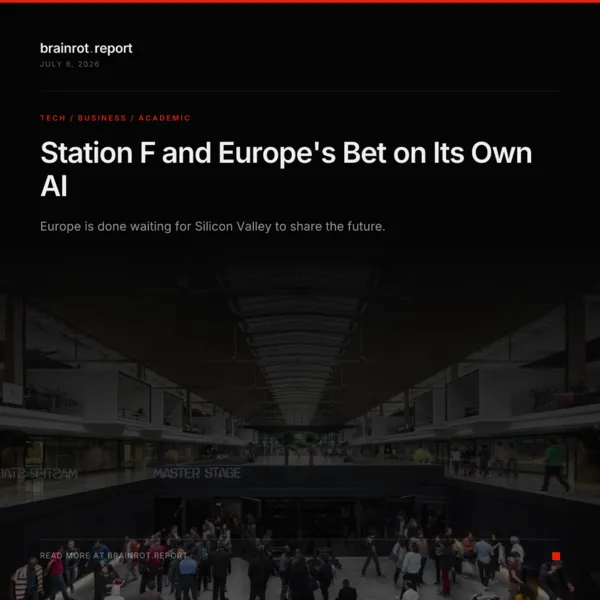
Station F scales F/ai accelerator as Europe bets on sovereign AI compute
Published by AINave Editorial • Reviewed by Ramit
Paris's Station F, the mega-campus founded by Xavier Niel, is scaling its F/ai accelerator to support a new cohort of European AI startups built around sovereign compute. The expansion signals that European founders are increasingly choosing to build within a framework that prioritizes regulatory alignment, data sovereignty, and access to EU markets from day one, rather than following U.S.-centric founder pipelines. Learn more.
What happened
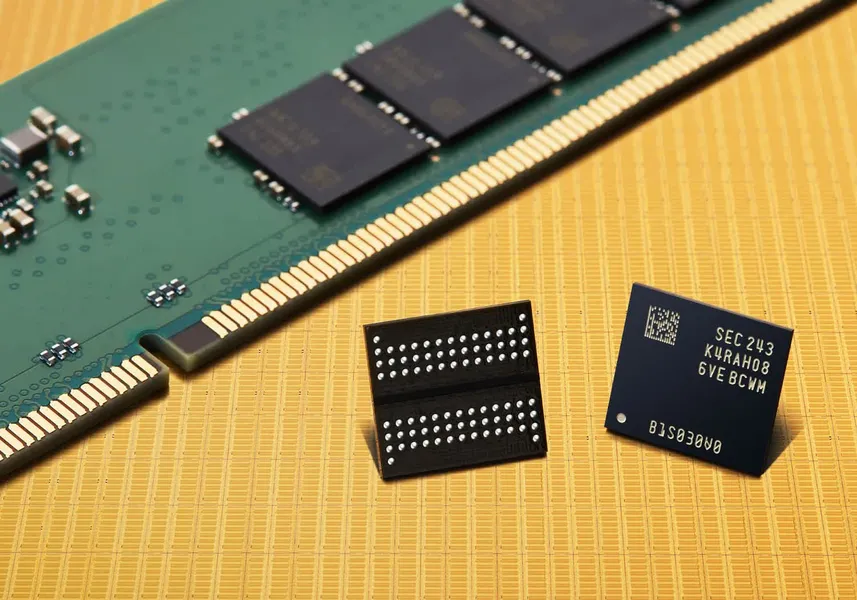
Station F is ramping up its F/ai accelerator to support a new cohort of European AI startups that aim to reduce reliance on American or Taiwanese hardware for compute. The expansion is deliberate: as Nature's analysis of the chip race documents, control over semiconductor supply chains has become the defining geopolitical contest of the decade. Europe produces almost none of its own chips and runs most of its AI infrastructure on foreign hardware, making AI sovereignty an acute concern.
Why AI builders should care
The European approach foregrounds regulatory alignment (GDPR, EU AI Act), data sovereignty, and access to EU markets from day one as competitive advantages. For builders, this creates a structural benefit: companies embedded in European regulation from the start can bypass costly compliance retrofits later, particularly for public procurement and institutional contracts. This is not just cultural preference; GDPR compliance and EU AI Act readiness open doors that U.S.-centric startups must work to unlock.
Practical implications
Founders building within the European regulatory perimeter gain more than just compliance. They gain access to European public procurement contracts and institutional markets that require data locality and regulatory alignment. The F/ai accelerator aims to co-locate talent, capital, and infrastructure in a way that makes Paris a credible alternative to San Francisco for founders who want to build AI companies without dependency on U.S. cloud monopolies. The geopolitics of AI begin at the pitch meeting.
Caveats
Without domestic semiconductor production and serious investment in inference infrastructure, European AI sovereignty risks remaining a policy aspiration rather than a technical reality. The Nature chip feature underscores how fragile the ambition is. Accelerators are where cultures of building get formed, but infrastructure investment must follow. If Station F convinces enough high-quality founders that Paris is the right place to start, the infrastructure argument becomes a funding and policy priority.
FAQs
What is the F/ai accelerator at Station F?
The F/ai accelerator is an initiative at the Paris-based Station F mega-campus. It is being expanded to support a new cohort of European AI startups that prioritize sovereign compute and reduced dependence on American or Taiwanese hardware, as part of a broader strategy to build a self-sustaining European AI ecosystem. More details.
How does Station F aim to advance European AI sovereignty?
Station F aims to advance European AI sovereignty by focusing on regulatory alignment, data sovereignty, and direct access to EU markets from the start. The goal is to create a framework where startups can leverage GDPR and EU AI Act compliance as a competitive advantage rather than retrofitting it later. Learn more.
Why is data sovereignty important for AI in Europe?
Data sovereignty is presented as foundational for building an EU-first AI ecosystem, enabling startups to access European public procurement and institutional markets while avoiding the compliance hurdles faced by companies built on non-European infrastructure. Details.
What role do GDPR and the EU AI Act play in European AI startups?
GDPR compliance and EU AI Act readiness are framed as structural advantages for startups embedded within European regulation from day one. This positioning allows companies to bypass costly retrofits and opens doors to EU public and institutional contracts that require such compliance. Read more.