Hong Kong’s Digital Education Blueprint Puts AI Skills and Safeguards Together
Published by AINave Editorial • Reviewed by Ramit
Hong Kong has issued a digital education blueprint that aims to integrate AI into schools while addressing risks linked to excessive social media use and harmful content. The practical takeaway for AI builders is straightforward: adoption in education will depend on teacher readiness and student protections, not capability alone.
Hong Kong’s plan links AI adoption to school operations
The blueprint includes mandatory digital education training for teachers, digital elements in school development plans, and a new innovation and technology curriculum. Its stated goal is to give students the digital skills and competencies needed for an increasingly AI-driven environment. These measures form the core of Hong Kong’s digital education in Hong Kong strategy, rather than treating AI as an isolated classroom experiment.
The source does not specify the exact tools schools will use, how the curriculum will be assessed, or which agencies and vendors will deliver the training. It describes policy direction, not a detailed technical implementation plan.
Why this matters to AI builders
For teams building education technology, the emphasis on teacher digital skills training in Hong Kong is an important product constraint. A classroom AI system may need guided onboarding, explainable outputs, teacher controls, and workflows that fit existing lesson planning. A tool that assumes students or educators can independently evaluate every model response may be difficult to deploy responsibly.
The requirement to include digital elements in school development plans also points to a more formal buying and evaluation process. Schools may need to consider technology alongside budgets, staff capacity, curriculum goals, and student well-being. That creates demand for clearer implementation documentation and evaluation frameworks, rather than demonstrations built around novelty.
Safeguards will shape education technology HK
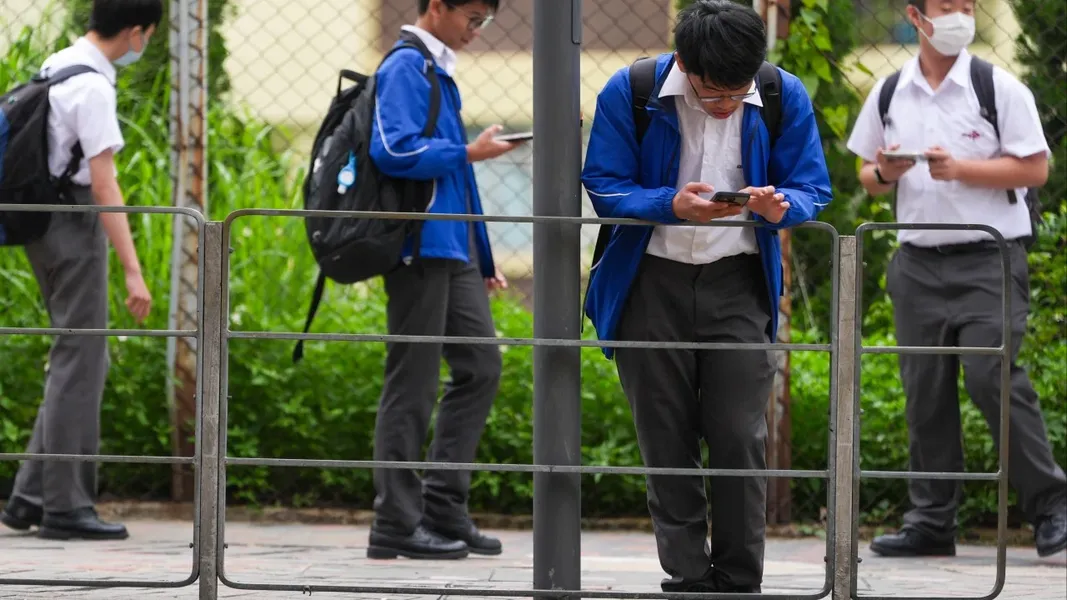
The blueprint’s policy framing acknowledges concerns about excessive social media use and exposure to harmful content. The available source does not define specific controls such as filtering standards, data retention rules, age thresholds, or human review requirements, so builders should not treat those details as settled policy.
Still, the direction is meaningful. Products intended for Hong Kong schools should expect scrutiny around content safety, student privacy, teacher oversight, and the effect of extended technology use on well-being. Safety features may need to be part of the core product design, not an enterprise add-on added after a pilot.
What remains unknown
The announcement does not provide an implementation timeline, funding figures, performance metrics, or independent evidence that the measures have improved learning outcomes. It also does not establish which AI applications will be approved in classrooms. The plan is therefore best read as a signal about priorities: digital literacy for Hong Kong students, teacher preparation, curriculum modernization, and safeguards should advance together.
For founders and product teams, the decision rule is to build for accountable adoption. Strong model performance may help attract attention, but schools will also need tools that teachers can understand, administrators can govern, and students can use without unnecessary exposure to harmful content.