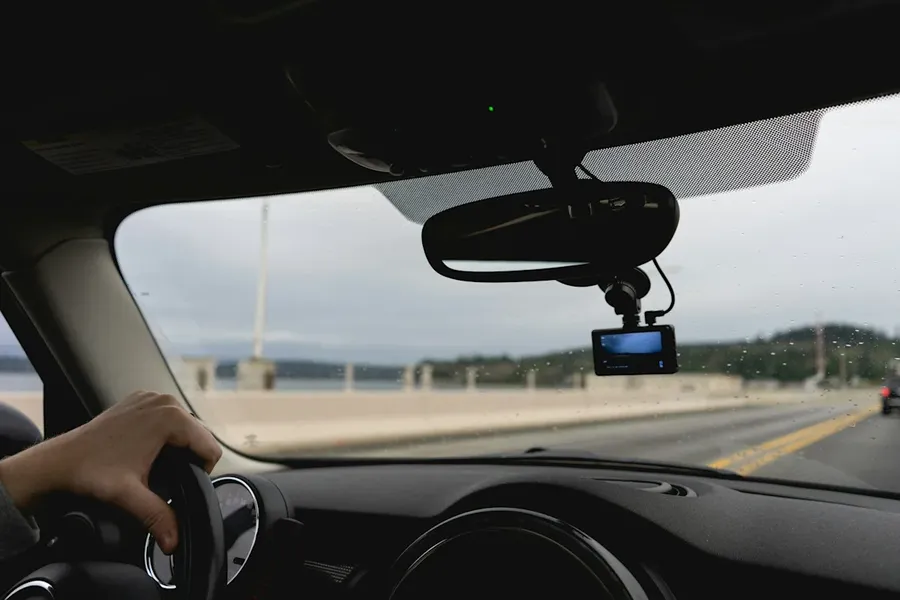
Motive AI Dashcam ALPR Lawsuit Tests Fleet Privacy Rules
Published by AINave Editorial • Reviewed by Ramit
A proposed California class action argues that Motive Technologies' AI dashcams may function as Automated License Plate Readers, or ALPRs, while collecting nearby vehicle data without the privacy disclosures California law may require. The practical issue for fleet operators and AI builders is simple: a camera sold for safety can create a separate surveillance and biometric compliance surface. The lawsuit was filed in the Northern District of California as case No. 3:26-cv-07675.
The lawsuit targets the camera's data exhaust
Drivers Adam Dean and Christian Erickson allege that Motive's forward-facing systems record license plates, vehicle images, and GPS timestamps of nearby vehicles, then route that information to Motive's servers. The complaint says Motive did not publish an ALPR usage and privacy policy covering collection, retention, access, and purpose. Related coverage describes the same core allegation.
That does not establish that Motive violated the law. It frames the question the court must address: whether a computer-vision system can fall within California's ALPR rules even when its stated purpose is detecting tailgating, lane drift, fatigue, or distraction. The plaintiffs point to California Civil Code sections 1798.90.5 through 1798.90.55, which require a published policy for covered ALPR systems.
Why this matters for AI builders
The important design lesson is that compliance follows system behavior, not only product positioning. If a safety camera automatically identifies plates and attaches them to time and location data, the resulting dataset may matter legally even if the product team never intended to build a conventional plate-reader database.
The complaint also alleges that Motive's inward-facing camera collected biometric identifiers and sent them to company servers. That claim is separate from the ALPR theory, and whether facial data qualifies for protection depends on the applicable jurisdiction and statute. Still, a separate Illinois case involving driver-facing cameras was allowed to proceed on plausible biometric privacy allegations. For builders, this is a reminder to map every inference, identifier, retention period, and downstream user before deployment.
The risk reaches fleets and insurers
Carriers often mandate cameras while vendors operate the underlying platform. If Motive's system is ultimately treated as an undisclosed ALPR, fleets may need to review their notices, vendor contracts, access controls, retention schedules, and employee consent processes rather than assuming the vendor carries all responsibility.
The economics of safety programs could also change. Discounts tied to fatigue monitoring may look less attractive if the same deployment creates privacy, employment, or litigation exposure. Motive's product disclosure also acknowledges that an arbitrator found certain claims that its AI detected unsafe driving three to four times more accurately than Samsara's to be false under the Lanham Act, adding a separate caution about treating vendor accuracy claims as settled evidence. The underlying report describes that disclosure and finding.
What remains unresolved
This is an ongoing proposed class action, not a final ruling. Class certification, the interpretation of California's ALPR statute, the exact data captured and retained, and the treatment of biometric information all remain contested. The complaint's requested damages, including up to $2,500 per class member, do not predict what plaintiffs will ultimately recover.
The near-term decision rule
Sources
- Motive Sold Truckers an AI Camera to Keep Them Out of Court. Now the Camera Is the One Being Sued
- Motive AI Dashcam Lawsuit: Truckers Allege Illegal Plate Tracking
- Camera Movement AI Prompts
- an AI scammer stole and sold my art - YouTube
- Understanding placement of your Blink Cameras — Blink Support
- TouchScale — Measure Anything With AI Camera
- Motive sold truckers an AI camera to keep them out of court. Now the camera is the one being sued
- Truckers sue AI dash cam company over 'mass surveillance' on a 'massive scale'
- Driver Privacy: New Lawsuit Involves AI Camera Technology
- Illinois Judge Lets BIPA Suit Over Driver-Facing Cameras at HMD Trucking Move Ahead - ID Tech
- In-Cab Camera Lawsuits: BIPA Settlements and Privacy Rights - LegalClarity
- AI Scanned Truckers' Faces Without Consent, Suit Claims - Law360
- 3D Camera Control - Free AI Multi-Angle Image Generator
- Endacopia Ending C: All The Surgeon Questions and Answers
- Motive sold truckers an AI camera to keep them out of court. Now the camera is the one being sued