Edward Jones bets on AI to augment human advisers amid looming retirement wave
Published by AINave Editorial • Reviewed by Ramit
Edward Jones is betting that AI-enabled insights can preserve the expertise of its most experienced advisers as a third of the industry prepares to retire. CEO Penny Pennington is reshaping the firm's talent and technology strategy to keep its human-centric model intact while using AI to surface client needs, track emotional context, and share knowledge across a network of 34,000 advisers.
What happened
Edward Jones, which manages $2.4 trillion in assets for 9 million clients, faces a demographic challenge. At least a third of the 326,000 financial advisers in the US are expected to retire in the next decade. Pennington describes this as a "prevailing scarcity" of the kind of advice clients need.
To address this, the firm is collecting about 100,000 client conversations daily and generating roughly 55 million interaction notes. AI tools analyze these notes to surface trends and push insights back to advisers. For example, the system has detected a surge in baby boomers asking about relocating to be closer to their children, allowing advisers to preempt those conversations.
The firm is also using AI to monitor the emotional and psychological tenor of conversations. Generalized anxiety about job dislocation now appears in 20% of all conversations, up from 16% a year ago.
Pennington frames the knowledge-pooling push as a natural extension of the firm's partnership ethos. "Our culture is one of peer-to-peer support," she says. "It's a mutually reinforcing network effect that accelerates the process of gaining insight and putting insight to work."
Edward Jones Ventures, an in-house venture capital arm, has backed 15 startups since its launch last year to test tools in areas like estate planning, blending incumbent data resources with external innovation.
Why AI builders should care
This case illustrates how large incumbents can leverage vast transaction data and millions of emotionally aware insights to augment advisers rather than replace them. For AI builders, the key takeaway is the design of a peer-to-peer knowledge network that preserves human expertise for clients as the workforce ages.
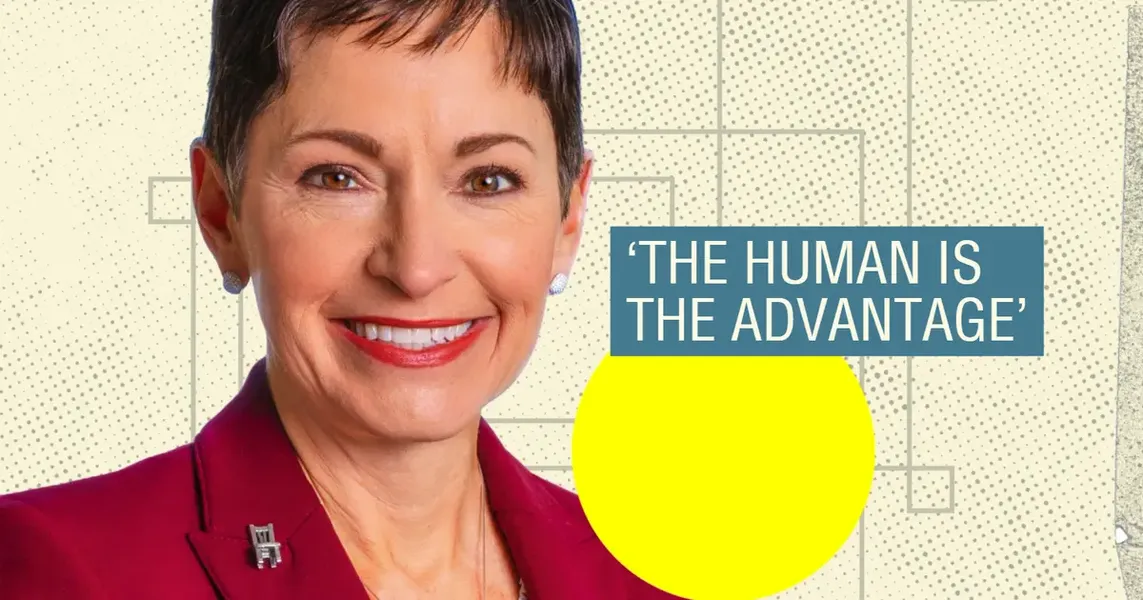
Pennington argues that technology will make it more viable to serve customers with more modest means, potentially broadening access to advisory services. "Fundamentally, the human is the advantage," she says. "We will not win based on technology; we will surely lose without it, but it will not be the primary determinant of winning."
The venture arm approach also offers a model for incumbents: invest in startups to test AI tools in a controlled environment, then integrate the most promising solutions into the core business.
Practical implications
Financial advisory firms can use AI to surface client needs and preempt conversations, increasing efficiency and timeliness of advice. A large adviser network can absorb and redistribute knowledge to mitigate loss when staff retires.
Emotional and psychological context in client conversations can be monitored to build trust and tailor guidance without compromising client privacy or ethics. Pennington notes that the firm can "see into the emotional and psychological context that we're dealing with among our clients today," which helps build trust and advance advice more quickly.
Caveats
Claims about AI increasing efficiency and broadening access are based on internal tools and analytics. No final deployment outcomes or performance benchmarks are provided in the source. AI's role is described as augmentative, with emphasis on human judgment, ethics, and trust, rather than automation of all advisory functions.
There may be concerns among advisers about being replaced by machines, highlighting the need to manage adoption and perception of AI within advisory cultures. Pennington acknowledges this dynamic but frames the knowledge-sharing as a mutually beneficial network effect.
FAQs
How is AI used to support Edward Jones advisers?
AI-enabled insights surface trends and client needs from about 100,000 daily conversations and roughly 55 million notes. It aids knowledge-sharing across advisers to preserve expertise as advisers retire, and emotional and psychological cues in conversations are analyzed to tailor guidance and build trust.
Will AI replace financial advisers at Edward Jones?
No. CEO Penny Pennington states that AI will augment rather than replace human advisers, emphasizing the primacy of trust, ethics, and personal judgment in financial advice.
How does AI help prepare for an adviser retirement wave?
AI-supported knowledge pooling and multi-generational teams help preserve expertise and continuity of advice as experienced advisers retire. The firm collects interaction notes from daily client conversations and redistributes insights across the network.
What role does AI play in estate planning and client insights at Edward Jones?
Edward Jones Ventures backs startups testing tools in areas including estate planning, blending incumbent data with external innovations to improve client insights. The firm has backed 15 startups since its launch last year.
Sources
Latest Tech News