Anthropic expands governance with Ben Bernanke appointment to its Long-Term Benefit Trust
Published by AINave Editorial • Reviewed by Ramit
Anthropic appointed former Federal Reserve Chair Ben Bernanke to its Long-Term Benefit Trust, an independent governance body that advises the company on AI risk and appoints a subset of its board members. The move signals how AI labs are building credibility mechanisms as they scale toward public markets and face regulatory scrutiny over systemic risks from models like Mythos.
What happened
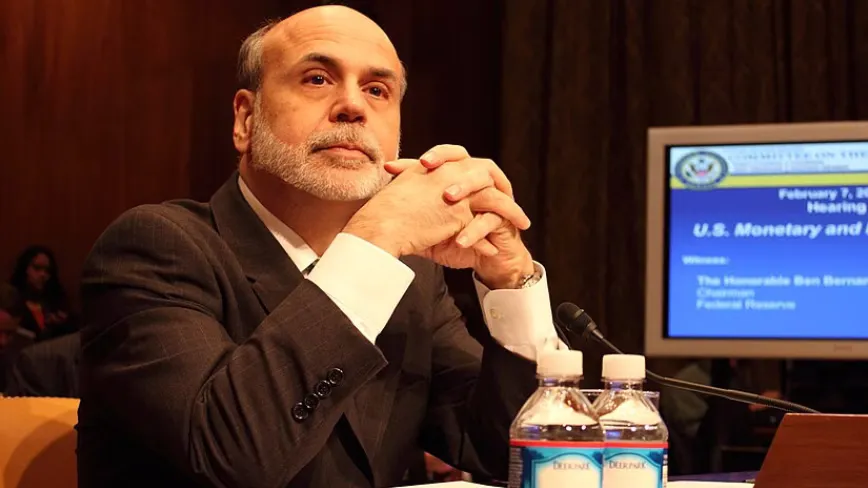
Anthropic announced on July 9, 2026 that Ben Bernanke, former Fed chair (2006-2014) and 2022 Nobel laureate in economics, joined the Long-Term Benefit Trust. Bernanke will help the company understand how AI is changing the economy, according to Anthropic's blog post. He is the fourth member of the trust, joining Neil Buddy Shah (CEO of the Clinton Health Access Initiative), Richard Fontaine (national security expert), and Mariano-Florentino Cuéllar (former California Supreme Court justice) CNBC.
Trustees hold no equity in Anthropic and are paid exclusively for their time and service. New members are selected by existing trustees in consultation with the company TNW.
Anthropic, founded in 2021 by former OpenAI researchers, is valued at $965 billion and preparing for a potential IPO as soon as this year CNBC.
Why AI builders should care
Independent governance bodies that can appoint board members and advise on AI risk are becoming a credibility signal for AI labs, especially as they scale and consider IPOs. The trust structure is designed to bind the company to its mission of ensuring long-run benefits of AI outweigh risks, without trading off investor incentives CNBC.
For builders, this matters because governance decisions affect model release policies, safety guardrails, and regulatory posture. A trust with independent, paid trustees (no equity) provides a structural check that could influence which models ship and under what conditions TNW.
Practical implications
Bernanke's appointment could influence how Anthropic weighs economics and risk in model deployment, particularly around its most capable model, Mythos, which regulators monitor for systemic banking risks TNW. The trust's role in advising on AI risk and societal impact aligns with Anthropic's public-benefit corporation structure and IPO planning CNBC.
If the trust gains credibility, it may set a precedent for other AI labs evaluating similar governance models. Builders evaluating which platform to depend on may consider the strength of such oversight mechanisms when assessing long-term safety and reliability.
Caveats
Critics question how much mission-governance can constrain a fast-scaling AI lab. OpenAI's board saga showed how quickly guardrails can buckle under commercial and personnel pressure TNW. Anthropic has built a $1.5 billion Wall Street pipeline that pressures risk-taking, and the trust can appoint only a subset of directors TNW.
While the appointment raises the reputational cost of ignoring the trust, whether it changes a single decision Anthropic makes remains an open question. The trust's power is real but bounded, and its effectiveness will be tested by the models the company ships, not the trustees it names TNW.