Mill Commercial: AI-powered food waste recycling goes on-site for restaurants
Published by AINave Editorial • Reviewed by Ramit
Mill, the startup known for home kitchen food waste bins, is bringing its technology to commercial kitchens with a new system that combines on-site dehydration and grinding with AI-powered waste analytics. The goal is to reduce the roughly 74 million tons of food thrown out annually in the U.S., about a quarter of which comes from restaurants and grocery stores.
What happened
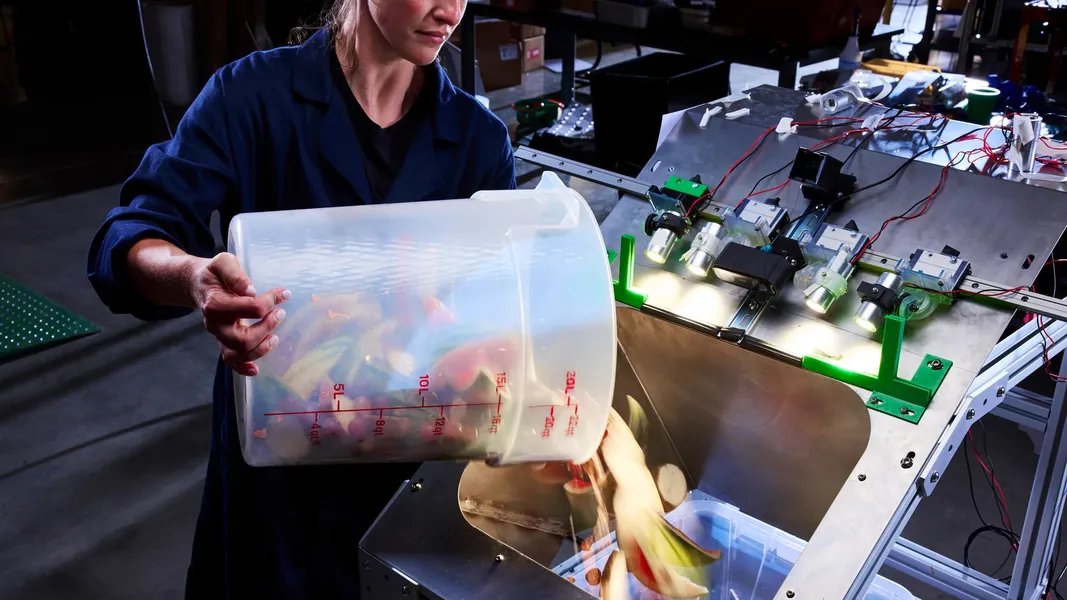
Mill has unveiled a commercial waste-bin system that pre-processes and analyzes restaurant scraps on-site. The device first dehydrates food waste, removing the roughly 80% water content that makes up most of its volume. It then grinds the dried material into a lightweight, non-smelly substance that looks like coffee grounds and smells like spices. The system also uses AI to identify what types of food are being thrown away and provides feedback to help kitchens reduce waste over time.
Whole Foods Market reached out to Mill in 2024 as part of its goal to cut in-store food waste in half by 2030. The grocer plans to deploy Mill Commercial devices across its stores. "The major differentiator between Mill Commercial and other solutions was the on-site processing...the grind and dehydrate process allows us to reduce the volume of our food scraps by 80% on average," said Cameron Crake, circularity lead for Amazon's worldwide grocery team, which includes Whole Foods.
Mill has raised more than $232 million since launching in 2020. The company has also partnered with Compass Group and joined Google's AI Futures Fund to further develop its commercial food waste technology.
Why AI builders should care
Mill's approach is a practical example of how hardware plus AI can solve a real-world operational problem. The system does two things that matter for AI product builders:
- It generates real-time waste analytics by identifying what's being thrown out and in what quantities.
- It provides prescriptive guidance to kitchen staff, suggesting operational changes such as adjusting how many croissants to bake if all of them are being discarded.
This feedback loop turns a waste stream into a data stream. For teams building AI products for physical environments, Mill shows how edge inference on low-cost hardware can drive behavioral change in commercial settings.
Practical implications
On-site processing reduces waste volume by about 80%, which directly lowers handling, storage, and transport costs for kitchens and retailers. The resulting byproduct can be sent to farms for use as chicken feed or compost, creating a circular waste stream instead of a disposal cost.
For AI builders, the key takeaway is the integration of computer vision or sensor-based classification with a mechanical process. The system doesn't just track waste; it acts on it immediately by reducing volume and creating a usable output. This pattern of "sense, process, and act" is applicable beyond food waste to any industrial or commercial waste stream.
Caveats
Performance metrics and deployment timelines are based on company descriptions and partnership announcements rather than independent third-party validation. The exact AI model architecture, accuracy rates for waste classification, and per-unit pricing have not been publicly detailed. Mill's commercial rollout is still in early stages, with Whole Foods as the first major deploying partner. Specific timelines for broader restaurant and grocery adoption remain unclear.
FAQs
Sources
- Inside Mill's AI-powered plan to help restaurants stop wasting food
- Mill Commercial
- Mill teams up with Amazon for industry-first food waste ...
- Exclusive: Whole Foods to launch new AI food recycle ...
- Whole Foods Market to reduce in-store food waste thanks to ...
- Mill Pushes Deeper into Commercial Food Waste with Compass ...
- Mill joins Google's AI Futures Fund to advance food waste ...
- Mill’s Innovative AI Revolutionizes Food Waste Management ...