Discovery Loop: Google AI Researchers Build an Autonomous Research Startup
Published by AINave Editorial • Reviewed by Ramit
Discovery Loop AI startup has been formed by four senior Google AI researchers, including Jeff Dean, to automate parts of the scientific method. The team plans to build systems that propose experiments, implement what is needed to run them, evaluate the results, and use those results to choose the next experiment. For AI builders, the practical significance is a shift from AI as a research assistant toward AI as an engine for iterative R&D.
A heavyweight Google team is moving the research loop outside Google
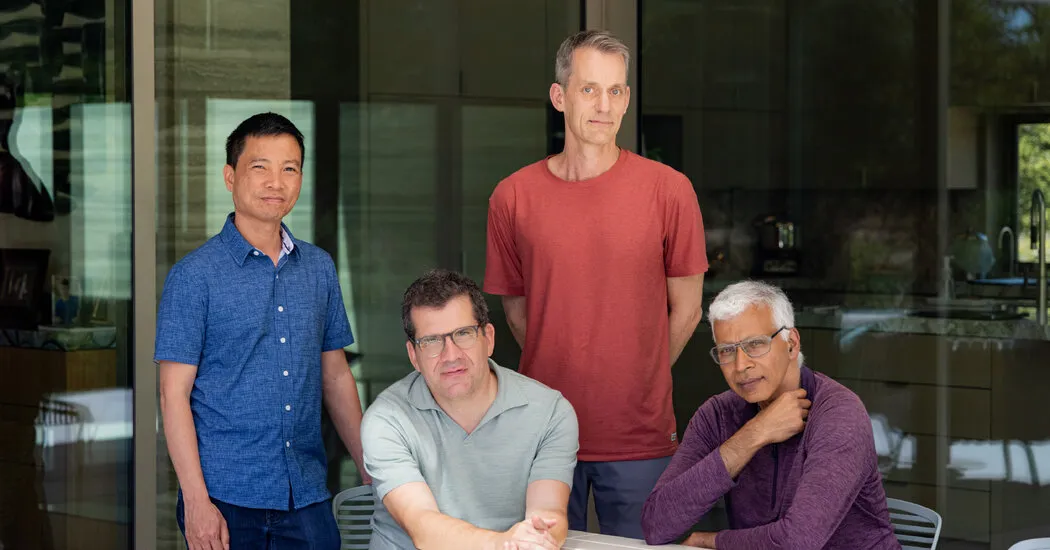
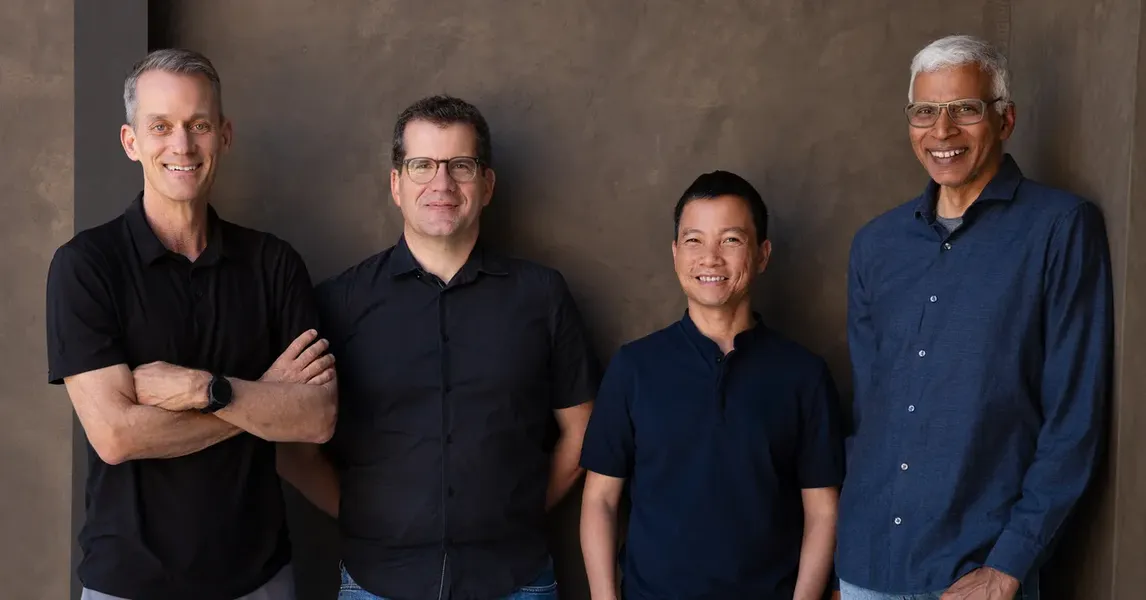
Jeff Dean and Sanjay Ghemawat are leaving Google after almost 27 years. They are joined by Oriol Vinyals, a technical lead for Gemini, and Quoc Le, a Google Brain cofounder associated with AutoML-Zero. The four founders have organized Discovery Loop as a public benefit corporation and attracted investment from Khosla Ventures, Radical Ventures, and other firms, although the funding amount and valuation have not been disclosed.
Google is not simply losing access to the group. The company is taking a stake in Discovery Loop and has agreed to provide compute power for the first year, according to the reported Google investment and cloud arrangement. The startup remains a separate company, but the relationship gives it an unusually strong early infrastructure position.
Discovery Loop will be its own first customer
The first application is expected to be machine learning itself. Discovery Loop intends to use automated experimental loops to improve its core ML algorithms before applying the resulting system to other research areas. Le suggested that the process could eventually explore alternatives to current transformer architectures, but that is a stated possibility, not a demonstrated result.
This sequencing matters. An AI research system needs more than a model that can generate plausible ideas. It needs reproducible experiments, reliable evaluation, enough compute to test many hypotheses, and a way to distinguish genuine improvement from noise or overfitting. The supplied reporting does not yet disclose the startup's software architecture, evaluation methods, model access, or customer offering.
The builder implication is an R&D operating model, not a new chatbot
If the approach works, autonomous AI research could let small technical teams run more experiments without expanding their research staff at the same rate. That may affect how founders design internal R&D pipelines, especially in areas where experiments can be represented in code and evaluated against clear objectives.
The harder cases are physical and regulated domains. Chip design, biology, drug discovery, and materials design all involve expensive equipment, domain constraints, safety review, and experiments that may take much longer than a software benchmark. Discovery Loop's broader ambitions therefore depend on integration with laboratories, simulators, datasets, and human experts. The startup has said that humans will initially help develop experimental ideas, with deeper automation as the goal.
What remains unproven
The founders have strong credentials, but credentials are not evidence that autonomous discovery loops will produce useful breakthroughs. The company has not publicly shared its funding, team size, product scope, office setup, benchmarks, or first customer list. Its announced domains are targets, not validated deployments.
For builders, the sensible takeaway is to watch for concrete evidence: repeatable gains from machine learning experiments, transparent evaluation, and workflows that survive human review. Until then, Discovery Loop is an important signal about where elite AI talent wants to work, but not yet proof that AI can independently conduct high-value scientific research.
Sources
- Google’s Top AI Brains Are Leaving to Launch Discovery Loop
- Google shakes up AI leadership as DeepMind chief shifts role
- Google Shakes up AI Leadership. Hassabis Steps... - Business Insider
- Google DeepMind CEO Demis Hassabis is stepping aside
- Anthropic's AI Drug Discovery, Amazon Leo vs. Starlink... | IT Explore
- Google’s chief scientist is leaving after 27 years to start his own AI company
- Google eyes $1.5B investment in AI coding startup as AI brain drain continues with Jeff Dean's exit
- Jeff Dean and Sanjay Ghemawat depart Google to co-found Discovery Loop
- Jeff Dean Leaves Google to Automate the Scientific Method With Discovery Loop
- Discovery Loop: создатели ключевых технологий Google... | Дзен
- Google DeepMind launches AI 'brain' for robots
- Google DeepMind
- Google’s Top AI Brains Are Leaving to Launch Discovery Loop
- Google chief scientist Jeff Dean leaving company after 27 years
- Four Top Google A.I. Researchers Form New Start-Up