Australia’s AI data centre rules hit a power timing problem
Published by AINave Editorial • Reviewed by Ramit
Australia’s proposed world-first AI data centre rules would require large facilities to become net-generators of clean power, but the plan already faces a basic feasibility problem: the renewables needed to meet the requirement cannot be built fast enough.
What happened
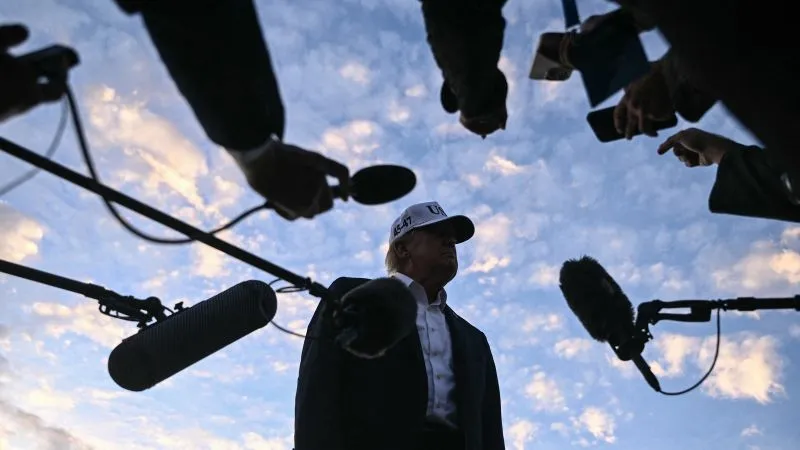
Prime Minister Anthony Albanese set out the framework on July 15 at the University of Sydney as part of a broader national AI push that also addresses copyright and creates a new Office of AI. Under the plan, large data centres would have to fund fresh renewable capacity and pay their full grid-connection costs instead of passing those costs to households. They would also need to minimise water use and reduce load when the grid is under strain.
The trouble is timing. Wind and solar projects in New South Wales and Victoria take roughly three to five years to approve and build, while a data centre can go up in as little as two. Commonwealth Bank economist John Oh warns that if data centre demand arrives before the generation meant to cover it comes online, operators will lean on the existing grid, the very outcome the rules were designed to prevent.
Data centres currently draw about 3 TWh per year, a few percent of national demand. Forecasts put that between 15 and 30 TWh within a decade as the sector attracts an estimated A$85 billion to A$135 billion in investment. Anthropic alone has floated an appetite that industry watchers peg at around 20 GW, though the company has not committed to building on that scale.
Why AI builders should care
If enacted, the rules would fundamentally change the economics of building and operating large data centres in Australia. Developers would be responsible for funding new renewables and maintaining grid reliability, not just buying green certificates. The policy aims to prevent the industry from offloading grid costs to households, but if generation lags demand, the cost transfer could still happen, pushing up consumer electricity prices.
For builders planning AI workloads in Australia, the regulatory uncertainty means project timelines and cost structures could shift significantly. The requirement to act as active grid participants, not passive loads, adds technical and financial complexity.
Practical implications
The framework must clear National Cabinet, with agreement targeted for August, before legislation reaches parliament in early 2027. The Australian Energy Market Commission has also proposed technical standards requiring large loads to stay connected and ride through faults, referencing a 2024 incident in Virginia where 60 data centres shed 1,500 MW at once. These standards would add another layer of compliance for operators.
Australia’s approach is the most demanding of any country so far. New York imposed a one-year moratorium on hyperscale sites, Ireland lifted its freeze on condition that new centres source most power from renewables, and the US Congress has weighed making Big Tech pay for AI energy costs. Australia’s version bundles net-generation, grid-connection cost allocation, and water use into a single national law, potentially setting a precedent for other jurisdictions.
Caveats
The plan is still a promise rather than a statute. Feasibility hinges on whether renewable projects can be deployed fast enough to meet data centre demand, and the investment and demand figures are projections that may change as policy details mature. Until legislation passes, the rule exists mostly as an accounting exercise that balances only if the renewables arrive on time.
FAQs
Sources
- Australia’s world-first data centre rules hit their first snag: the power isn’t there yet
- Exposing The Dark Side of America's AI Data Center... - YouTube
- Data centres are hungry for power, and Alberta is... | CBC News
- One fallen power line exposed a growing AI data center... | TechCrunch
- One of Australia’s top universities - The University of Sydney
- journals.sagepub.com/doi/abs/10.3102/003465430298487
- Labor aims to shape AI revolution with nationalised data centre and AI copyright rules
- Calls grow for urgent rules to curb AI data centre rush
- Не работает приложение smartThings (The smartThings app...)
- Snag – Cages Lyrics | Genius Lyrics
- Australia’s ‘World-First’ Data Center Rules Face First... - Bloomberg
- When data centers move in I
- What AI data centres really mean for Australia's water supply : Find...
- Australia to tighten AI oversight with new office, data centre rules