Al Gore’s Calm Take on the AI Data Center Backlash, Explained for Builders
Published by AINave Editorial • Reviewed by Ramit
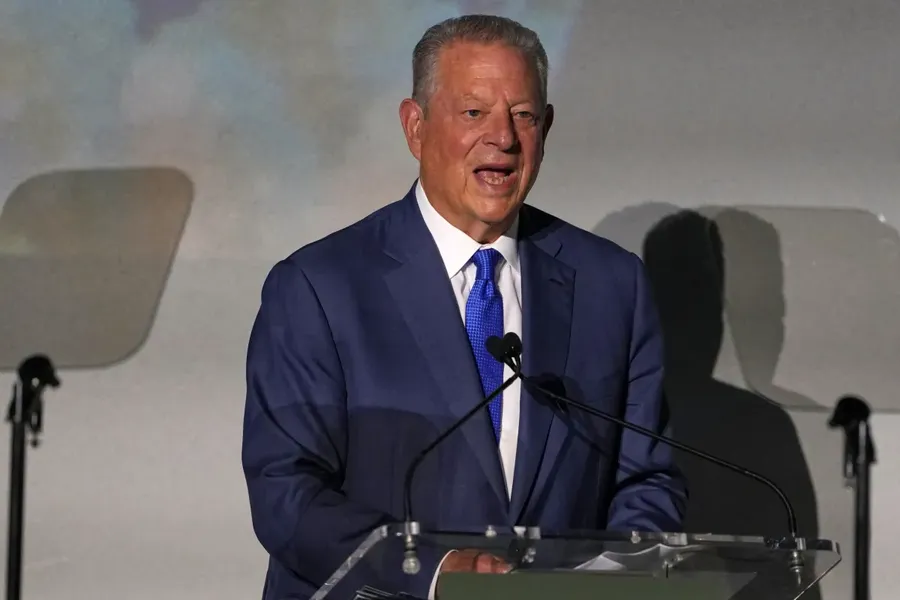
Al Gore has a surprisingly calm take on the AI data center backlash, and his argument matters for anyone building AI products that depend on cheap, abundant compute. In an interview with TechCrunch, Gore said AI data center emissions are a fraction of global energy use, and the bigger risk is not the data centers themselves but the energy system they could lock in. For builders, the practical takeaway is that energy constraints, not just model costs, will shape where and how AI compute gets deployed over the next decade.
Why Gore is not worried about data center emissions
Gore’s core argument is that AI data centers are not the main driver of energy demand. He points out that global air conditioning already consumes more electricity than the entire European Union, and demand could triple by 2050. That means the grid stress from AI is real but not unprecedented. The International Energy Agency estimates air conditioning will add more strain than AI workloads, which changes the framing of the backlash.
For builders, this matters because it suggests AI data center emissions are not the only factor driving energy policy. If you are planning long-running agent workloads or training runs, the availability of grid capacity and the price of power will matter more than the public debate about data center emissions.
The real risk: methane turbines and grid lock
Gore’s main concern is that building new gas plants to meet AI demand locks in fossil-fuel generation. He specifically warns about methane turbines, which are gas-fired generators that could keep the grid dependent on fossil fuels for decades. The risk is not just emissions today, but the long-term infrastructure choices that make it harder to transition to renewables.
This is where the AI data center buildout intersects with grid resilience. Gore argues that renewables and batteries are becoming the cheaper option, and that locking in gas now would be a strategic mistake. For builders, this means energy prices for data centers could become more volatile if grid operators choose fossil-fuel peakers over storage and renewables.
The opportunity: renewables, storage, and AI efficiency
Gore sees the AI buildout as an opportunity rather than a drain on energy. He highlights investments in Volue and Gridware, two companies working on grid resilience. Volue helps utilities deploy more renewables to the grid, while Gridware sensors monitor grid infrastructure to protect against risks like wildfires. These are the kinds of tools that make it easier to integrate variable renewables without sacrificing reliability.
Gore also expects AI to accelerate the decoupling of compute from energy intensity across the stack. That includes green cement and steel, storage software, and database design. The idea is that AI can optimize energy use in ways that reduce overall emissions, even as compute demand grows.
The Stern forecast: AI as a climate tool
Gore ties his argument to a forecast from economist Nicholas Stern, who projects that efficiency-driven AI could reduce global emissions by 6% to 9% annually starting next decade. That is a significant claim, and it is worth treating as a projection rather than an established outcome. The forecast depends on AI being applied to energy efficiency, grid optimization, and industrial processes, which is not guaranteed.
For builders, this is a reminder that the climate impact of AI depends on how the technology is deployed. An AI product that optimizes energy use in buildings or supply chains has a different emissions profile than one that powers a large language model trained on fossil-fuel electricity.
What builders should watch
If you are building AI products, the energy angle is not just a macro story. It affects your cost structure, your deployment choices, and your regulatory risk. Watch for three things: the price of power in your target regions, the availability of grid capacity for new data centers, and the policy signals around methane turbines and renewables.
The important part is that Gore is not dismissing the energy concerns. He is saying the solution is not to slow down AI, but to accelerate the transition to renewables and storage. For builders, that means the companies that plan for energy constraints now will have an advantage over those that assume cheap compute will last forever.
FAQs
Sources
- Al Gore says the real AI risk isn’t data centers — it’s what industry leaders are warning about
- Poll: Americans say there’s a serious risk of AI destroying... - POLITICO
- What Al Gore says is possible by 2023 | Salesforce - YouTube
- Trump downplays AI risks after dire expert warnings and calls to slow...
- Could AI really wipe out humanity – six experts spell out the risks
- Al Gore says the real AI risk isn’t data centers
- AI poses huge risks to national security without guardrails, minister says
- Al Gore Says Global Warming ‘Is A Moral... - Climate Change Dispatch