AI's Transformation: From Excitement to Mundanity in the Workplace
Published by AINave Editorial • Reviewed by Ramit
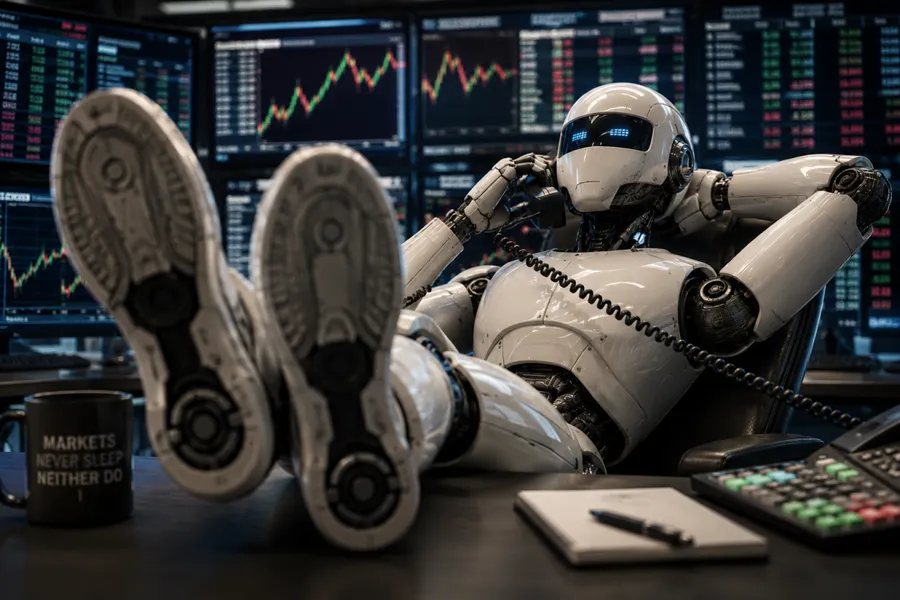
In an era marked by the relentless advance of artificial intelligence, expectations have run high, with proponents suggesting that AI could transform entire industries. Nevertheless, a growing consensus among industry leaders reveals a stark reality: AI's actual impact in workplaces has thus far been mundane. This evolving narrative reflects both significant possibilities and persistent limitations in AI adoption, especially in the fields of architecture and engineering.
The Theoretical Impact
The promise of AI working alongside or even replacing human labor in various sectors has attracted both optimism and skepticism. Anthropic's recent labour-market disruption study indicates that AI could theoretically handle over 80% of tasks in architecture and engineering. However, actual adoption and practical implementation remain limited. Simon Mason, a director at the London-based architecture firm TP Bennett, explains that the use of AI has integrated itself into their workflow, primarily facilitating the creation of custom precedents—much like the transition from hand-drawn designs to AutoCAD. Mason reflects, "We see it very much as just another part of what we do now."
Voices of Caution
Conversely, professionals like Chris Fulton, Digital Director at ADP, emphasize human critique and decision-making as irreplaceable elements in the creative process. Fulton's experiences highlight a common scenario: teams utilizing AI do not consistently outperform those relying solely on traditional methods. This raises concerns about overestimating AI's capabilities, as he notes, "The reality is that if you give people access to those tools, they may do an individual task quicker, but all that actually does is just move a bottleneck somewhere else in the process."
The Optimistic vs. Pessimistic Divide
Leaders such as Dario Amodei of Anthropic, Sam Altman of OpenAI, and Elon Musk present a narrative filled with dramatic potential, suggesting that advanced AI could revolutionize intellectual work and even bridge societal divides. However, contrasting this optimism is the voice of caution from figures like Tom Standage, Deputy Editor of The Economist, who notes that the tech industry often oscillates between utopian and dystopian views. According to Standage, like previous technological innovations, AI adoption and its long-term effects on society may unfold over decades, highlighting the unpredictable nature of innovation.
Practical Challenges
As this debate continues, it's evident that the upfront excitement about AI may overshadow the efficiency challenges faced in practice. With studies concluding that many AI models, including those from Anthropic, struggle with contextual understanding and reasoning, practitioners like Fulton caution against over-reliance. He states, "A lot of the time they are not clever. They don't reason; they don't think; they don't understand."
The Future of AI in Workplaces
The implications of AI's evolving role in the workplace will likely dictate the framework of the future workforce. The concerns are multifold: while the potential for AI to bolster productivity exists, with it comes the fear of unintended consequences and the inability to foresee how AI systems will behave in the long term. As technology shifts from novelty to mundanity, understanding AI's true capabilities—and limitations—will be imperative for businesses moving forward.
In summary, while AI has the theoretical potential to change the workplace fundamentally, its practical adoption remains modest. The technology serves more to augment human capability than to eliminate it, illustrating a critical juncture in AI's journey from excitement to everyday reality.