AI data center grid resilience is a grid problem: what happened, why it matters for builders, and how to plan for it
Published by AINave Editorial • Reviewed by Ramit
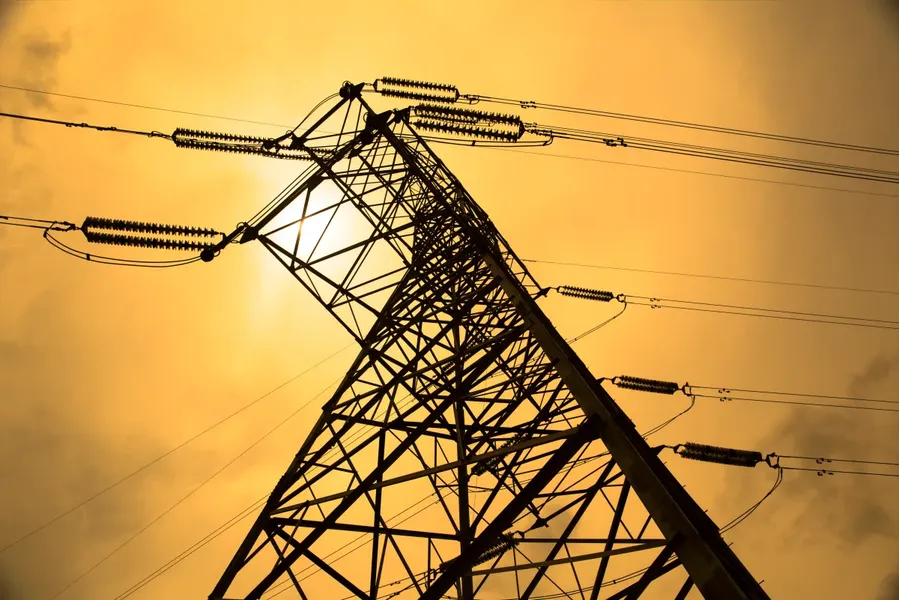
A single downed power line outside Washington, DC, triggered a cascade of data center disconnections that destabilized the PJM grid for 11 minutes. The event exposed how concentrated AI compute loads can amplify grid disruptions, and it highlights the need for AI data center grid resilience strategies that go beyond standard backup power.
What happened
When the power line failed, data centers in Northern Virginia detected the voltage fluctuation and switched to backup power nearly simultaneously. According to PJM data, about 3.1 GW of load vanished from the grid in 30 seconds, and at peak the grid saw an excess of 3.49 GW of electricity. The disconnected data centers represented roughly 3% of total PJM demand at the time. The grid took 11 minutes to stabilize, and voltage spikes were recorded from Northern Virginia to Chicago.
This event was twice the scale of a similar incident in 2024, when 60 data centers simultaneously disconnected and pulled 1.5 GW of load from the grid. ON.Energy CTO Ricardo de Azevedo called the situation a "canary in the coal mine," noting that these events are happening more and more frequently.
Why AI builders should care
For teams building AI products or operating AI training workloads, grid instability is not just a policy issue. It directly affects capacity planning, uptime, and the economics of compute. Northern Virginia is home to the world's highest concentration of data centers, and by 2040 data centers are expected to account for about 24% of PJM load, up from 6% in 2024. If a single power line failure can trigger a 3 GW disruption, larger failures could cause even more severe consequences for AI workloads that depend on continuous, high-power compute.
Ali Zain Banatwala, senior market models specialist at the Independent Electricity System Operator, pointed out that data centers need a way to sequentially disconnect or reconnect rather than all acting at once. A more orderly process would allow grid operators to develop robust procedures and reduce the risk of cascading failures.
Practical implications
A campus-scale uninterruptible power supply system, like the one ON.Energy is deploying, can help data centers ride through grid disruptions. The company's system hides the entire data center behind a bank of batteries and power conversion equipment, presenting a steady, consistent load to the grid. It can absorb fluctuations by charging batteries during surplus and dispatching power during dips, and it can follow grid changes within milliseconds. ON.Energy is currently installing 3 GW of its systems across four data center campuses.
For AI builders and operators, this means that AI training workloads can ramp up and down without causing grid disruption, and the data center can remain connected during voltage events. This approach also aligns with emerging grid operator requirements. For example, ERCOT is planning to require large loads like data centers to "ride through" disruptions, which could shift planning for capacity, siting, and energy storage investments.
Caveats
The evidence available centers on a single incident and industry responses. Interpretations should be treated as best-effort summaries and may not reflect full technical details or broader grid conditions. The specific numbers around load share and projections are based on Synapse Energy Economics and Reuters data as reported in the source article. The ON.Energy system is one vendor's solution; other approaches may also be viable. The incident did not cause a blackout, but it demonstrated the fragility of current grid interaction patterns for large AI data centers.
FAQs
Sources
- One fallen power line exposed a growing AI data center problem. Here’s how to fix it.
- Exposing The Dark Side of America's AI Data Center... - YouTube
- The Subprime Data Center Crisis
- The Future of AI: How AI Is Changing the World | Built In
- Testing AI Data Centers for PFAS | Adam Gushgari posted... | LinkedIn
- One fallen power line exposed a growing AI data center problem. Here's how to fix it.
- One fallen power line exposed a growing AI data center problem. Here’s how to fi...
- Fiancé 'Bordering On The Cheap' Frustrates Woman, Dave Ramsey Warns Her The Prob...
- Power line failure exposes growing AI data center grid risk - MSN
- One fallen power line exposed a… — AI News | OnAirToday
- One fallen power line exposed a growing AI data center ...
- One fallen power line exposed a growing AI data center ...
- One fallen power line exposed a growing AI data center problem. Here’s how to fix it.
- How to Fix Cat Mail Co Infinite Loading Screen Loop: 2026 Guide...
- Is Gemini not working for you? Here's how you can fix it