AI's energy and water footprint: what builders can do now
Published by AINave Editorial • Reviewed by Ramit
The environmental cost of AI is no longer a theoretical concern. Global data centers consumed 448 trillion watt-hours of electricity last year, more than all but 10 countries, and that number is projected to nearly double within four years. For AI builders, founders, and product teams, the practical question is not whether AI has a resource footprint but how to operate responsibly within it without losing velocity.
What happened
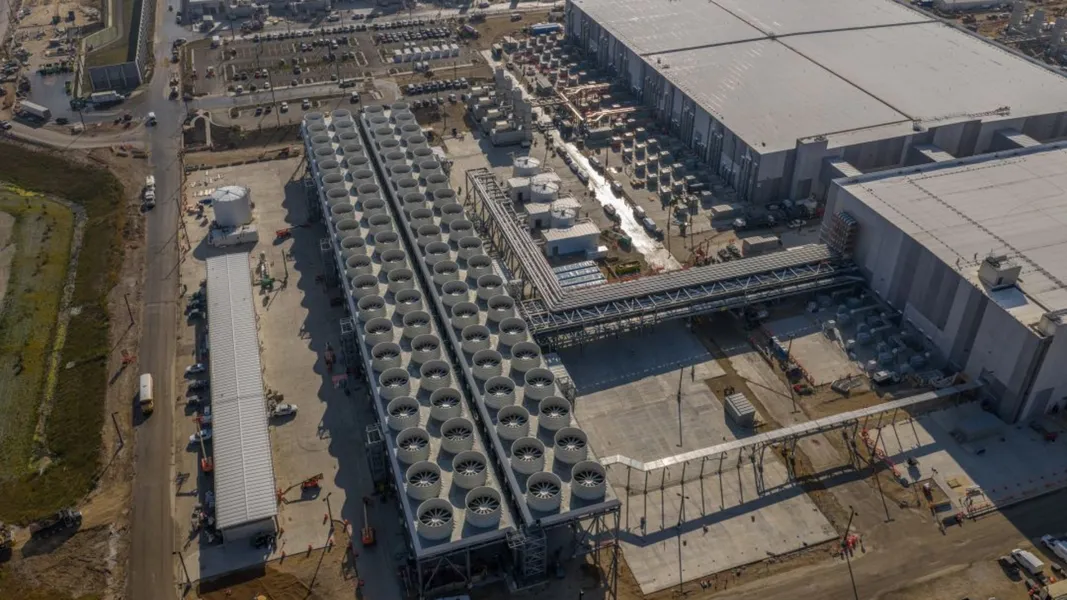
A new report from the United Nations University, covered by the Associated Press, catalogues the accelerating resource demands of AI infrastructure. Last year global data centers used 448 trillion watt-hours of electricity, and consumption is expected to more than double in the next four years. The water footprint is equally stark. By 2030, just the electricity used by data centers is estimated to require nearly 2.5 trillion gallons of water for cooling, enough drinking water for the entire world for 1.7 years, according to UNU co-author and water scientist Kaveh Madani.
Local impacts are already visible. Data centers in two Virginia counties near Washington used 2.1 billion gallons of water in 2023. Community pushback against new deployments is growing, with BaRupOn COO Balaji Tammabattula noting that "the moment you say that you're building a data center, there's a backlash."
The Associated Press reporting also highlights a critical transparency gap. Private AI companies, with rare exceptions, do not disclose energy and water costs per query. Researchers like Sasha Luccioni and University of Michigan professor Mosharaf Chowdhury are forced to estimate costs using open-source models, because providers do not publish the data. Luccioni, co-founder and chief scientific officer of the Sustainable AI Group, called this a "bait-and-switch" in which tools users already rely on now default to generative AI without clear consent.
Why AI builders should care
For teams designing AI products, the sustainability conversation is shifting from an abstract PR concern to a material constraint on operations and user trust. If major cloud providers face water-use restrictions in key regions, latency and availability could be affected. If users begin to expect transparency about resource cost per request, products that offer opt-out mechanisms or efficiency dashboards will have a trust advantage.
The numbers are also a forcing function for architecture decisions. A single ChatGPT query uses the equivalent of an efficient light bulb running for two and a half minutes, and ChatGPT alone processes 2.5 billion queries per day. For builders deploying their own models or serving inference at scale, the compounding effect of inefficient prompts, unnecessary context, and compute-heavy default behaviors directly translates into higher costs and a larger resource footprint.
Practical implications
Builders can take concrete steps to reduce waste without sacrificing product quality.
Limit non-essential inference. Reserve generative AI for tasks where it adds clear value. Simple lookups, calculations, and routine queries do not need large language model inference. Sasha Luccioni put it plainly: "You can generate a chocolate chip cookie recipe with Claude, or you can open a damn book."
Design for concise prompts. Longer, more verbose queries increase compute per request. Madani and other experts advise making queries concise and eliminating unnecessary context or polite preamble. This reduces both latency and resource burn.
Offer opt-out search options. When users do not need AI-generated answers, builders can provide non-AI search fallbacks. Experts recommend lower-energy search engines such as Ecosia, which plants trees and uses less energy, as well as DuckDuckGo and Startpage, which offer no-AI options. Google users can opt out by adding "-ai" at the end of a query or selecting "Web" in search options.
Push for provider transparency. Ana Pinheiro Privette, a former top sustainability official at Amazon Web Services, emphasized that consumer and developer pressure can shift company behavior. "They listen if everybody suddenly starts caring about not having a footprint." Builders can make procurement and provider choices that favor transparency about energy and water costs.
Caveats
The figures from the UNU report, while sourced from a credible institution, are estimates. They rely on modeling that uses open-source AI data to approximate costs for private systems, because companies do not publish actual query-level resource consumption. Specific savings from individual behavior changes are not quantified in the reporting. The recommendations are directional, providing a useful baseline for teams that want to act without waiting for perfect data.
FAQs
Sources
- AI is an energy and water hog, here's what you can do to counter that
- How can AI help address environmental and sustainability ...
- AI is devouring energy like crazy!! How are you guys not worried?!
- AI Will Eat Energy | Jalalkuncha Sudharshan Kumar - LinkedIn
- I wrote something on AI and its impact on my blog. | Fatima Zahra
- AI is an energy and water hog, here's what you can do to counter that
- Kevin O'Leary: I've solved your data center problem
- AI Is an Energy and Water Hog, Here's What You Can Do to Counter That
- AI is an energy and water hog, here's what you can do to counter that
- AI is an energy and water hog, here's what you can do to counter that ...
- AI is an energy and water hog, here's what you can do to counter that
- AI is an energy and water hog, here's what you can do to counter that ...
- AI is an energy and water hog, here's what you can do to counter that
- AI is an energy and water hog, here's what you can do to counter that
- AI is an energy and water hog — here's what you can do to counter that
- AI is an energy and water hog, here's what you can do to counter that