White House asks OpenAI to slow GPT-5.6 rollout, signaling a new era of AI safety governance
Published by AINave Editorial • Reviewed by Ramit
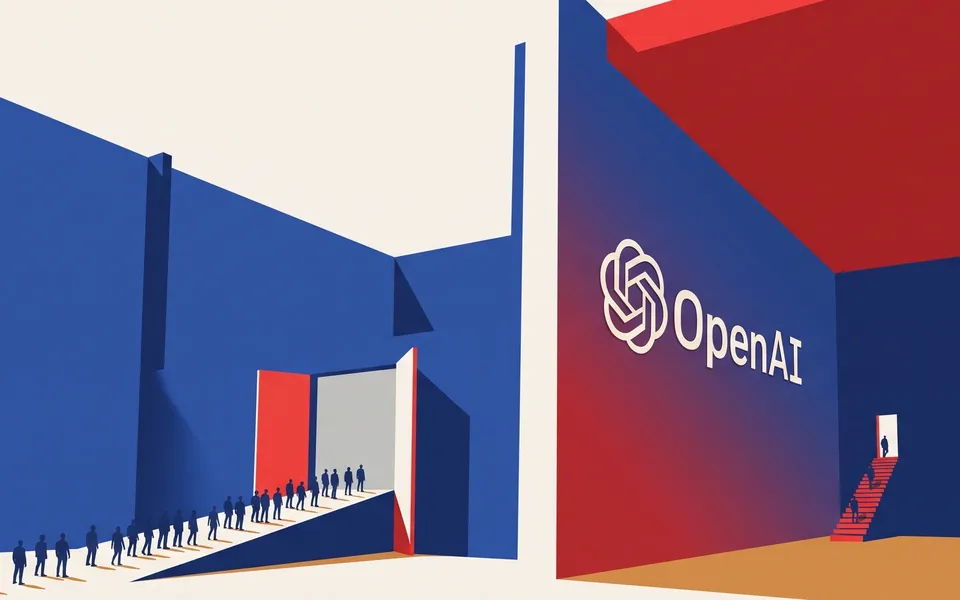
The White House has requested OpenAI limit the release of its upcoming GPT-5.6 model to a small number of government-approved partners instead of a broad public launch. This marks a shift from the administration's earlier hands-off posture and signals a new operating reality for AI builders: frontier model access will increasingly be gated by safety review and partner approval, not just API keys.
What happened
OpenAI plans to distribute GPT-5.6 to a select group of close partners during a preview period, with the government approving access customer by customer. CEO Sam Altman told staff that if the limited release goes well, a broader public launch could follow a couple of weeks later. The agencies that reportedly asked for this limited rollout were the Office of the National Cyber Director and the Office of Science and Technology Policy. This comes after the administration placed an export control order on Anthropic over its frontier models Mythos and Fable, and after President Trump signed an executive order asking AI companies to voluntarily submit new models for government review 30 days before release.
Why AI builders should care
The GPT-5.6 rollout safety situation is not an isolated incident. It reflects a growing pattern where the most capable models are kept under wraps. Anthropic already limited its frontier cyber model, Claude Mythos, to a small partner cohort through a program called Project Glasswing, arguing the model was simply too powerful for open release.
For builders, this means the models you depend on may not arrive on your usual timeline. If you are building a product or agent workflow that relies on the latest frontier model from OpenAI or Anthropic, you may face delayed access, application-based approval, or uncertainty about which capabilities will be available and when.
Practical implications
Expect more staged, partner-led rollouts for frontier models. Access may be customer by customer, with government agencies involved in the approval loop. This creates several practical considerations:
- Plan for uncertainty. If your product roadmap depends on a specific frontier model, build fallback paths using available models or earlier versions.
- Apply early for partner programs. If you want early access to models like GPT-5.6, engaging with OpenAI's enterprise or partner channels may be necessary.
- Watch for regulatory shifts. The executive order framework is not yet established, creating confusion among AI companies about who or which agency is directing regulation. Builders should monitor developments closely.
The broader concern driving these restrictions is that LLMs have proven adept at writing malware and can execute entire ransomware attacks autonomously. Frontier cyber tools are ostensibly capable of identifying and exploiting software vulnerabilities at speeds no human analyst can match, which poses a significant problem for any organization running complex software infrastructure.
Caveats
Details about the rollout scope and timing may evolve as official statements and regulatory frameworks develop. The current reporting comes from The Information, TechCrunch, and CNN, all citing internal memos and unnamed sources. OpenAI has declined to comment on the record. The exact capabilities of GPT-5.6 that triggered the safety concerns have not been publicly detailed. The regulatory framework for voluntary pre-release review remains undeveloped, and there is no transparent, consistent process for AI model governance yet.
FAQs
Sources
- The White House is asking OpenAI to slow roll the release of its new model over safety concerns
- White House asks OpenAI to limit its next model release
- The White House is asking OpenAI to slow roll the release of its new ...
- The White House is asking OpenAI to slow roll the release of its new ...
- The White House is asking OpenAI to slow roll the release of its new ...
- OpenAI will delay GPT-5.6 after Trump administration request | The Verge
- White House reins in AI-testing unit as national-security concerns grow
- OpenAI’s Sam Altman to meet with White House, lawmakers
- The White House has requested OpenAI limit the release of its ...
- How a 90-minute White House deadline sparked Silicon Valley’s biggest AI fight
- The White House has requested OpenAI limit the release of its ...
- White House asks OpenAI to limit its next model release
- Trump administration asks OpenAI to limit next model release over security concerns
- OpenAI diverges from White House on AI safety rules