SynthIDBio Watermarks AI-Designed Proteins, With Limits
Published by AINave Editorial
Google DeepMind’s SynthIDBio puts a statistical watermark into some AI-designed proteins by subtly changing which amino acids a design model is likely to select. In laboratory tests, watermarked binders attached to their targets as well as unwatermarked versions. That is a useful proof of concept, not evidence that the method works across protein types or can withstand deliberate removal. The reported experiments used ProteinMPNN to design binders.
A sequence signal that must preserve the protein’s job
Protein design models choose amino acids according to probabilities, much as text models choose words. SynthIDBio shifts those probabilities slightly, creating a pattern a detector can recognize across a sequence. The challenge is that an amino-acid substitution can change how a protein folds and works, so the watermark has to be detectable without disrupting the design.
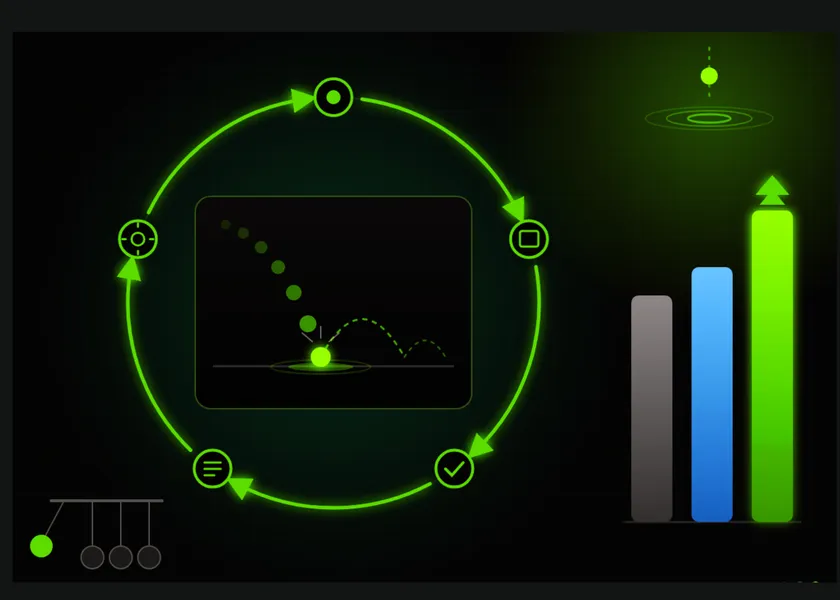
The DeepMind team tested the method on binders, proteins that attach to specific targets. In lab experiments, the watermarked versions were just as good at attaching as the unwatermarked versions. That supports a narrow but important claim: watermarking did not impair target attachment in these tested designs. It does not establish unchanged performance for every protein or biological function. The experiment focused on ProteinMPNN-designed binders.
That boundary matters for proteins with fewer options. Researchers quoted in Science questioned whether the technique would work as well for very small proteins, which have fewer amino acids to modify, or enzymes, where many existing constraints already shape the design. A method that preserves binder attachment may still prove difficult to use in those cases. Scientists raised questions about small proteins and complex enzymes.
Provenance could help, but a watermark is not a security barrier
Protein manufacturers already screen customer sequences for potential threats, but some AI tools can modify sequences to avoid being flagged. A watermark tied to a lab, model, or manufacturer could add a separate provenance signal: it might help identify where a sequence came from or support attribution. Those are proposed uses, not demonstrated improvements to screening or a settled system for scientific credit. The existing screening limitation and possible provenance uses.
The central weakness is practical. DeepMind acknowledges that the current watermark is relatively easy to scrub, which could defeat its value as a durable record. A detectable signal can help only when it survives the changes a sequence may undergo and when relevant researchers, manufacturers, or databases adopt a way to check it. The article says adoption across those groups remains uncertain. The researchers describe removal as a current limitation.
DeepMind is also exploring watermarking other AI-designed biomolecules, including DNA, but that work is not presented as a validated deployment. For now, SynthIDBio shows that provenance marking can coexist with target binding in one tested class of designs. Whether that signal can become a dependable record across the much wider landscape of protein design is still open.