Robotic Coffee Shops and AI Tokens: How Beijing Is Automating Hospitality
Published by AINave Editorial • Reviewed by Ramit
Beijing is becoming a testing ground for two distinct but related trends: robotic coffee shops that run without any human staff, and bars that give away AI model tokens with every drink. For builders watching how AI and automation enter physical retail, these venues offer early, if still gimmicky, signals about customer acceptance and operational trade-offs.
The Robotic Coffee Shop in Beijing
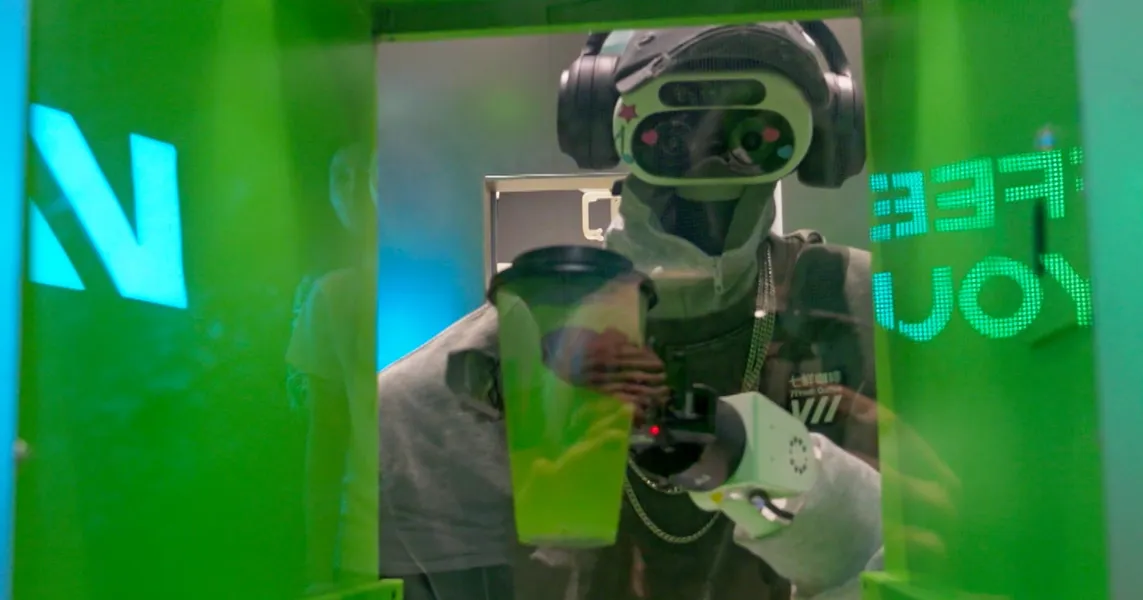
The most talked-about example is a coffee shop operated by 7Fresh in Beijing that has "no cash registers and no human baristas - only machines," according to NBC News. Customers order through a payment kiosk, and a robot arm prepares the drink. The store is fully automated: no cashier, no barista, no human touchpoint from order to pickup. The description of the shop as "the buzziest new place for coffee in the Chinese capital" suggests novelty is part of the draw.
Buy a Drink, Get AI Tokens
A few blocks away in Zhongguancun, Beijing's tech hub, the AGI Bar takes a different approach. Owner Song De gives customers unlimited DeepSeek coding tokens with every drink. A $1.50 glass of foam comes with access to a large language model running on two Nvidia boxes behind the counter. Patrons sit with laptops, using the free compute for coding and other tasks. Song told Reuters that the bar "loses money and gives away ten drinks for every one it sells." The bar still employs humans but has automated inventory, reservations, and membership systems using an AI agent.
What This Means for AI Builders
For product teams shipping AI tools or automation solutions, these Beijing venues illustrate two useful patterns. First, full automation of a simple service like coffee-making is technically feasible today, but the customer experience depends heavily on novelty and tolerance for machine-only interaction. Second, giving away AI inference as a promotional expense is a creative acquisition strategy, though the AGI Bar's economics show it is not sustainable at scale.
The model of bundling AI tokens with physical purchases could be interesting for startups looking to distribute compute access without building a consumer app. Instead of paying for ads, a brand pays for GPU time and gives it away as a loss leader. The bar's approach - offering unlimited tokens rather than metered API calls - also removes friction for users who might otherwise hesitate to try a model.
Caveats and Open Questions
These are pilot-stage examples, not proven business models. The robotic coffee shop's long-term viability depends on machine reliability, maintenance costs, and whether repeat customers return once the novelty fades. The AGI Bar is operating at a loss. Neither case provides data on customer satisfaction, retention, or unit economics.
Moreover, the term "AI token" here is promotional, not technical. It refers to free access to a model, not to the standard LLM token used in API billing. Builders should not confuse this marketing usage with the technical token concept defined by NVIDIA as "tiny units of data."
Labor displacement claims from a single venue are premature. While the 7Fresh Coffee example eliminates human frontline roles, it does not yet represent a large-scale shift across China's hospitality sector. The broader trend is real but uneven.
For builders, the takeaway is practical: both automation and token-based giveaways are being tested in the wild, and the results will inform how AI products enter physical spaces. Whether this scales beyond novelty depends on cost, reliability, and whether customers actually want a machine-only experience.
Sources
- In China, drinks come with AI tokens and coffee is served by robots
- Starbucks Faces Rivalry from Luckin Coffee and Cotti in China...
- What Are AI Tokens? The Language and Currency... | NVIDIA Blog
- High Quality A New Generation Of Ai Robot Baristalatte Art Coffee...
- Ipoh’s Nam Heong Restaurant Has Hired And Trained 6 Robot...
- AI bar in Beijing gives away DeepSeek tokens with drinks
- At Beijing AI-themed bar, DeepSeek tokens come with the pints
- Chinese businesses are giving away AI tokens with coffee, credit cards, and dumplings
- Robots Are Everywhere in China – And No One Thinks It’s Weird....
- At Beijing AI-themed bar, DeepSeek tokens come with the pints
- Chinese businesses are giving away AI tokens with coffee, credit cards, and dumplings
- Not a token effort: beer meets AI at bar in China’s capital
- Beer Meets AI in China: This Beijing Bar Rewards Customers With...
- Creating videos with AI is now so easy | MiniMax H3 Turbo... - YouTube