OpenAI's Think Big PAC Pours $310K Into FL-25 Race, Testing AI Influence on Congress
Published by AINave Editorial • Reviewed by Ramit
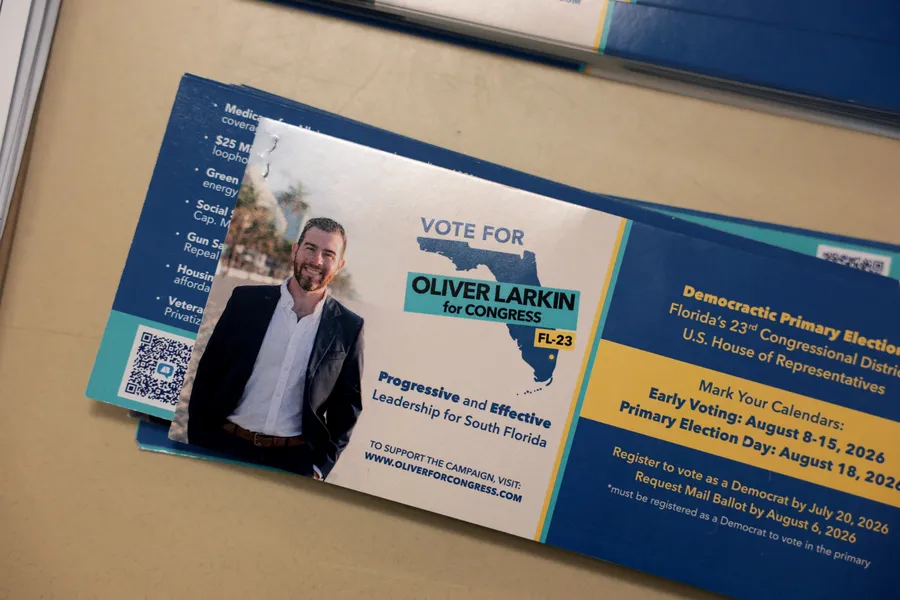
The AI industry is making its presence felt in Florida's 25th Congressional District, where the newly drawn swing seat is hosting a Democratic primary with implications for federal AI regulation. Think Big PAC, the Democratic-facing arm of the pro-AI-deregulation super PAC Leading the Future, spent $309,574 in independent expenditures supporting incumbent Rep. Jared Moskowitz against DSA-backed challenger Oliver Larkin. The expenditure, documented in FEC filings, is the first time the AI industry's political machine has entered a Democratic primary featuring a DSA-aligned candidate this cycle.
Why the AI Subcommittee Seat Matters
Moskowitz sits on the House Judiciary Subcommittee on Courts, Intellectual Property, Artificial Intelligence, and the Internet, the congressional body with jurisdiction over AI legislation, patent law, and emerging technology governance. Think Big's mission is to elect candidates who oppose strong federal AI regulation and favor a single national framework over state-by-state rules. Backing a member of the AI subcommittee directly aligns PAC spending with policy goals.
The Funding Network and Challenger
Leading the Future has raised $125 million from AI industry investors, including OpenAI president Greg Brockman and Andreessen Horowitz co-founders Marc Andreessen and Ben Horowitz. The network operates Think Big for Democrats and American Mission for Republicans. Larkin, a former union organizer, ran on a platform opposing corporate PAC money and has called AI a "corporate surveillance tool" in line with DSA positions. He accepted no corporate PAC money, emphasizing the contrast.
Practical Implications for AI Builders
For founders and product teams building AI systems, the FL-25 race offers a concrete example of how political spending targets the lawmakers who will write AI rules. If the industry's preferred candidates win seats on the AI subcommittee, they are more likely to support regulations that favor existing closed-source models and limit open-source alternatives, or push for federal preemption of state AI laws. Conversely, a wave of DSA-backed challengers could push for stricter AI governance and worker protections. The outcome in Florida may signal whether the DSA's grassroots model can succeed outside urban progressive strongholds, potentially reshaping the regulatory conversation in Congress.
Caveats and Open Questions
The evidence centers on a single district race and a single PAC filing. OpenAI has stated that Brockman's involvement is in a personal capacity, and the company does not officially endorse Think Big. The Campaign Legal Center filed a complaint alleging Think Big evaded reporting requirements by routing funds through shell companies, but the FEC has not acted. Readers should also note that Larkin's internal poll showed a much closer race than independent surveys, so the final outcome may not reflect a clear verdict on AI money's influence.
The Bottom Line
The FL-25 primary is a test of whether AI industry political spending can protect its allies on key oversight committees against populist challengers. The result will influence how AI builders think about the regulatory outlook: a Moskowitz win maintains the current pro-industry tilt; a Larkin win signals growing political headwinds for tech companies. Either way, the race underscores that AI policy is now a live issue in competitive congressional districts.
FAQs
Sources
- OpenAI's Political Machine Backs FL-25 Incumbent on AI Oversight Panel
- Inside the next phase of OpenAI’s political strategy - POLITICO
- Our views on AI policy and political advocacy | OpenAI
- Florida is now OpenAI's biggest problem in red America - POLITICO
- OpenAI employees back rival AI policy group, highlighting differing views within workforce
- OpenAI's political machine backs FL-25 incumbent on AI oversight panel
- OpenAI has upped its lobbying efforts nearly seven-fold | MIT Technology Review
- OpenAI’s Political Machine Scores Big in GOP Primaries as AI ...
- OpenAI Employees Are Funding a Political Fight Against Their ...
- Altman, OpenAI get bogged down in political spending fight
- Inside the AI industry’s political war room - POLITICO