OpenAI Ohio data center: 8 GW campus backed by Nvidia and SoftBank
Published by AINave Editorial • Reviewed by Ramit
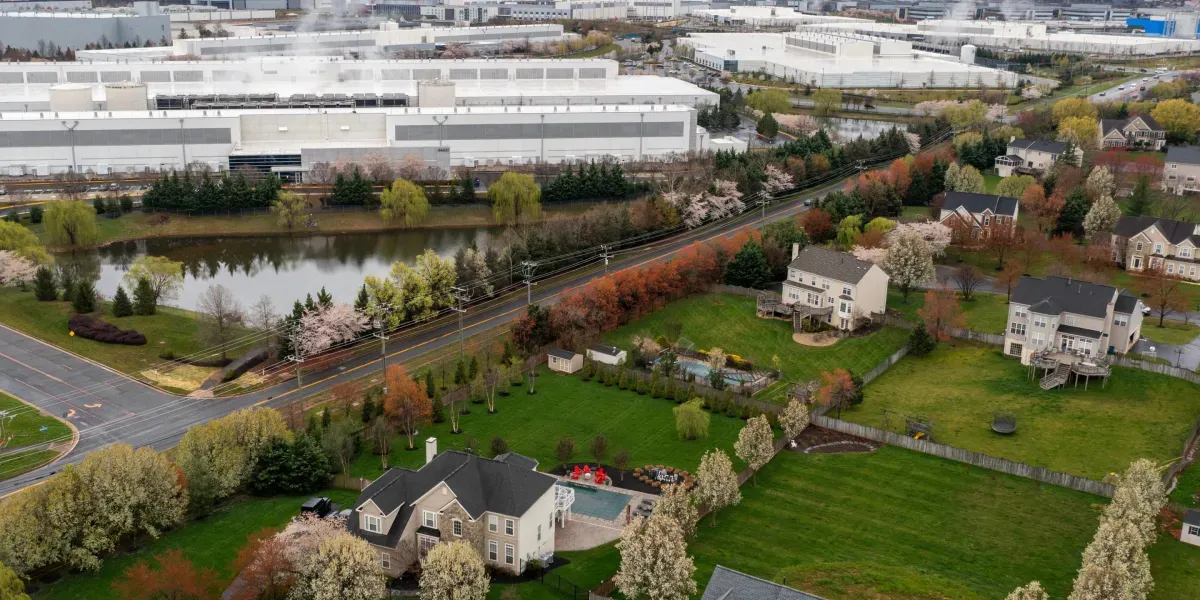
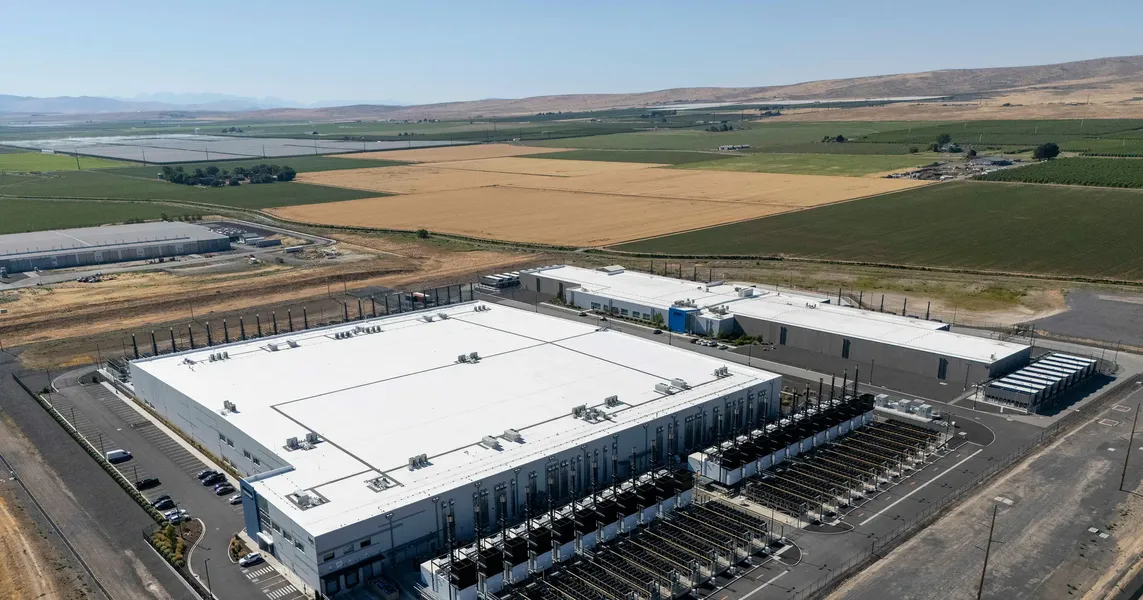
OpenAI has locked in a data center lease so large it redefines what "scale" means for AI infrastructure. The 8-gigawatt campus in Pike County, Ohio, backed by Nvidia financing and built by SoftBank's SB Energy, will come online in phases starting in 2028. For builders, this signals a shift toward industrial-scale compute campuses that could reshape model training economics and data center geography.
How the deal is structured
OpenAI signed a 10-year lease for the facility, which will be built and owned by SB Energy. Nvidia is providing up to $105 billion in financing to support credit and compute, securing its role as the exclusive AI compute provider at the PORTS-Pike Technology Campus. SB Energy will manage the site under a 20-year lease to OpenAI and plans to invest at least $4.2 billion in regional grid infrastructure.
The initial capacity target is 4.25 gigawatts, with an option to scale to 8 gigawatts total. Nvidia is also investing $1.5 billion directly in SB Energy, further intertwining the chipmaker with the project's long-term viability.
What 8 gigawatts of compute means
Eight IT-gigawatts is an order of magnitude beyond any single AI data center announced to date. For comparison, a large existing facility might run at 100-200 megawatts. The campus will be powered by 10 gigawatts of new energy generation, including up to 9.2 gigawatts of gas-fired power, with funding tied to a 2025 U.S.-Japan trade deal.
For builders, this scale directly affects model training timelines and inference costs. A campus this large can train multiple frontier models simultaneously or handle massive inference loads for products like ChatGPT and future agent systems. The compute is owned by OpenAI under a long-term lease, which gives the company predictable access to GPU clusters without the capital outlay of building its own chip supply.
Why this matters for AI builders
The OpenAI Ohio data center signals that the frontier of AI infrastructure is moving toward vertically integrated, hyperscale campuses owned by a small set of players. This has two practical implications:
First, compute concentration risk increases. If OpenAI's next-generation models are trained exclusively on this campus, any power or cooling disruption affects the entire pipeline. Second, access to Nvidia's latest hardware will be tiered. Nvidia's exclusive provider role means OpenAI gets first or exclusive access to new GPU generations, widening the gap between frontier labs and smaller shops.
For teams building on OpenAI's API, the long-term effect may be lower inference prices as training costs amortize over more capacity, but also reduced bargaining power as OpenAI controls its own hardware supply.
Caveats and open questions
Several details remain uncertain. The $105 billion figure comes from Nvidia's announcement, but early reports discussed a $250 billion backstop that was later reduced. The final terms of the Nvidia guarantee and exact capacity phasing are not public.
Regulatory approval for the gas-fired power buildout is not guaranteed, and the project sits on a former uranium-enrichment site, which may carry environmental remediation obligations. Nvidia CEO Jensen Huang has publicly rejected claims of "circular" AI financing, but the interlocking ownership between OpenAI, SB Energy, and SoftBank raises valid questions about risk concentration.
For builders, the key takeaway is that this project, if completed, will create the most concentrated pool of AI compute in the world by 2028. Whether that benefits the broader ecosystem or entrenches existing power structures depends on how OpenAI chooses to make that capacity available through its platform.
Sources
- OpenAI announces massive data center in Ohio with Nvidia guarantee
- Nvidia backs financing for OpenAI data center in Ohio
- Nvidia, OpenAI and SoftBank Finalize Deal For Massive Ohio Data Center Project
- Nvidia to Back Ohio Data Center With as Much as $105 Billion
- OpenAI Advances AI Data Center in Ohio | Keryc
- Nvidia to Invest Up to $105 Billion for OpenAI Data Center in Ohio
- OpenAI Eyes Massive 10-Gigawatt Ohio Data Center
- OpenAI announces massive Ohio data center with Nvidia guarantee
- ORCL Stock Jumps Overnight: Nvidia Reportedly Puts $250B On Table For OpenAI’s D...
- Nvidia reignites "circular" AI concerns
- Dow closes higher as oil tumbles, Nasdaq slips with Nvidia leading chip selloff
- Nvidia just made a move Wall Street wasn't ready for
- NVIDIA Guarantees SB Energy's PORTS-Pike... | NVIDIA Newsroom
- Nvidia in talks with OpenAI to guarantee $250 billion financing for data center
- Nvidia backing $105 billion in financing for OpenAI data center in Ohio
- Nvidia in talks with OpenAI to guarantee $250B for US' biggest data center project that also has Japan's 'promise'
- Nvidia's $750 billion AI deals spark AI bubble fears as OpenAI financing raises circular financing concerns