AI slop in legislative drafting: what it means for AI builders and policy teams
Published by AINave Editorial • Reviewed by Ramit
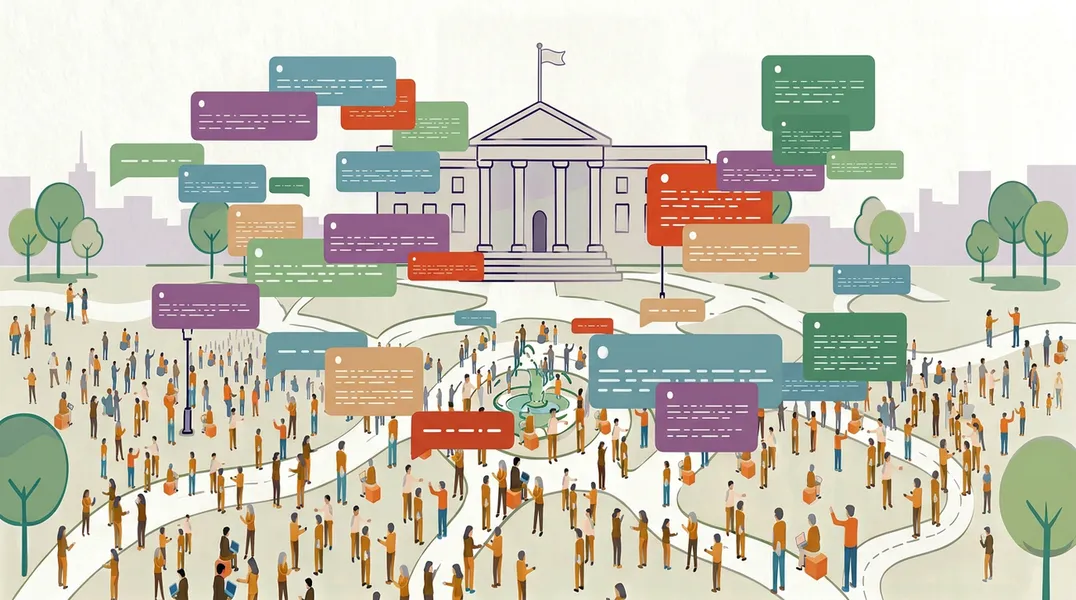
The House Office of Legislative Counsel (OLC) is drowning in AI-generated bill texts, and the drafters can barely keep up. In the first 60 days of the current Congress, the OLC received 5,623 bill requests, up 72% from two years earlier, while operating with only 61 attorneys and 19 support staff. Politico article.
Nearly all of that increase comes from staffers and outside groups using ChatGPT or Claude to generate legislative language. The problem: those drafts are riddled with errors in statute citations, legal definitions, and policy nuance. One adviser said OLC spends more time fixing AI-drafted legislation than drafting from scratch.
Why this matters for AI builders
This is not a story about Congress falling behind on technology. It is a case study in what happens when general-purpose LLMs are applied to high-stakes domains without domain-specific guardrails. The errors are predictable and structural. Commercial models confuse tax credits with tax deductions, mis-cite sections of the U.S. Code, and fail to recognize that excluding D.C. or tribal nations from a definition of "state" has real consequences. Ari Hershowitz, a lawyer and technologist who works with the office, called incorrect citations "a guaranteed way of introducing thousands of bugs into our legal system." Politico article.
For anyone building AI into regulated or legal workflows, the lesson is clear. Verification layers, citation checkers, and output constraints are not optional. The OLC cannot reject every AI-generated bill, so it must review them all, and the review cost often exceeds the drafting cost.
The one tool that actually works: Comparative Print Suite
While generative AI causes problems, a specialized tool is showing what careful domain design looks like. The Comparative Print Suite uses natural language processing to visualize how a proposed bill would amend the U.S. Code. It shows exactly which lines are struck and inserted, and it is designed to return an error message when it cannot be confident about a change. Hershowitz described it as "the first AI tool in the House" and noted it produces zero hallucinations because it refuses to guess. Politico article.
The tool was built through direct collaboration with OLC staff rather than dropped in as a generic solution. Senate adoption remains limited.
Caveats: what the OLC still cannot automate
Former OLC head Wade Ballou emphasized that AI cannot replace the "art of drafting." The choice between a tax credit and a tax deduction is a policy decision that requires human judgment. Even with better tools, the OLC warns that relying too heavily on AI-generated text could introduce unintended legal consequences and that "responsibility cannot be outsourced to a chatbot." Politico article.
The office is exploring AI for legal research and text processing, but generation will stay in human hands for the foreseeable future. Builders working in legal, regulatory, or compliance spaces should treat this as a cautionary benchmark: if the OLC cannot trust an LLM to draft a statute amendment, your compliance agent probably should not either.
FAQs
Sources
- AI slop is swamping a House office that drafts US laws
- Experts Warn That AI Slop Is Corrupting Kids' Brains
- From shrimp Jesus to erotic tractors: how viral AI slop... | The Guardian
- Study: Hackers Complain About AI Slop Swamping Forums Hackers...
- Disturbing AI Food Slop Is Strangling... | The Unexpected Cosmology
- AI slop is swamping a House office that drafts US laws
- AI Slop is Word of the Year and These 5 Flags Spot it... - YouTube
- your ai slop bores me
- What Is AI Slop and Why It’s Everywhere Online | eWeek
- We Turned AI Slop Into Real Keyboards (feat.) - YouTube
- There should have been an op-ed here but you filed AI slop
- AI slop is swamping a House office that drafts US laws