Meta and Nvidia plant a flag in open-weight AI as US builders seek domestic alternatives
Published by AINave Editorial • Reviewed by Ramit
Meta and Nvidia both released open-weight AI models this week, a coordinated push to give US developers a domestic alternative to popular Chinese open-source models from Moonshot AI, DeepSeek, and Alibaba's Qwen. The releases follow a July 24 open letter from major tech companies urging policymakers not to impose "premature restrictions" on open-weight AI, arguing that openness strengthens competition and US leadership.
What Meta and Nvidia actually released
Meta opened the weights for Muse Spark 1.2, part of its Muse line led by Scale AI CEO Alexandr Wang. The model is designed for on-device laptop workloads like powering digital agents. Nvidia followed a day later with Nemotron 3.5 Lightning, which the company calls "truly open source" because it publishes training datasets, techniques, and model weights alongside the model itself.
Both models are smaller than frontier proprietary systems from OpenAI and Anthropic. The bet is that developers and enterprises who cannot or will not use Chinese open-weight models for compliance or security reasons will adopt these US-built alternatives.
Why this matters for builders
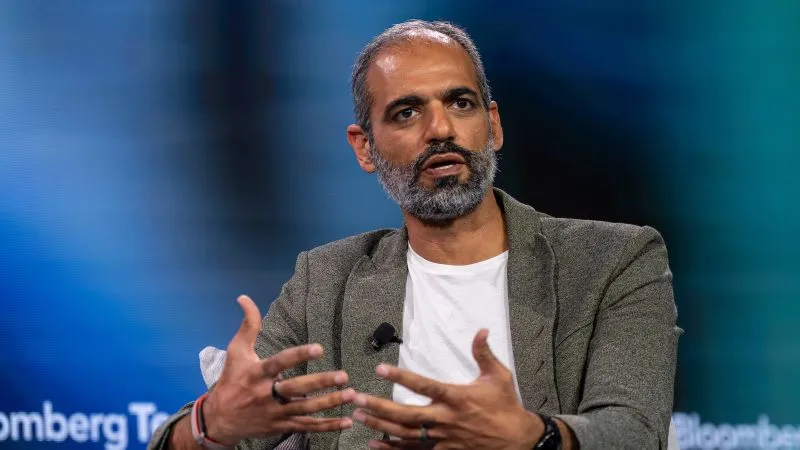
For teams building on-device AI agents or deploying models in regulated environments, the availability of US-origin open-weight models changes the sourcing calculus. Box CEO Aaron Levie noted that companies like large banks and government agencies "probably wouldn't be able to put a non-domestic open-source model" into production, making Muse Spark 1.2 a viable option where Chinese models are off-limits.
Forrester analyst Charlie Dai called Meta's shift back to open weights "strategically important" because it restores a major US vendor to the open ecosystem, improving transparency, customization, and data sovereignty for developers.
The trust problem Meta still faces
Meta has a mixed track record with open-weight AI. The release of Llama 4 in April 2025 left developers unimpressed, and the company later shifted to proprietary Muse models before reversing course. Umesh Sachdev, CEO of Uniphore, said Meta "burned bridges with third-party developers" and that it will take more than a manifesto to rebuild trust.
Nvidia faces less skepticism because it has consistently published training details with its Nemotron family. But both companies must prove they can cultivate a durable ecosystem beyond releasing competitive models.
What remains uncertain
The article does not provide benchmark comparisons between these models and Chinese alternatives like DeepSeek or Qwen. Claims about model capability come from vendor statements and analyst opinion, not independent evaluation. The open letter's framing of distillation as a standard technique also remains contested in policy circles, and future regulation could shift the landscape.
For now, the practical takeaway is clear: US builders who need open-weight models for on-device or compliance-sensitive use cases have two new domestic options. Whether they deliver on performance and ecosystem support will determine if this flag stays planted.
FAQs
Sources
- Meta and Nvidia plant 'very firm flag' in open-weight AI race led by Chinese Labs
- Meta and Nvidia plant 'very firm flag' in open-weight AI race led by.....
- Meta and Nvidia plant 'very firm flag' in open-weight AI race led by.....
- Meta and Nvidia plant flag in open-weight AI race led by Chinese...
- Meta and Nvidia Release Open-Weight AI Models to... | Gate News
- White House Exempts Open AI Models From New AI Safety Tes...
- Meta, Anthropic, Google, OpenAI to meet with Trump White House amid rogue AI agent fallout
- Microsoft, Meta, Nvidia, OpenAI, and Palantir have a message for Washington
- Nvidia CEO Jensen Huang's debut X post takes on Washington's Chinese AI fears – why ‘the world needs both’ open and closed AI
- As US weighs response to Chinese AI, industry urges against broad open-weight restrictions
- Big Tech companies defend open-weight AI models
- Meta and Nvidia plant 'very firm flag' in open-weight AI race led by.....
- Nvidia, Microsoft urge US to avoid broad restrictions on open AI models
- Microsoft, Meta, Nvidia, OpenAI, and Palantir have a message for Washington
- U.S. trade official says 'very few' Nvidia H200 AI chips have been shipped to China
- Meta Unveils an Open Version of Its Most Powerful A.I. Model