Helsing raises $1.8B at $18B valuation, cementing its position as Europe's defense AI leader
Published by AINave Editorial • Reviewed by Ramit
German defense technology startup Helsing SE has closed a $1.8 billion Series E funding round at an $18 billion valuation, backed by a group of 10 new and returning investors including JPMorgan Chase, General Catalyst, Lightspeed, and Iconiq. The round is the largest private raise in European defense-tech history and positions Helsing as a direct rival to U.S. defense startup Anduril.
What happened
Helsing SE announced the close of its $1.8 billion Series E on July 13, 2026. The capital was provided by a group of 10 investors, with JPMorgan Chase, General Catalyst, Lightspeed, and Iconiq among the participants. The company says it is now valued at $18 billion.
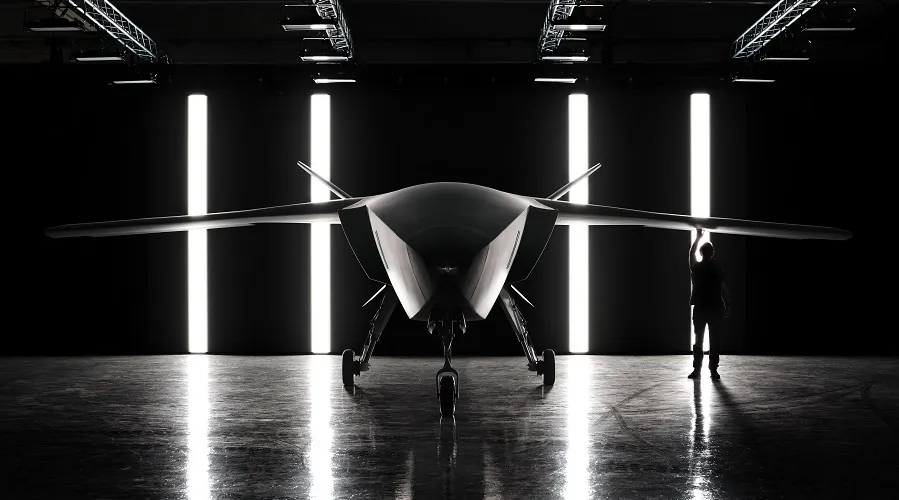
Helsing's flagship product is the CA-1 Europa, an autonomous jet aircraft that is 36 feet long with a maximum takeoff weight of four tons. The company describes it as having a relatively affordable design suited for high-volume manufacturing.
The CA-1 Europa's autonomous flight features are powered by a software platform called Centaur. Last year, Helsing tested Centaur by having it fly a fighter jet over the Baltic Sea. The company says Centaur successfully completed two test flights alongside a second, human-piloted plane that acted as a simulated opponent. Centaur uses reinforcement learning to adapt to new flight situations, and Helsing claims the software can be integrated into a plane in a few months.
Helsing also offers a second software platform called Altra, which assembles data points from drones and other systems into a real-time picture of a given area and automates tasks such as identifying objects of interest.
The company's product portfolio includes the HX-2 Fathom drone, which is significantly smaller than the CA-1 Europa and can cover up to 62 miles. According to the company, it is optimized to operate in the presence of electronic interference. Helsing also offers the SG-1 Fathom, a miniature autonomous submarine that can be deployed in hundreds to collect detailed data about underwater environments, processed by an onboard neural network the company calls a large acoustic model (LAM). Rounding out the portfolio is the Cirra, a hardware module that enables aircraft to study ground-based radars by analyzing the radio signals they emit.
Last year, Helsing acquired business jet maker Grob to advance its aircraft development efforts. The company has opened two factories in the UK and Germany to manufacture its systems and is currently building a third factory expected to significantly expand production capacity.
Why AI builders should care
For AI builders, founders, and product teams, Helsing's raise signals that defense AI is becoming a major category for applied reinforcement learning, real-time sensor fusion, and autonomous systems. The company's Centaur platform uses reinforcement learning to adapt to flight scenarios, a technique that has direct parallels in robotics, simulation, and autonomous vehicle development. The Altra data platform's real-time data aggregation and object identification capabilities are similar to challenges in industrial IoT, surveillance, and logistics automation.
The scale of the raise also indicates that government and defense contracts are becoming a viable revenue model for AI startups. At $18 billion, Helsing is being valued more like a mature enterprise software company than a typical startup, reflecting the scale of government defense contracts and the long-term recurring revenue potential once these systems are deployed.
Practical implications
For teams building AI products in regulated or safety-critical domains, Helsing's approach offers several lessons:
- Reinforcement learning in production: Centaur's use of RL for flight control demonstrates that RL can be deployed in high-stakes environments when combined with rigorous testing and simulation.
- Sensor fusion at scale: The Altra platform's ability to aggregate data from drones, submarines, and ground sensors in real time is a pattern that applies to any multi-sensor AI system.
- Hardware-software integration: Helsing's acquisition of Grob and its factory buildout show that AI companies in defense often need to own the hardware stack to deliver end-to-end solutions.
Caveats
Several important caveats apply. The capabilities described for Centaur, the CA-1 Europa, and other products are based on company claims in press coverage, not independent verification. The test flights over the Baltic Sea were conducted with a human-piloted aircraft as a simulated opponent, which is a controlled scenario that may not reflect real combat conditions. The $18 billion valuation is based on the company's own statement and investor participation, and private market valuations can change. The comparison to Anduril is based on press framing; no direct performance benchmarks between the two companies are available in the provided sources.
FAQs
Sources
- Defense technology startup Helsing raises $1.8B at $18B valuation - SiliconANGLE
- Defense startup Helsing raises $1.8 billion at $18 billion valuation - CNBC
- Helsing Closes $1.8B Round, Reaching $18B as Europe's Defense AI Giant ...
- European defencetech leader Helsing secures $1.8B Series E at $18B ...
- Europe's Helsing raises $1.8 billion, valuing defence group at $18 ...
- Defense-tech Helsing secures $1.8B from Goldman and JPMorgan at $18B valuation
- Europe's Anduril rival Helsing raises $1.8 billion at $18 billion valuation
- Helsing raises $1.8 billion in Europe's biggest defense-startup round
- Goldman Backs Drone Startup Helsing at $18 Billion Valuation
- Helsing raises $1.8B at $18B valuation for defense AI | Logicity
- Helsing Raises $1.8B at $18B Valuation | Tectonic Defense
- European AI defense startup Helsing raises $1.8 billion at $18 billion...
- Helsing raises $1.8B at $18B valuation in... | The Tech Buzz
- Defence AI Startup Helsing Raises $1.8B Series E
- Daniel Ek-backed defense tech Helsing to raise $1.2B at $18B valuation