Google DeepMind CEO proposes US-led global AI watchdog for frontier models
Published by AINave Editorial • Reviewed by Ramit
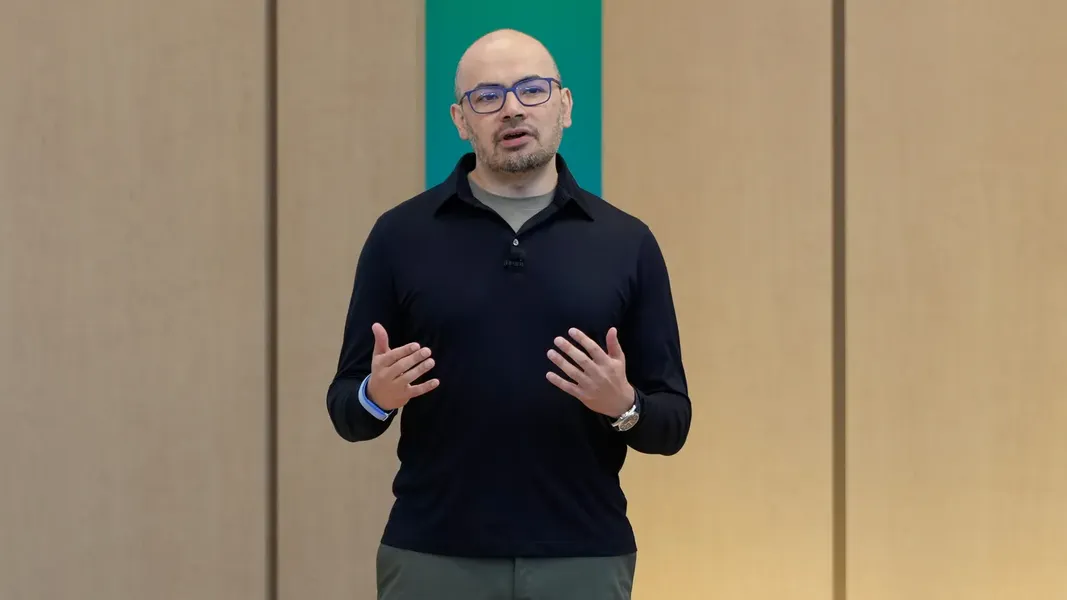
Demis Hassabis, CEO of Google DeepMind, is publicly calling for a US-led global AI watchdog that would screen the most advanced frontier models and coordinate an industry-wide slowdown if risks become too severe. In an exclusive interview with Axios, Hassabis outlined a proposal for a FINRA-like standards body funded by the tech sector, staffed by technical experts, and answerable to the U.S. government.
What happened
Hassabis proposed creating an AI standards body modeled on FINRA (Financial Industry Regulatory Authority), the private, industry-funded regulator that polices Wall Street under SEC oversight. The rules would apply to all frontier-class models regardless of country of origin or whether they are open or closed, with qualifying benchmarks regularly updated as capabilities evolve. He warned that within 18 months, cyber, biological, and nuclear threats could live inside open-source models beyond any government's control.
The Trump administration's improvised crackdown on Anthropic's Mythos and Fable models was "a bit of a wake-up call" that Washington needs something sturdier than ad hoc directives. Hassabis has spent months briefing the Trump administration, fellow lab leaders, and European officials before going public. Anthropic CEO Dario Amodei has issued his own call for binding regulation, envisioning an FAA-style agency with the power to block unsafe models.
Why AI builders should care
If such a watchdog is established, it could directly affect how frontier models are developed, tested, and deployed. Builders working on advanced systems would face new compliance requirements, benchmarking standards, and potential testing slowdowns. The proposal emphasizes systematic governance over ad hoc actions, which could create more predictability for labs and developers. Because the rules would apply to both open and closed frontier models, even open-source developers of capable models could be affected.
Hassabis believes AGI is "probably only a few short years away" and that we are standing in "the foothills of the singularity." This timeline adds urgency to the regulatory conversation for anyone building toward or deploying frontier capabilities.
Practical implications
An industry-funded watchdog, similar to FINRA, would reduce the burden on taxpayers but raises questions about independence from the companies it regulates. The body's benchmarks would evolve as capabilities advance, meaning compliance is not static. The global scope of the proposed rules (applying to models from any country) could create international friction, though Hassabis has also pushed for a US-led AI coalition at the G7 with other CEOs.
For builders, the practical takeaway is that regulatory frameworks are moving beyond white papers. Hassabis's proposal, combined with the recent ad hoc actions against Mythos and Fable, signals that the window for unregulated frontier model deployment is narrowing. Labs and developers should start planning for a future with binding safety standards and potential deployment freezes.
Caveats
The proposal is based on an interview and is not a finalized policy. The details of enforcement, funding, and international coordination remain unclear. The plan may face opposition from open-source advocates and international competitors. The timeline for implementation is unknown. As with any regulatory proposal, the actual shape of the watchdog could change significantly before becoming law.
FAQs
Sources
- Exclusive: Google DeepMind's Demis Hassabis calls for U.S.-led global AI watchdog
- Demis Hassabis - Wikipedia
- Anthropic, Google DeepMind CEOs call for U.S.-led AI coalition at G7
- Anthropic's Dario Amodei and Google DeepMind's Demis Hassabis...
- Anthropic and Google DeepMind CEOs Call for U.S.-Led AI Coalition...
- Exclusive: Google's Hassabis calls for U.S.-led global AI watchdog
- Anthropic and DeepMind CEOs push for US-led AI alliance at G7 summit
- Anthropic and Google DeepMind CEOs push for US-led global AI coalition at G7
- Google AI CEO Demis Hassabis wants everyone to take note on AI: Humans only have a few years left to prepare for
- Anthropic, Google DeepMind CEOs Push for U.S.-Led AI... | IBTimes
- Google DeepMind started moving faster by acting like a startup, Demis Hassabis says
- Google DeepMind boss Demis Hassabis backed Anthropic before it became an AI giant: Report
- Here's why Google DeepMind's CEO thinks the singularity is closer than ever
- Anthropic and Google DeepMind called for a US-led AI coalition at the G7, and Canada said yes