EU Parliament Builds In-House AI to Govern AI-Assisted Drafting for Lawmakers
Published by AINave Editorial • Reviewed by Ramit
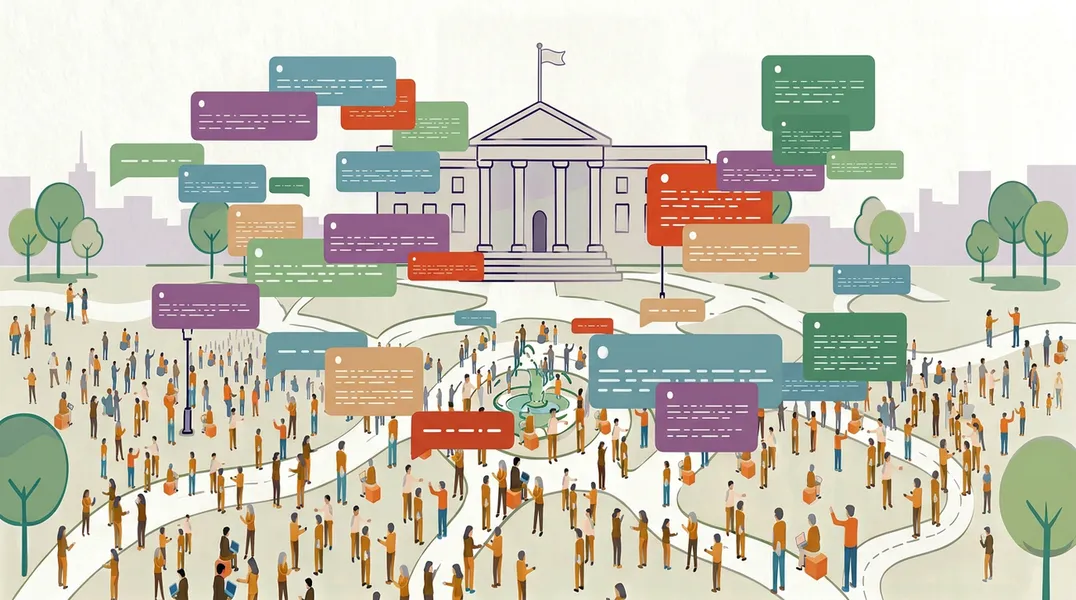
The European Parliament is piloting EPGenAI Hub, an official AI platform that gives MEPs and their staff sanctioned access to multiple large language models. The goal is to bring AI-assisted drafting under institutional control, replacing ad-hoc use of public chatbots with a governed environment that balances productivity, data sovereignty, and transparency. For AI builders, this case study signals a growing demand for secure, audit-friendly internal AI tooling in government and regulated sectors.
What happened
About 2,100 Parliament staff, roughly 20% of the workforce, already use AI daily. Committee chairs recently raised concerns that MEPs and assistants were leaning on AI to draft amendments, generating a surge in amendments needing translation, recognizable drafting styles, and hallucinated references to laws that do not exist. The Parliament's fix is EPGenAI Hub, which provides a single gateway for AI tools and aims to stop officials from pasting draft legislation into uncontrolled public apps. The platform is in testing and could begin rollout as early as September.
Why AI builders should care
Parliament's move illustrates a structural shift: organizations with sensitive data and compliance obligations are moving away from BYO-chatbot culture toward in-house, governance-aware AI tooling. For startups and AI teams building enterprise products, this signals demand for self-hosted model gateways, audit logging, data isolation, and role-based access controls that work within existing security perimeters. The playbook scales beyond governments to law firms, regulated financial services, and healthcare institutions.
Practical implications
EPGenAI Hub lets users choose models based on task sensitivity. Models running inside Parliament's systems include Meta's Llama, OpenAI's GPT-OSS, and Mistral Small. For tasks that require a more powerful model, external services such as ChatGPT and Claude Sonnet are available. This tiered approach lets builders deploy smaller, private models for routine drafting and reserve external APIs for complex work, while keeping sensitive data out of public chat logs.
The platform is also expected to evolve. The Parliament's press service said the model lineup is under review, and EU sovereign and open-source models are becoming available through cloud providers contracted by the European Commission. That pattern mirrors what many AI builders already do: a mix of self-hosted and API-based models, governed by a unified policy layer.
Caveats
Rules for AI use inside the Parliament are still catching up. MEPs face no obligation to disclose whether an amendment, question, or speech was written with AI. Committee chairs asked the secretary-general to draw up guidelines, but the job may fall to the constitutional affairs committee, which would require a formal rules rewrite. Staff must already label AI-assisted work and avoid placing sensitive information into public AI tools, but these rules date from April 2024 and are due for an update.
There is also an awkward tension with the EU's digital sovereignty goals. The initial model lineup leans heavily on American AI providers, even as the Parliament has been swapping Google for the French search engine Qwant and disabling built-in AI on tablets over data-protection fears. The mix is expected to shift as EU cloud contracts come online, but for now the institution writing Europe's AI rulebook is still figuring out how to use the technology itself.
FAQs
Sources
- The European Parliament is building its own AI to stop MEPs pasting draft laws into ChatGPT
- European Parliament
- ChatGPT
- European Parliament
- ChatGPT No Restrictions (Ultimate Guide for 2026) | God of Prompt
- Chatgpt Ai Holi Bike & Cars Photo Editing Prompt Holi Ai... - VM Editor
- ‘Parliament has not been immune to AI slop’: The EU is about to roll out its own AI platform
- EU Parliament Builds Its Own AI Platform for Lawmakers
- ‘Parliament has not been immune to AI slop’: The EU is about to roll out its own AI platform — including modes from OpenAI, Meta, Anthropic and Mistral
- ‘Parliament has not been immune to AI slop’: The EU is about to roll out its own AI platform
- Not so fast, ChatGPT: the European Parliament studies... | Rival Times
- Home | MEPs | European Parliament
- Europe, US urged to investigate the type of AI that powers systems...