Data Centers and AI Buildout: Can Electricity Prices Stay Affordable?
Published by AINave Editorial • Reviewed by Ramit
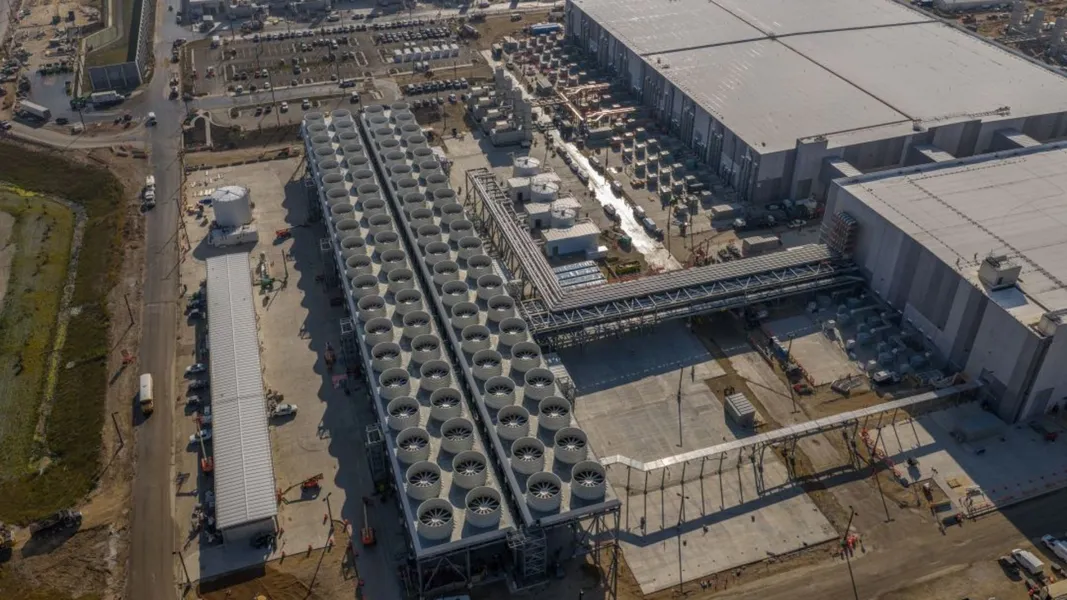
A new working paper from the Electric Power Research Institute (EPRI) challenges the common assumption that data centers drive up electricity costs. Using FERC and EIA data from 2015 to 2024, researchers found that for every doubling of data center capacity, average retail electricity prices decreased by about 3.5% (and roughly 6% at the state level). This happens because electricity pricing is based on cost recovery: fixed costs are spread across more kilowatt-hours, and increased demand brings more efficient generators online. However, the trend is not guaranteed to continue. PJM, the largest U.S. power grid operator, projects a $6.3 billion increase in consumer electricity costs over the next three years tied to data center power demands. Virginia, the state with the most data centers, has already seen residential prices rise over 13% in the last year. With data center construction expected to reach $7 trillion by 2030, the future of electricity pricing hinges on whether AI deployment materializes at scale and whether grid capacity expands fast enough.
What happened
EPRI researchers analyzed data from the Federal Energy Regulatory Commission (FERC) and the U.S. Energy Information Administration (EIA) covering 2015 through 2024. They found a causal relationship: each doubling of data center capacity correlated with a 3.5% decrease in average retail electricity prices. At the statewide level, the decrease was about 6%. The mechanism is straightforward: electricity prices are set by cost recovery, not production cost. When data centers add load, fixed infrastructure costs are divided among more kilowatt-hours, and the additional demand brings more efficient generators online, further lowering per-unit costs.
But recent signals point to a reversal. PJM, which operates the largest power grid in the country, estimated that $6.3 billion of the projected rise in consumer electricity costs over the next three years is attributable to data center power demands. In Virginia, residential electricity prices have increased by more than 13% in the past year, according to EIA data. The planned data center buildout is enormous: spending could reach $7 trillion by 2030.
Why AI builders should care
If AI adoption scales as expected, the efficiency gains and load growth from data centers could continue to dampen electricity bills. But if demand falls short of projections, the fixed costs of new infrastructure will be spread over fewer users, potentially raising prices for everyone. As EPRI researcher Asa Watten told Fortune, "If the grid builds capacity, expecting a lot of demand from data centers, and that doesn't show up, that could be a clear story of how data centers could increase prices in the future." For AI builders, this means the cost of running inference and training workloads is tied to broader energy economics that are far from settled.
Practical implications
Tech builders should factor potential electricity pricing volatility into capital planning for AI infrastructure and cloud workloads. Key considerations include:
- Energy efficiency: Prioritize models and hardware that deliver more compute per watt. As AI becomes cheaper to run due to power efficiency gains, the need for massive capacity may shrink, reducing the risk of stranded assets.
- Location strategy: Choose data center regions with stable or expanding grid capacity. Regions like Virginia are already seeing price spikes, while others may benefit from new generation and transmission investments.
- Scalable baseload vs. burst capacity: Design workloads to take advantage of off-peak pricing or regions with surplus renewable generation. Burst capacity that can shift geographically may offer cost advantages.
Caveats
The EPRI findings cover data up to 2024 and reflect a period when data center growth was smaller relative to total grid load. The favorable pricing effect may not persist if AI demand underperforms or if grid capacity expansion slows. The $7 trillion buildout is a projection, not a guaranteed outcome. As Watten noted, if the denominator of users shrinks, fixed costs get spread among fewer people, which could increase prices. The future trajectory depends on actual AI deployment at scale, continued grid expansion, and broader electrification trends that could further spread fixed costs.
Sources
- Data centers were actually making electricity costs cheaper, but the $7 trillion buildout with no guaranteed AI demand is threatening the trend
- The $7 Trillion AI Boom Is Turning Into The Energy Trade of the...
- AI's $7.6 Trillion Buildout Has an Environmental Bill... | Youmake Blog
- Can our Power Grid Survive the $7.6T AI Revolution?
- Exposing The Dark Side of America's AI Data Center... - YouTube