AI in the workplace: how automation and agents are reshaping work for builders and teams
Published by AINave Editorial • Reviewed by Ramit
AI tools from large language models are increasingly automating or augmenting work, and executives are investing heavily with the expectation of cutting headcount. The emergence of AI agents executing specific tasks signals a shift toward virtual, autonomous workers. For AI builders, founders, and product teams, the practical question is not whether AI will replace jobs, but how to design systems that balance productivity gains with cost control and workforce realities.
What happened
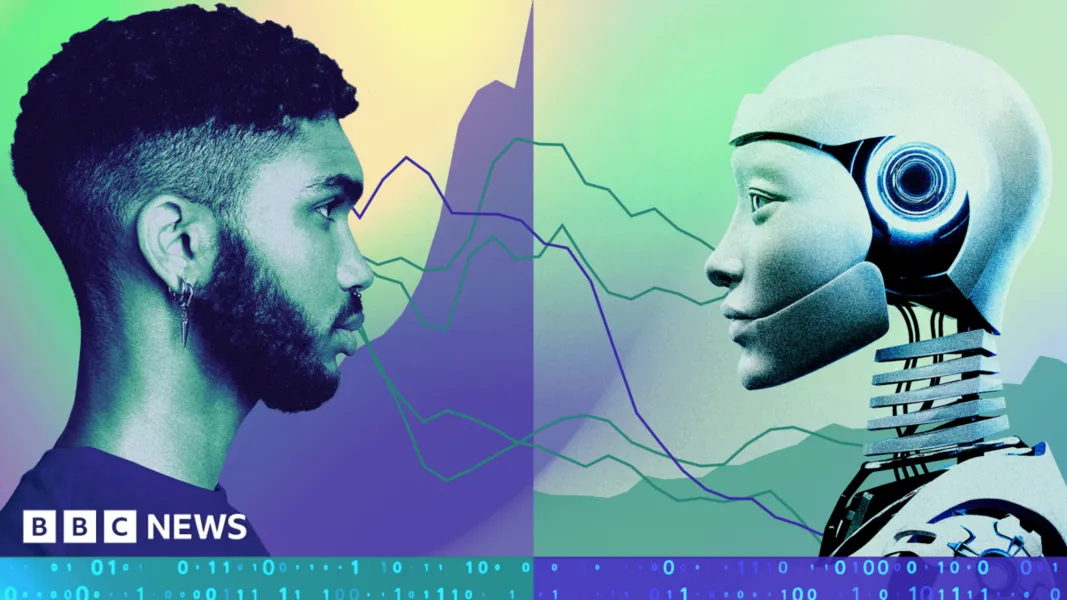
Companies are directing large sums into AI tools, partly because they could save money on headcount. The phrase "flat is the new up" describes how investors now ask whether jobs should be done by new recruits or by armies of AI agents, virtual workers tasked with specific roles, some of them relatively skilled BBC.
Stanford University's analysis of wage and jobs data finds a hit to employment for 22 to 25-year-olds of 2.7% since ChatGPT became widespread, rising to 12.8% in the most AI-exposed sectors such as finance, software, and creative industries BBC. Not all economists agree, arguing that other factors such as interest rate rises can explain this, but the pattern is notable.
Online job postings have also shifted. The OECD's recent analysis shows a difference in job postings between highly exposed sectors (telemarketing and legal services) and less exposed sectors (construction, cleaning, and food prep). The UK was hit notably on this measure, and its service sector concentration leaves it exposed to potential AI job losses BBC.
AI usage is measured in tokens, small chunks of text that AI systems use to understand and generate language. On average, one token is roughly equivalent to three-quarters of an English word. There have been astonishing increases in AI use in 2026, and the increase in token use has vastly outweighed the declining per-token cost BBC.
The world's top companies deployed "token leaderboards" to get employees to create as much productivity gain as possible from advanced models. Trillions, and sometimes quadrillions of tokens have been used primarily for agentic use, which is for agents that can perform tasks automatically. The problem: incredible bills were racked up, so many companies have begun to ration the use of these models BBC.
Why AI builders should care
For teams building AI products or internal automation workflows, the data signals a clear pattern: the cost of running AI agents at scale can quickly exceed the cost of human labor for certain tasks. The virtual workers might be more expensive than the human ones, depending on the task BBC.
This matters for product design. If you are building an AI agent for customer support, code review, or financial analysis, you need to model not just accuracy but total cost per task. The era of unlimited token budgets is over. Companies are already rationing model usage and pivoting to much cheaper forms of AI, including models derived from Chinese models that are provided freely on the market BBC.
Practical implications
Builders should design with cost-awareness and governance from day one. Here are the key takeaways:
- Monitor token consumption per task. If your agent uses 100,000 tokens to complete a task a human can do in 10 minutes, the economics may not work. Track token usage per workflow and set hard limits.
- Consider hybrid augmentation, not full automation. The data shows that some tasks are better augmented than automated. For complex, judgment-heavy work, a human-in-the-loop pattern may be cheaper and more reliable than a fully autonomous agent.
- Plan for model switching. As companies pivot to cheaper models, your architecture should support swapping the underlying LLM without rewriting the agent logic. Use abstraction layers for model calls.
- Watch the labor market signal. The Stanford wage impact data and OECD job posting shifts are early indicators. If you are building for sectors like finance, software, or creative industries, expect your users to face pressure to show ROI from AI tools quickly.
Caveats
Several important caveats apply to this data. The Stanford wage impact analysis is not universally accepted; some economists argue that interest rate rises and other macroeconomic factors could explain the employment shifts for young workers BBC. The OECD job posting data also includes many confounding factors, from taxes to broader economic conditions.
The token usage surge and subsequent rationing is a real-time signal, but it reflects the behavior of the world's largest companies. Smaller teams and startups may face different cost dynamics. The pivot to cheaper Chinese-model derivatives is a trend to watch, but the quality and reliability of those models for specific enterprise tasks is not yet fully documented in the source material.
Finally, the article notes that Nobel prize-winning economists recently warned the world must act now to ensure that AI leads to rising living standards and not large-scale job displacement BBC. This is a policy signal, not a product signal, but builders should be aware that regulatory attention on AI labor displacement is likely to increase.
FAQs
Sources
- Will AI help you do your job or replace you?
- Will AI help you do your job or replace you?
- Will AI Help You Work — or Replace You?
- Will AI Help You Get More Leads - Or Is It Just a Fad?
- If AI Can Do Your Job With a Better Prompt, What Were You Really...
- Ai Isnt Going to Replace You Somone Using Ai Is Going to | TikTok
- AI May Replace 80 Percent of Skills. This Last 20 Percent Will Make You Irreplaceable
- Can AI do your job? These Miami workers are the most exposed
- What Jobs Will AI Replace?
- I quit my tech job because I worried that AI was going to eventually replace me
- I built my replacement
- Will AI help or hurt workers? At SXSW, the answer depends on who...
- AI Won’t Take Your Job. It Will Take Your Excuse. | Medium
- Will AI replace your job? Which occupations are most at risk
- Is AI A Threat To Healthcare Jobs? Which Jobs Are And Aren’t At Risk
- Is AI coming for your job? Take this quiz to find out.