US-China AI Competition: Why Open Models Could Win Users
Published by AINave Editorial • Reviewed by Ramit
The US-China AI competition is becoming a contest over who can make AI practical to use, not just who builds the most capable model. China is promoting models that developers can download, customize and run, while Washington is building an alliance intended to reduce reliance on China for AI supply chains. For teams choosing infrastructure, the difference is tangible: lower cost and more control can matter more than a modest capability lead.
Two coalitions, two pitches
In July, Chinese leader Xi Jinping launched the World Artificial Intelligence Cooperation Organization, a rival to the US-backed Pax Silica alliance. CNN reports that more than two dozen countries and the European Union signed up to Pax Silica, while China recruited 29 countries, including Russia, Indonesia and Pakistan, to its alternative vision of open models. Those membership figures show competing diplomatic efforts, not which side has the stronger technology or broader adoption. The coalition details and reported membership
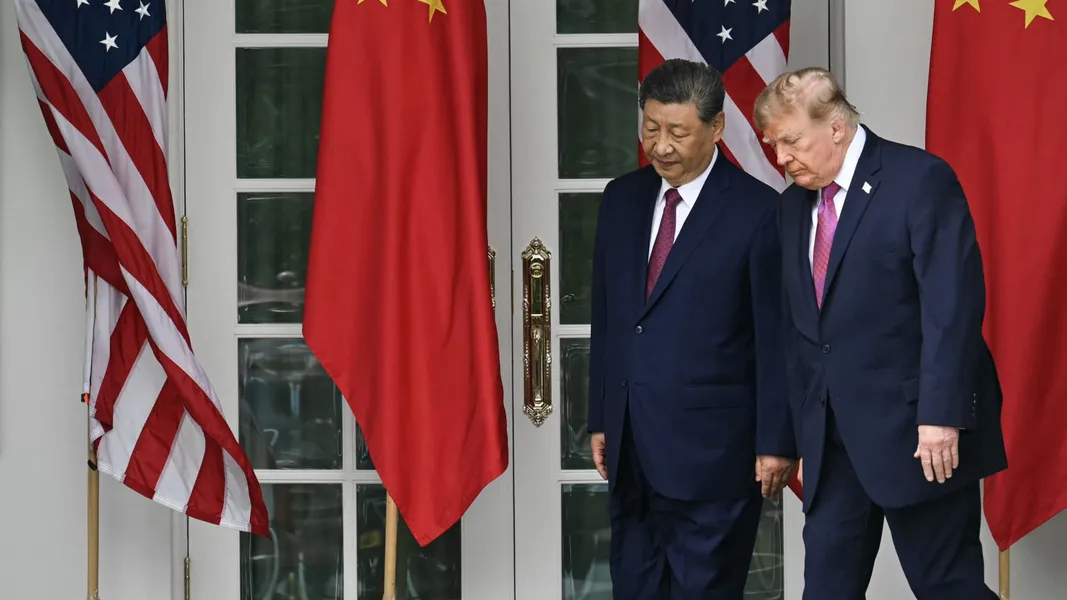
At the Trump-Xi summit, the leaders agreed to continue AI dialogue, but the discussions produced little substantive progress on the issue. The contrast is notable: governments are trying to organize around competing ecosystems even as the two powers have yet to establish much practical cooperation on AI. The summit’s limited AI outcome
Cost and control can beat the frontier
Open models let users download, customize and run systems without relying on a paid service from a US AI company. CNN cites an OpenRouter leaderboard showing Chinese models’ share of global usage rising from less than 15% to over 54% in a year, led by DeepSeek. That is a reported usage measure, not a benchmark of model quality. CNN also reports that US companies including Airbnb, DoorDash and Shopify have used Chinese models, citing lower costs and customization flexibility. The usage figures and company examples
The practical choice depends on the task. Some companies may need frontier systems, while others may find a less expensive model capable enough for their work. The advantage is not that every Chinese model matches the best US systems; it is that teams can trade some capability for lower cost or greater control when their use case permits it. CNN’s description of that trade-off
Openness is also a condition
The open-model push developed partly in response to US restrictions on advanced chips and China’s smaller capital markets, according to CNN. But openness is not guaranteed to persist. Experts quoted by CNN say Beijing could limit access to its most capable models for national-security reasons, potentially through licensing rules that restrict where a model can be used. They describe that as a possibility, not an announced blanket closure; China could maintain a mix of open and closed systems. The constraints and potential licensing approach
That uncertainty cuts to the heart of China’s pitch. Developers seeking to adapt models for local or enterprise needs benefit when they can access and fine-tune them. If access narrows as models become more capable, the low-cost alternative may remain available in some form while offering less freedom for the use cases that made it attractive. The link between continued access and the appeal of open models
The contest is also not a clean choice between national camps. CNN reports that companies often prefer to diversify suppliers, while Washington has floated restrictions on open Chinese models and US technology firms have warned against sweeping limits. For product teams, the meaningful question is whether a model will remain affordable, adaptable and available for the intended deployment, not which country can claim a single, universal AI victory. The supplier-diversification preference and debate over restrictions