CoreWeave’s Full-Stack AI Cloud Bet Goes Beyond GPUs
Published by AINave Editorial • Reviewed by Ramit
CoreWeave’s full-stack AI cloud strategy is about more than adding GPUs: the company says it has completed the industry’s first bring-up and validation of Nvidia Vera Rubin NVL72 on CoreWeave Cloud, while positioning its services around inference and agentic workloads. The practical case for that approach is that production AI depends on data movement, orchestration and operations as well as compute. But the article’s striking cost comparison lacks measurement details, and the reporting does not establish an advantage over hyperscalers.
Production AI needs more than accelerator access
CoreWeave is pitching an integrated stack as enterprise attention shifts from training toward inference. That means supporting workloads through deployment and operation, with capabilities such as data movement, infrastructure orchestration, observability, security, governance and cost management. These are elements of the company’s positioning, not independently demonstrated customer outcomes.
The problem it wants to address is real in the figures cited: TheCUBE Research estimates that about 30% of organizations face an operational-readiness gap between experimentation and production, and nearly 88% of AI pilots fail to reach production. Those figures are attributed research findings, not proof that CoreWeave’s services close the gap. TheCUBE is also a paid media partner for the Fully Connected event covered in the article, a relevant context for its analysis.
Vera Rubin makes the infrastructure argument concrete
CoreWeave’s validation of Vera Rubin NVL72 is a specific milestone. The article describes the platform as bringing together CPUs, GPUs, storage, networking, software and data capabilities for agentic workflows. That matters because agents can involve more than a single model response: Nvidia’s Dion Harris describes systems that plan, use skills and subagents, while CoreWeave CTO Peter Salanki outlines a possible inference pipeline in which smaller models handle initial queries and larger ones take on harder tasks. Salanki presents that pipeline as a vision, not a deployed service.
TheCUBE Research calls cost compression a key commercial implication, reporting that Vera Rubin offers one-tenth the cost per million tokens compared with Nvidia’s previous releases. The article gives no workload scope or measurement method, so the figure is not enough to predict a customer’s total bill or establish a like-for-like advantage over other clouds.
High-density racks bring facilities into the story
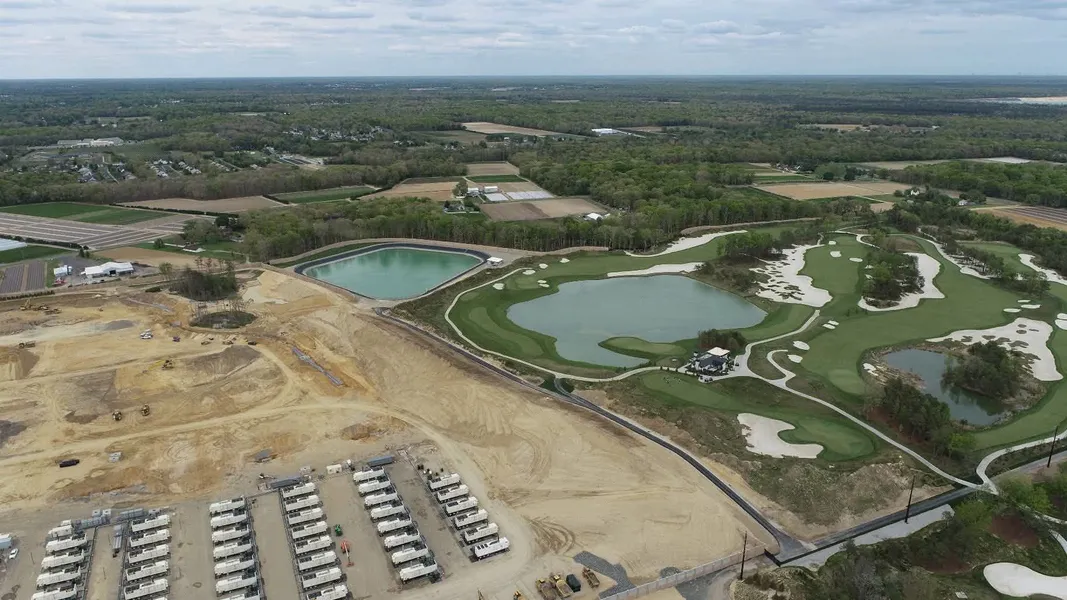
The infrastructure argument extends beyond software. Vera Rubin racks can reach up to 250 kilowatts per rack, making purpose-built facilities and liquid cooling increasingly important. At that density, the cloud offering depends partly on the physical environment that can support the hardware, not just the orchestration layer customers see.
CoreWeave also describes an AI-agent deployment service involving agents that can improve autonomously using real-world data, alongside a Physical AI Field Engineering service. Those additions broaden the pitch beyond rented compute, but the available reporting does not detail their capabilities or customer results. CoreWeave’s bet is that bringing infrastructure and operational services together will matter as AI moves into production; whether that translates into better outcomes than general-purpose cloud remains an open comparison.