Chinese Suppliers Target the U.S. AI Data Center Boom
Published by AINave Editorial • Reviewed by Ramit
Chinese companies see the U.S. AI data center boom as a market opportunity, even as Washington and Beijing compete over AI infrastructure. The appeal is practical: U.S. projects face equipment constraints, and some Chinese suppliers say factory-built facilities can move construction faster. But the commercial case sits within a politically sensitive supply chain.
A large U.S. market, and a manufacturing opening
The U.S. had 5,427 AI data centers in 2025, compared with 449 in China, according to figures CNBC attributes to Stanford’s Institute for Human-Centered Artificial Intelligence. CNBC also estimates Alphabet, Microsoft, Meta and Amazon will spend about $765 billion combined on AI infrastructure in 2026. Separately, the Chinese government has outlined a $295 billion data center investment plan over five years, a different measure and time span, not a like-for-like spending comparison.
Brightray, a Singapore-registered AI infrastructure company, sees stronger demand in the U.S. Its sole manufacturer is Chinese firm PrefabDC, while Brightray manages construction. The gap between the countries’ data center counts helps explain why Chinese manufacturers might seek U.S. customers, even as China continues to plan domestic investment.
Prefabrication shifts work off the construction site
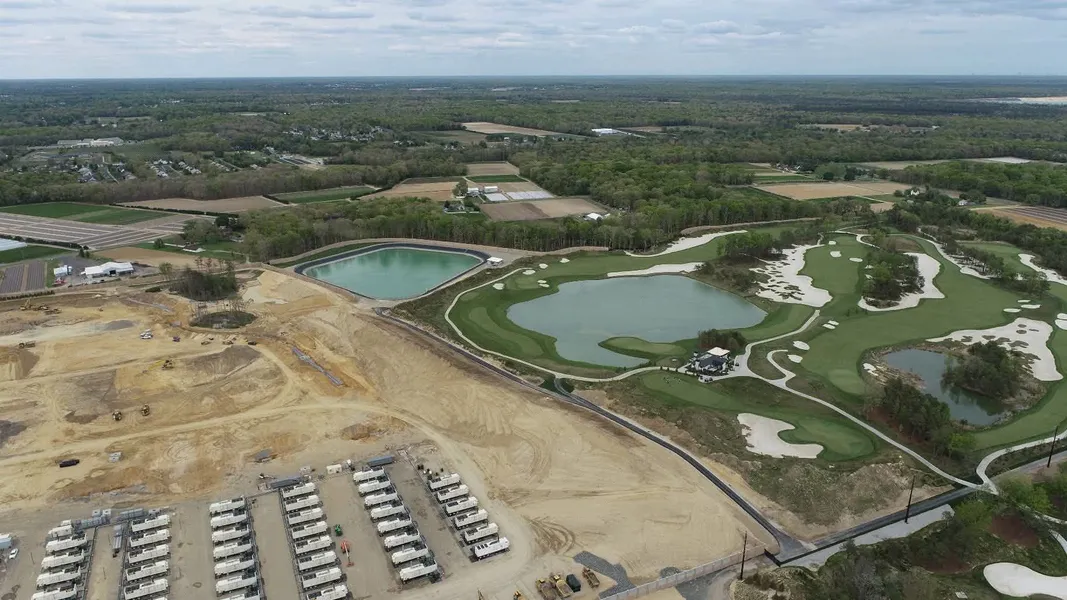
Brightray says its approach includes modules with the building’s exterior, whereas U.S. prefabrication more often covers modules installed inside a building. Making much of a facility in a controlled factory environment can shield work from weather and unexpected site events, then bring those modules to the project location.
Industry analysts told CNBC that U.S. data centers take about two to three years to build on average. Brightray claims its PrefabDC facilities can cut construction time by at least half. That is a company estimate, not a verified result across projects; the available reporting does not establish how often the claimed schedule is achieved.
Faster access comes with supply-chain exposure
The opportunity is not limited to complete facilities. U.S. builders face shortages and long lead times for electrical equipment, and Wood Mackenzie analyst Benjamin Boucher said China can offer some needed components on more favorable timelines. Chinese companies already supply transformers, batteries and fiber-optic cables, among other products, to the U.S. data center supply chain.
That availability can ease a near-term bottleneck, but it also deepens reliance on a rival country for infrastructure components. U.S. policymakers and security officials have raised cybersecurity concerns and the possibility that dependence could create strategic leverage. CNBC reports no specific security incident involving the suppliers discussed, and concerns are not evidence of compromised equipment.
The policy environment adds another constraint: the Trump administration is considering restrictions on Chinese open-weight AI models and new types of Chinese data center components. They are proposals under consideration, not enacted bans. For builders, the schedule advantage of a factory-based approach is therefore only part of the calculation; the durability of access to its suppliers may matter just as much.