Apple vs OpenAI trade secrets suit reshapes hardware ambitions in AI race
Published by AINave Editorial • Reviewed by Ramit
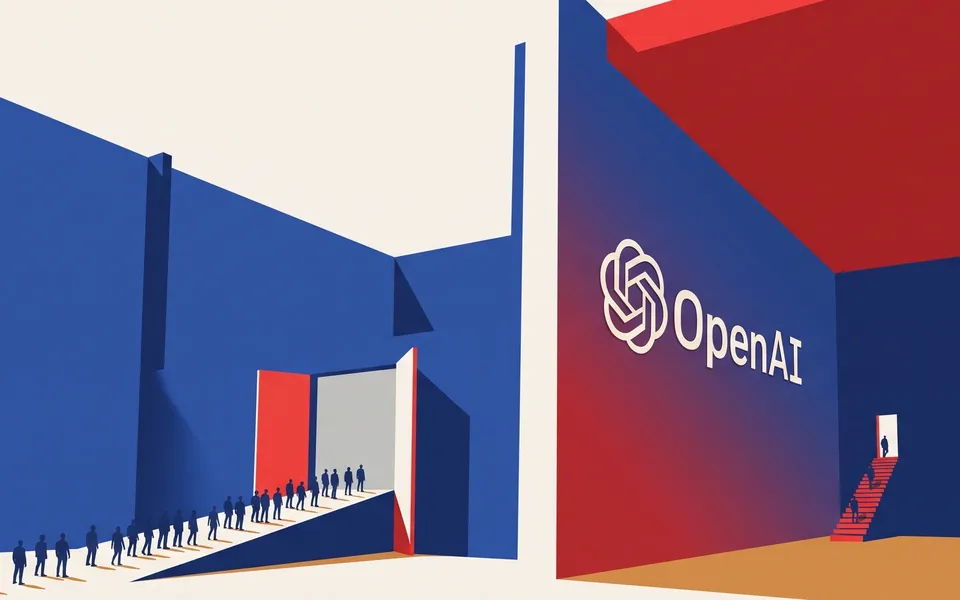
Apple filed a lawsuit against OpenAI on Friday, alleging trade secret theft and breach of contract tied to the AI company's push to build its own consumer hardware. The case names OpenAI's chief hardware officer Tang Tan, former Apple engineer Chang Liu, and hardware startup io Products as defendants. Apple claims OpenAI orchestrated a coordinated effort to extract confidential information about unreleased Apple products through recruiting, interviews, and direct vendor engagement.
What happened
The lawsuit, filed in the U.S. District Court for the Northern District of California, accuses OpenAI of using Apple's trade secrets to develop its own hardware line. According to the complaint, Tang Tan directed Apple job candidates to bring actual Apple hardware components to interviews for "show and tell" sessions. Chang Liu, who joined OpenAI in January 2026, allegedly failed to return an Apple-issued laptop and used an authentication bug to download dozens of confidential hardware files, including engineering presentations and supplier data. Apple also alleges OpenAI coached departing employees on how to evade security procedures and that the company used Apple's metal-finishing technique with a partner under false pretenses. The lawsuit seeks injunctions to stop OpenAI from using the alleged secrets, return of materials, and preservation of evidence.
Why AI builders should care
For anyone building AI products, this case highlights the growing intersection of software intelligence and physical hardware. OpenAI's hardware ambitions, backed by the $6.5 billion acquisition of io Products, signal a future where AI models are embedded in dedicated devices. If OpenAI succeeds, it could redefine how users interact with AI, moving beyond chat interfaces into agent-focused hardware. But the lawsuit also warns about IP risks: over 400 former Apple employees now work at OpenAI, and the allegations suggest systematic extraction of proprietary knowledge. For AI startups and product teams, this means tighter enforcement around employment contracts, data handling, and competitive intelligence.
Practical implications
The legal battle could delay OpenAI's hardware roadmap. OpenAI CFO Sarah Friar told the AP that consumer hardware would arrive towards the end of the year, but the lawsuit may force redesigns or pauses. For developers building on OpenAI's API or integrating ChatGPT into devices, the outcome could affect feature availability or partnership terms. Apple has already shifted its Siri AI to Google's Gemini models, replacing OpenAI in its latest software. This also serves as a reminder for AI builders to audit how their teams handle sensitive data, especially when hiring from competitors. Using encrypted communication channels or advising on security bypass, as alleged in the complaint, can lead to legal exposure.
Caveats
These are allegations, not proven facts. OpenAI spokesperson Drew Pusateri said the company has no interest in other companies' trade secrets and focuses on its own technology. The case will unfold through legal discovery, which could take months or years. Apple's claims about the metal-finishing technique and Line Messenger usage need verification. Additionally, the lawsuit does not name Jony Ive, and Apple's 2024 ChatGPT integration partnership is still technically in place, though strained. AI builders should watch for court rulings that could set precedents for how talent mobility and IP protection interact in the AI industry.
FAQs
Sources
- Apple sues OpenAI over alleged trade secret theft
- Apple sues OpenAI alleging trade secret theft, says scheme was 'at every level'
- Apple sues OpenAI over stealing 'trade secrets'
- Apple sues OpenAI for allegedly stealing hardware secrets
- Apple files lawsuit accusing ChatGPT maker OpenAI of stealing trade secrets
- Apple Sues OpenAI, Accusing It of Stealing Company Secrets
- Apple Sues OpenAI for Trade Secret Theft in Pivotal Case
- Apple sues OpenAI, two former employees for trade secrets theft
- Apple Claims OpenAI Stole Trade Secrets In New Lawsuit
- Apple accuses OpenAI of stealing trade secrets in blockbuster Silicon Valley lawsuit
- Apple is suing OpenAI over alleged trade secret theft
- Apple sues OpenAI, alleging trade secrets theft from former employees
- Apple Sues OpenAI Over Alleged Trade Secret Theft In ChatGPT Hardware Push
- Apple accuses OpenAI of using stolen trade secrets to create its upcoming AI gadgets in new lawsuit
- Apple Sues OpenAI, Claiming Employees Stole Trade Secrets
- Apple sues OpenAI over 'pervasive' theft of trade secrets
- Apple sues OpenAI, two former employees for trade secrets ...
- Apple sues OpenAI, accuses ex-employees of stealing trade secrets - 9to5Mac
- Apple just sued OpenAI over an alleged trade secrets scheme
- OpenAI responds to Apple’s trade secret theft lawsuit
- Apple sues OpenAI, alleging trade secret theft in blockbuster Big Tech battle