St. Louis AI data center clash tests local governance and infrastructure bets
Published by AINave Editorial • Reviewed by Ramit
A proposed data center in St. Louis has become the latest flashpoint in the growing conflict between AI infrastructure expansion and local communities. TerraWatt's plan to convert a million-square-foot former warehouse into a data center faces a lawsuit from residents who say the project lacks basic environmental impact studies. For AI builders, the fight signals that data center siting is no longer just a technical or economic decision -- it is increasingly a political and regulatory one.
The TerraWatt project and the lawsuit
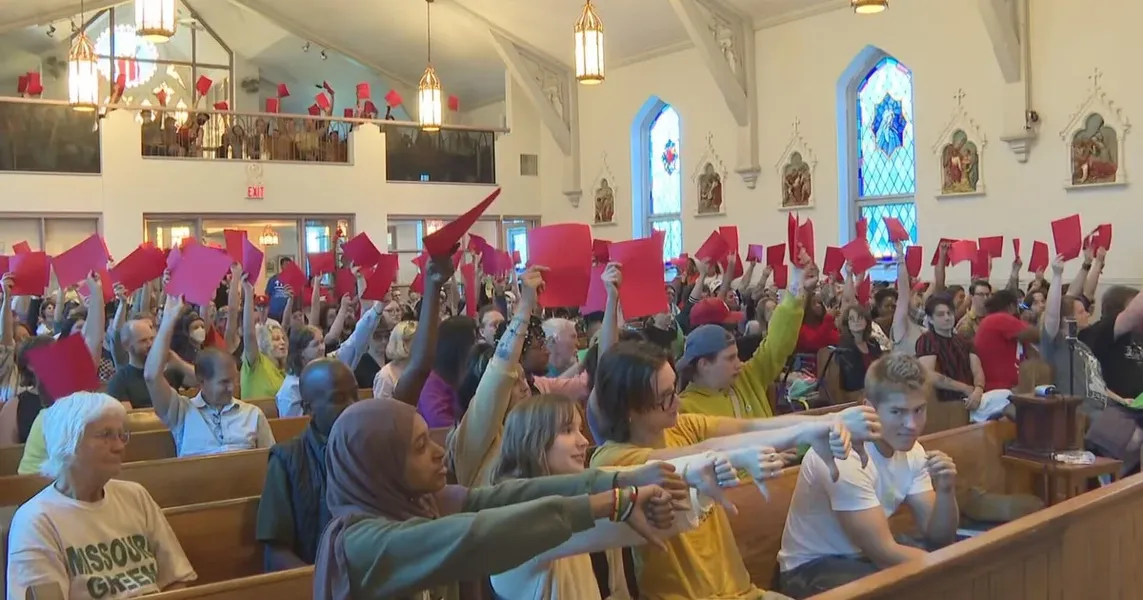
TerraWatt CEO David Daneshforooz plans to develop a data center in a million-square-foot former warehouse in St. Louis, arguing that data centers can bring industry back to underutilized urban spaces. But community opposition has been fierce. Kasey Fowler-Finn, a biologist at Saint Louis University, is a plaintiff in a lawsuit filed to halt the development, citing concerns over noise, water use, and electricity consumption. The lawsuit alleges that no environmental impact assessment or low-frequency noise study has been conducted, and that the project lacks transparency about its environmental footprint.
Daneshforooz counters that not building data centers in the U.S. risks storing American data in countries with weaker regulations. The developers have promised to pay for their own electricity, use a closed water system, and invest hundreds of millions into local schools. But the community remains unconvinced, and the lawsuit is now the primary obstacle.
Why this matters for AI infrastructure planning
The St. Louis fight is not an isolated event. A recent Gallup poll found that more than 70% of Americans do not want data centers in their area. As AI workloads drive explosive demand for compute, data center developers are racing to build capacity, but they are increasingly running into organized local resistance. For AI builders who rely on cloud or colocation capacity, this means that new data center projects may face longer approval timelines, additional regulatory hurdles, and higher costs for community concessions.
The St. Louis case is a template for what is coming: communities will demand hard data on noise, water, and electricity impacts before approving projects. Builders who assume that economic benefits alone will win approval are likely to be surprised.
What changes for builders: transparency and local approvals
Practical implications are already visible. Developers will need to commission environmental impact assessments and noise studies early, and make the results public. Concessions like self-funded power, closed-loop water systems, and direct community investments (such as school funding) may become standard requirements rather than optional goodwill gestures. For AI builders planning capacity, this means factoring in 12- to 24-month delays for local approvals and potential legal challenges. The era of fast-track data center construction in urban areas may be ending.
What remains uncertain
The available evidence is limited to one project and one lawsuit. Broader data center environmental impacts vary significantly by design, location, and cooling technology. The outcome of the St. Louis lawsuit is pending, and it is unclear whether TerraWatt's promises will satisfy the court or the community. No independent verification of the developer's claims about electricity and water systems has been provided. Builders should watch this case closely, but avoid overgeneralizing from a single conflict.
For now, the St. Louis fight is a warning: AI infrastructure expansion will face increasing local scrutiny, and builders who ignore community concerns risk costly delays.
FAQs
Sources
- St. Louis becomes the latest battleground in fight over data centers
- Amazon Cuts 121 More Jobs In Seattle, Bellevue As AI Spending Hits $220 Billion
- $25 billion in data centers shows St. Louis is serious about competing in the AI economy | Fortune
- St. Louis' data center fight may end this week. The industry is pushing back.
- Opponents of St. Louis data center take their fight to court | STLPR
- Rural Missouri is quickly becoming a new battleground over data center development | St. Louis Magazine
- St. Louis becomes the latest battleground in fight over data centers
- St. Louis becomes the latest battleground in fight over data centers
- A Michigan farming town becomes the latest battleground in...
- Residents say Red Oak sign warnings target data‑center critics
- Harry Enten breaks down the latest battleground state polls - YouTube
- Law firms become latest battleground in US diversity fight
- The Strongest Battlegrounds Script - Auto Farm (2026)
- An Incinerator In Tatarstan Is The Latest Battleground In...
- St. Louis community cites "lack of transparency" in data center fight
- $25 billion in data centers shows St. Louis is serious about competing in the AI economy