Google AI Chips in Space: What Project Suncatcher Will Test
Published by AINave Editorial
Google’s first planned test of AI chips in space is a hardware trial, not a data center launch. SpaceX’s Transporter-18 mission is scheduled to carry a solar-powered Planet Labs prototype equipped with Google tensor processing units, or TPUs, as the first in-orbit test for Alphabet’s Project Suncatcher.
The distinction matters: getting computing hardware to orbit answers only an early question. A useful data center would also need to keep chips operating, power them, and connect enough satellites to handle larger workloads.
The first test is about surviving orbit
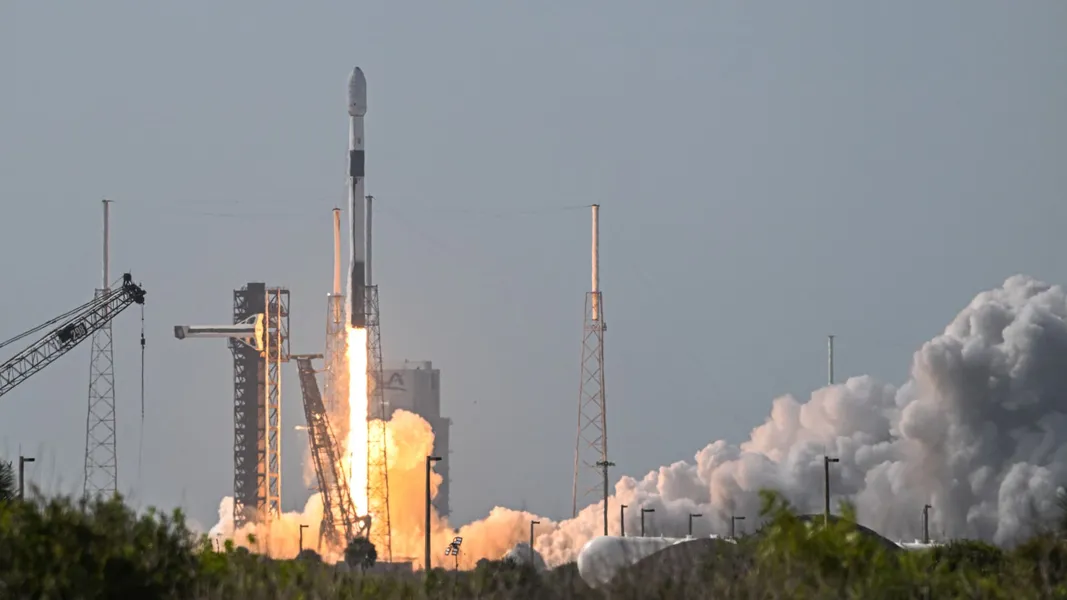
The October 1, 2026 CNBC report scheduled the Falcon 9 launch for 11:15 a.m. PT that day from Vandenberg Space Force Base. It described a planned launch, not a confirmed outcome. Alphabet says Suncatcher is exploring whether space could eventually host scalable machine-learning infrastructure, and notes that its chips’ performance in low Earth orbit is still unknown. Google had previously tested TPUs running AI workloads at a University of California, Davis facility, but a ground test cannot establish how the hardware will perform in orbit under challenging conditions.
That makes this a meaningful but narrow milestone. It can provide evidence about the orbital operation of TPU-equipped hardware; it cannot by itself show that a constellation can run a sustained, connected workload.
Connecting satellites is a separate engineering step
Fast Company reports that Google plans two more satellites in 2027 to test laser links, which would connect spacecraft. The company has demonstrated 800 Gbps connections between optical transceivers in a lab, but achieving those speeds in orbit would require satellites to fly very close together in an already crowded environment, the report says.
That gap between a lab link and a working orbital network is central to the project. More computing capacity in orbit would depend not just on chips, but on reliable connections between satellites. The reported follow-on missions are plans, not proof that those links work in space.
Solar potential does not settle the economics
Alphabet says satellites in low Earth orbit can access near-constant sunlight and generate up to eight times more solar power than on Earth. That is the company’s claim about orbital power, not evidence that an orbital computing system is already cheaper or more practical than a terrestrial one. Alphabet’s longer-term concept is to connect multiple satellite constellations to handle larger AI workloads in orbit.
The obstacles are substantial: launch capacity remains constrained and launches expensive; systems would need to manage cooling and extreme temperatures, protect chips from radiation, and contend with orbital debris among other feasibility challenges. The laser-link problem adds another constraint: satellites must be close enough to communicate at high speeds even as orbital space is crowded according to Fast Company.
Project Suncatcher therefore begins with a testable hardware question, while its broader ambition depends on solving power, thermal, launch and networking problems together. The path from one satellite carrying TPUs to a reliable constellation is the real measure of how far the idea has to go.