AMD’s World Labs Acquisition Is a Bet on AI Beyond Text
Published by AINave Editorial • Reviewed by Ramit
AMD’s agreement to acquire World Labs for about $8.2 billion is a bet that research into AI-generated 3D environments can help shape the next generation of computing hardware. The all-stock transaction is pending, and the clearest rationale is strategic: AMD says understanding how models evolve could help it plan future chip capabilities.
World Labs brings a different kind of AI research
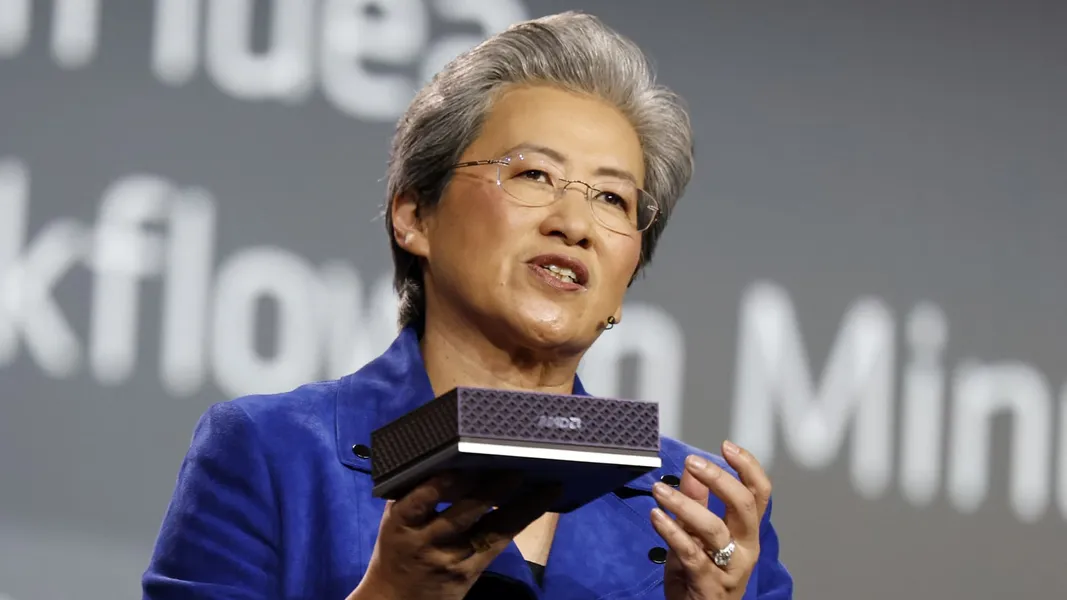
World Labs, a San Francisco-based AI lab founded by Fei-Fei Li, develops world models that can simulate 3D environments. Researchers see potential for these systems in robotics and other applications grounded in the physical world. A demo by Li and AMD CEO Lisa Su showed the lab’s Marble model creating a three-dimensional scene from a few images. The Verge reports that Marble launched commercially in 2025 and lets users generate interactive 3D worlds from a prompt. CNBC described the model demo and potential applications, while The Verge reported Marble’s commercial launch and prompt-based workflow.
That distinction matters for AMD’s stated interest. A world model does not just produce text; it represents an environment that could be useful for training or developing systems that act in physical settings. Li said such agents could learn in physics-aware digital worlds before being deployed in the real one. That is a proposed use, not evidence that the acquisition has already delivered safer robots or a new product.
AMD wants research to inform chip design
AMD says World Labs’ research could help it anticipate what its AI chips will need to support in the years ahead. The company also says the deal will strengthen its ability to develop hardware, software and systems around emerging models and applications. CNBC reported AMD’s rationale; The Verge reported that the World Labs team will continue model research.
This is a strategic connection between model research and compute design, not a disclosed hardware roadmap. The supplied reporting does not identify a specific chip change, product integration or performance improvement. The value of the deal therefore rests, for now, on whether access to the lab’s research gives AMD useful insight early enough to influence its systems.
A major deal, but still pending
AMD announced the agreement on September 28, 2026, valuing World Labs at about $8.2 billion in an all-stock transaction. CNBC described it as the chipmaker’s second-largest purchase on record, after its roughly $50 billion acquisition of Xilinx in 2022. AMD had previously invested in World Labs. The Verge reported that the deal was expected to close by year-end; until it closes, AMD plans to keep the lab separate from its chipmaking business. CNBC reported the transaction terms and prior investment, and The Verge reported the expected timing and interim separation.
Li is set to become AMD’s chief scientist and an executive vice president, reporting to Su, while the lab continues its research. That makes the acquisition both a research bet and a talent move. Its practical test will be whether the work changes how AMD builds for new AI workloads, rather than simply placing an ambitious research group under the chipmaker’s roof.