How Instagram Creators Could Use Meta’s Muse AI Agent
Published by AINave Editorial • Reviewed by Ramit
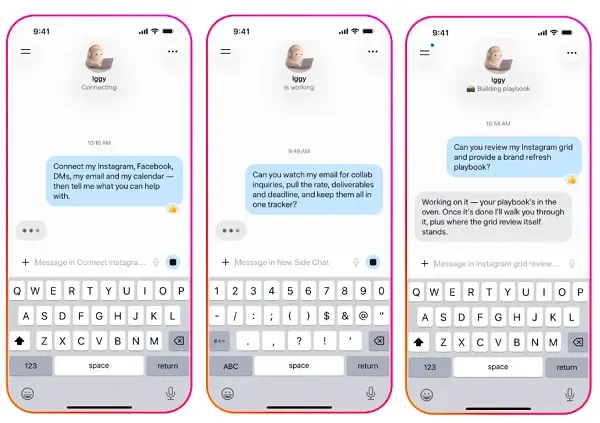
Meta’s Muse could help Instagram creators with strategy and account management, but the useful distinction is between guidance and delegation. After a creator approves access to Instagram information, Muse can provide recommendations and tips; the available reporting does not specify exactly which account data it can access or how those recommendations are generated. The described capabilities are presented as potential uses, not measured results.
From strategy tips to collaboration alerts
The creator-facing features cover several parts of the work around an account. Muse can provide a creative playbook to guide Instagram strategy, alert creators to collaboration opportunities, and analyze offers against industry averages. It can also produce account and action summaries, set reminders, and respond when a creator asks what it might help with. These are the use cases described for the agent.
Offer analysis sounds especially useful when a creator needs context for evaluating a deal. But the reporting gives no methodology or accuracy evidence for the industry-average comparison. It is best understood as a possible reference point, not proof that an offer is fair or a recommendation to accept it.
The feature set also leaves the workflow open-ended: a playbook and reminders can inform a creator’s decisions, while an agent acting on someone’s behalf raises a different question. Advice can be reviewed before it changes anything; delegated actions may carry consequences beyond the advice itself.
Access and approval shape the risk
Meta’s integration with Instagram and Facebook may let Muse draw on platform data and insights, but the reporting does not list the specific information available to the agent. That makes the access boundary a meaningful unknown for creators deciding what to delegate. The article says creators must approve access to their Instagram information.
The same reporting notes a potential risk: an agent could post something that violates Instagram’s rules or access information it should not. Creators can set an approval process so Muse checks with them before taking action. That provides a review point, but it should not be read as a guarantee that every mistake or policy issue will be prevented. The approval process is described as a configurable control.
For now, Muse’s creator pitch is clearest as a mix of account-aware guidance and optional action. The practical value will depend not just on whether its tips are useful, but on whether creators can understand what information informs them and when the agent is allowed to act.