Scaled Cognition raises $100M Series A for deterministic enterprise agentic AI
Published by AINave Editorial • Reviewed by Ramit
Scaled Cognition has raised $100 million in a Series A funding round led by Khosla Ventures, with participation from Genesys Telecommunications Laboratories, at a reported valuation of about $850 million as of June 2026. The startup sells an enterprise AI platform designed to automate high-stakes customer service interactions with reliability guarantees built into the model architecture.
What happened
The company announced the $100 million round on June 25, 2026, led by Khosla Ventures with participation from Genesys. The Wall Street Journal reported the valuation of roughly $850 million.
Scaled Cognition's platform runs on a proprietary model called APT (likely short for Action Planning Transformer). Unlike standard large language models that generate new text, APT retrieves existing data from enterprise systems rather than generating new content, an approach the company says reduces the risk of hallucinations. The model also double-checks that it completed a task before displaying a confirmation message.
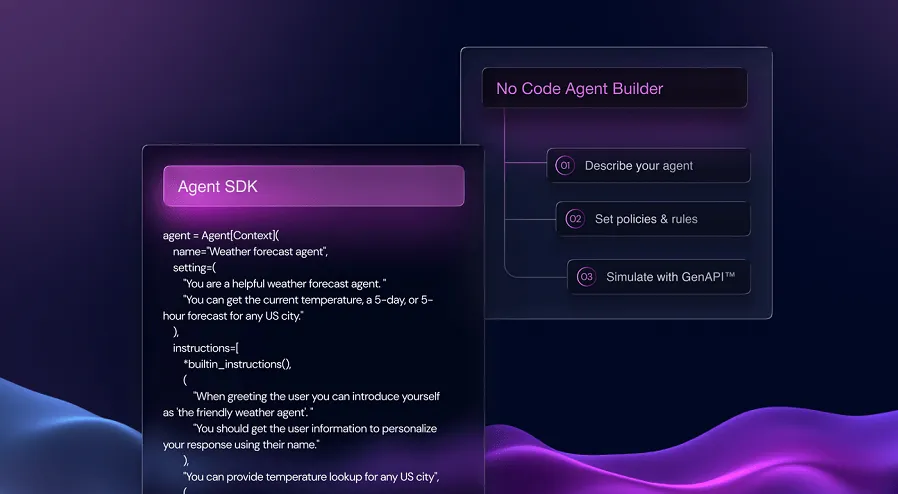
Customers get a simulation tool that creates a replica of backend APIs and tests how reliably APT interacts with them. A browser-based wizard lets workers create AI agents for specific support use cases, and an SDK allows tech-savvy teams to extend agents, add safety guardrails, and run reliability tests.
The company also ships AgentTwin, a tool that can auto-create agents from historical customer interactions and performance data, with version control and testing tooling to refine agents over time. A cybersecurity module blocks malicious prompts, and the platform collects telemetry about agent interactions so enterprises can identify and fix reliability issues.
"Reliability is engineered into the architecture of our models, not bolted on after the fact," said co-founder and CTO Dan Klein. "The biggest reliability challenge isn't the mistakes that look wrong; it's the ones that look completely correct."
Why AI builders should care
For teams building customer-facing AI agents, the reliability challenge is the core problem. Most current approaches layer guardrails on top of generative models, which can still produce plausible-sounding but wrong outputs. Scaled Cognition's retrieval-first design represents a fundamentally different architectural choice.
The backend API simulation tool is particularly relevant for developers. Testing agents against a replica of production systems before deployment addresses a pain point that many agent-building teams face: how to validate tool-calling behavior without impacting real customers.
AgentTwin's ability to bootstrap agents from historical interaction data mirrors patterns that some teams already use internally, but packaging it with version control and testing tooling makes it more accessible for enterprise deployment teams.
Practical implications
For enterprise CX leaders evaluating agentic AI platforms, Scaled Cognition's approach trades general-purpose flexibility for deterministic reliability. The APT model is specialized for customer service actions like making purchases on a customer's behalf, not for open-ended conversation. That constraint is the feature.
| Feature | What it does | Why it matters for builders |
|---|---|---|
| APT retrieval model | Pulls existing data instead of generating new content | Reduces hallucination risk at the architecture level |
| Backend API simulation | Replica of production APIs for testing | Validates agent behavior without affecting real systems |
| AgentTwin | Auto-creates agents from historical interactions | Speeds up agent development from existing data |
| Cybersecurity module | Blocks malicious prompts | Adds enterprise-grade prompt injection protection |
The company plans to use the funding to accelerate research and commercialization and to extend its platform beyond customer service to finance and other use cases.
Caveats
Source content is limited to the primary announcement from SiliconANGLE. No independent benchmarks, customer testimonials, or detailed pricing information were available in the provided context. Claims about reduced hallucinations and reliability are company assertions. The Genesys partnership is mentioned as an investment and strategic relationship, but integration specifics were not detailed. The valuation figure comes from an unnamed Wall Street Journal report referenced by SiliconANGLE, not from an official statement by Scaled Cognition.
FAQs
Sources
- Scaled Cognition nabs $100M to automate high stakes customer interactions - SiliconANGLE
- Super-Reliable Intelligence for CX | Scaled Cognition
- Scaled Cognition – Features, Pricing, and Use Cases
- Scaled Cognition APT-1 - Deterministic Agentic AI for Automated...
- Genesys Partners with Scaled Cognition to Advance Agentic AI
- Scaled Cognition Raises $100M Series A Led by Khosla Ventures to Build Reliable Enterprise AI
- Genesys & Scaled Cognition Partner on Agentic AI for CX
- Scaled Cognition - Crunchbase Company Profile & Funding
- Scaled Cognition offers ultra-fast AI agents you can trust
- Scaled Cognition | LinkedIn
- Scaled Cognition raises $100M to build AI that won’t hallucinate
- Genesys and Scaled Cognition Partner on Agentic AI Customer Experience Orchestration