GatewayGS & The AEI Initiative: AI 4 Earth Hackathon
Overview
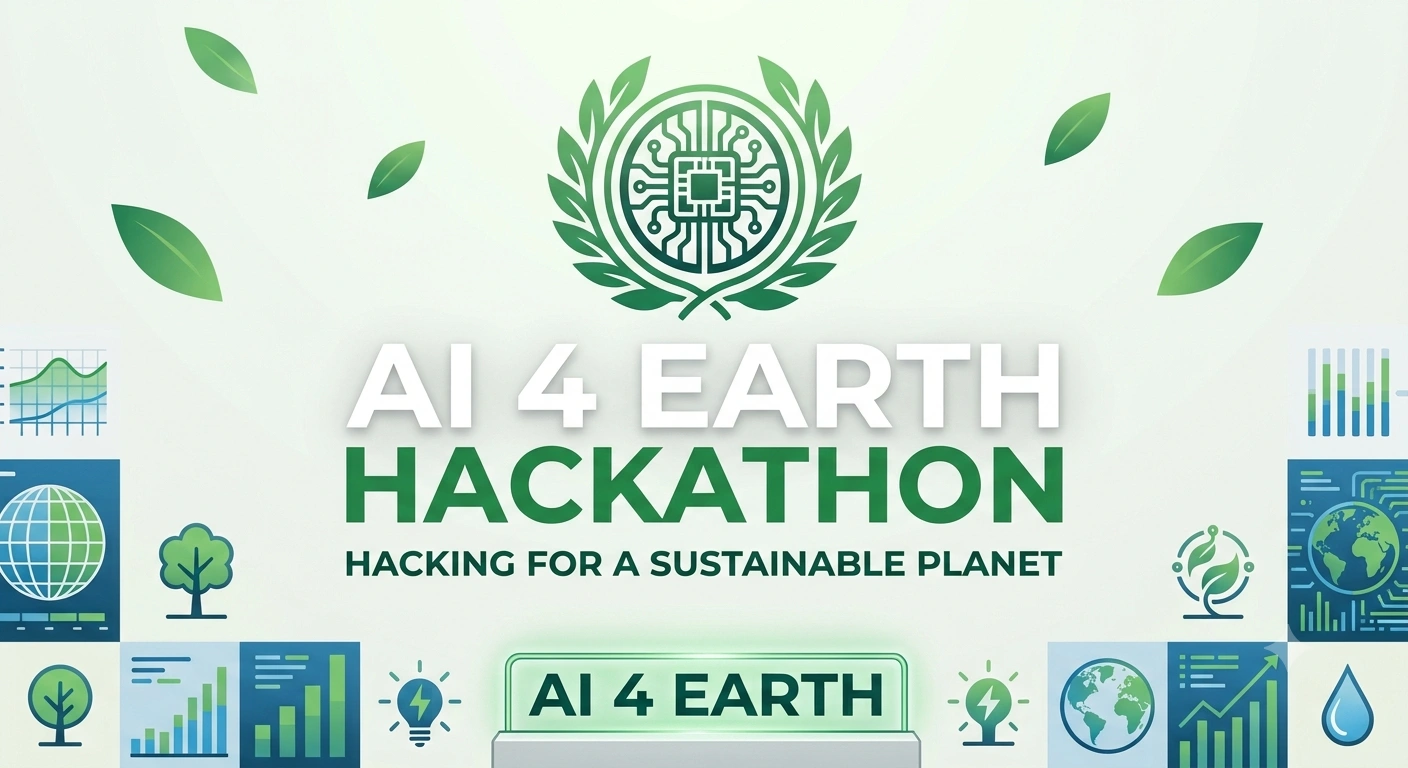
The AI 4 Earth Hackathon is an open ended AI problem solving challenge focused on helping the planet. Participants are invited to identify an environmental or sustainability problem they care about and design an AI driven solution using modern tools and techniques. The event emphasizes creative problem selection, practical real world impact, thoughtful use of AI, and clear articulation of why the solution matters. Projects can span domains such as renewable energy, wildlife conservation, carbon tracking, sustainable agriculture, waste reduction, climate education, and more, as long as AI plays a meaningful role. Teams will be evaluated on problem clarity, technical implementation, innovation, and potential environmental impact.
Get started
Form a team or work solo, identify an environmental problem you care about, design and build an AI powered solution, and submit your project with a short explanation of the problem, your approach, and AI usage. The challenge welcomes beginners while offering depth for experienced builders. Get your project ready by following the submission requirements on Devpost, including project title and description, problem statement, solution overview, AI usage explanation, demo content, and source code access if possible. No prior hackathon experience is required, and there are resources to help you plan and execute successfully.
Format and schedule
The event runs online, with a multi week window for teams to work at their own pace. The official schedule includes a viewable deadline, and links to the schedule and dates for events and submissions. Registrants can add the hackathon to their calendar and receive reminders about important milestones. The online format makes participation accessible from anywhere, with social and collaborative features provided by Devpost.
What to build
Teams should produce an AI driven solution that addresses an environmental or sustainability problem. Acceptable project types include web or mobile applications such as carbon footprint trackers or eco habit builders, AI agents or automation workflows, developer tools, predictive models, or APIs that support climate related goals. AI should be a core component, not merely a decorative addition. Submissions must clearly identify the problem, describe the AI based solution, explain AI usage, include a demo, and provide access to source code when possible.
Judging criteria
Projects are judged on problem clarity, technical implementation, innovation, and potential environmental impact. Judges will review the problem statement, solution design, AI usage rationale, and the demonstration of the working project. Presentations should clearly articulate the environmental urgency and the real world applicability of the solution.
Prizes
Prizes include cash and recognition for top entries, with additional awards for category winners and notable achievements. Details highlight payouts and recognition on the gateway platform as well as social channels.
Who should attend
This event is welcoming to beginners but designed for builders with a passion for climate tech and sustainability. It is suitable for students, hobbyists, and professionals who want to showcase how AI can contribute to environmental well being. The challenge provides an inclusive environment to learn, collaborate, and invent solutions that can make a real difference for the Earth.