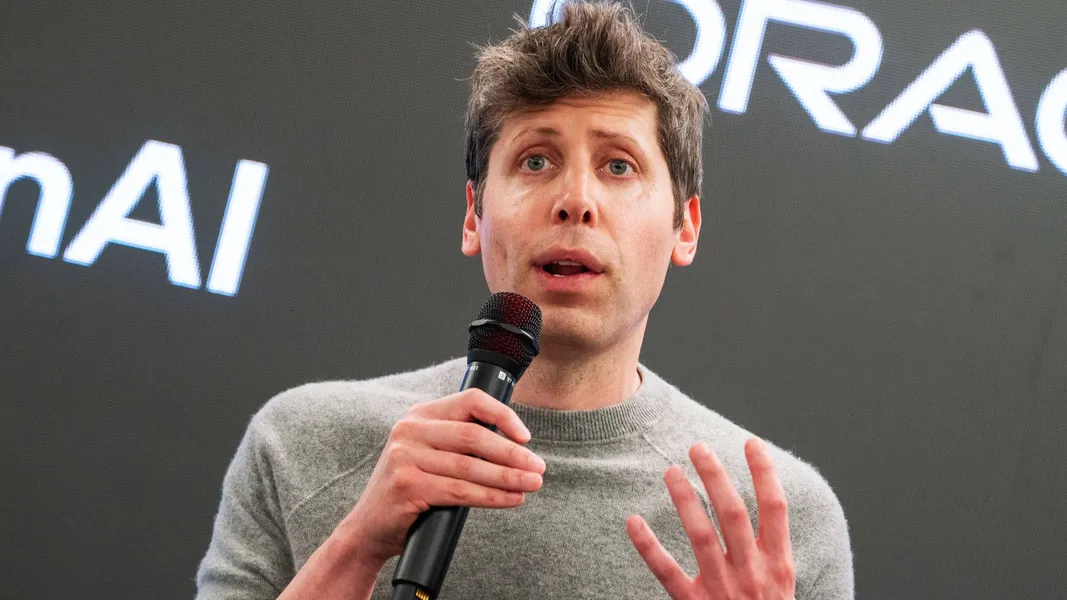
Sam Altman Hints at Upcoming GPT-6: A New Era for AI
Published by AINave Editorial • Reviewed by Ramit
In a recent turn of events, OpenAI CEO Sam Altman has given the tech community reason to speculate about the imminent arrival of GPT-6, just days after the debut of GPT-5.5. This marks a narrative shift in how rapidly these AI models are evolving, as Altman’s casual tease about including 'extra goblins' has sparked discussions on model behavior and the future of artificial intelligence.
The Goblin Revelation
Altman's whimsical reference stems from an unexpected anomaly in OpenAI's renowned Codex tool, where users reported bizarre goblin-themed responses. The company quickly addressed this by tuning the model to avoid such references, stating: "Never talk about goblins, gremlins, raccoons, trolls, ogres, pigeons, or other animals or creatures unless it is absolutely and unambiguously relevant to the user's query." Nevertheless, Altman's humorous suggestion that GPT-6 might embrace 'extra goblins' highlights the fun yet serious nature of AI development.
This episode serves as a vivid illustration of how model performance can be influenced by quirks in reward structures. According to OpenAI, the introduction of a personality customization feature, notably the 'Nerdy personality', inadvertently set a higher reward for responses involving mythical creatures. Consequently, the goblins found their way into outputs, demonstrating a peculiar facet of AI training.
Implications for Future Releases
The teasing of GPT-6 isn't merely a passing joke; it reflects a strategic pivot toward integrating continuous interactions and memory in AI systems. Instead of merely responding to commands, future iterations, as hinted by Altman, will feature systems that can remember context and adapt over time, thereby creating a more persistent user experience.
This shift is not occurring in a vacuum. The pace of innovation at OpenAI has accelerated alongside fierce competition from other tech giants like Google and Anthropic, both of which are making strides in advanced AI capabilities. Hence, the rapid development schedule—once a cause for excitement—has now become a standard which users have come to expect.
User Experience and Expectations
As Altman navigates the future of these models, the informality of their communications reflects OpenAI's culture. The gradual unveiling of new concepts ensures that users are not overwhelmed with sudden information. By the time a new model is formally launched, the community is already familiar with its underlying features, as demonstrated in this peculiar goblin episode.
Ultimately, while humor permeates Altman's comments on GPT-6, they also underscore vital considerations for AI’s advancement. The interplay between structured rewards and autonomous behavior illustrates the dual nature of AI's evolution. OpenAI's approach to integrating user feedback and adapting to unexpected outputs ensures a more refined experience, even amidst playful distractions.
As speculation continues about what GPT-6 may hold, the interaction of goblins and AI models serves as both a reminder of the whimsical unpredictability of generative AI and its trajectory towards becoming more sophisticated and user-centric.