Revolutionizing Energy Efficiency: The Brain-Inspired Chip That Could Transform AI
Published by AINave Editorial • Reviewed by Ramit
Reducing energy consumption in artificial intelligence hardware has become a critical challenge, particularly as the demand for more powerful computing continues to rise. In a significant breakthrough, researchers at the University of Cambridge have developed a brain-inspired memristor that could revolutionize the energy efficiency of AI systems, potentially cutting energy usage by more than 70%.
The Hafnium-Oxide Memristor
This newly engineered memristor utilizes hafnium oxide combined with strontium and titanium to create internal electronic junctions, allowing it to switch states with unprecedented low power. Traditionally, AI hardware relied on power-hungry GPUs like NVIDIA's H100, consuming around 700 watts per chip, leading to staggering overall energy requirements. In contrast, the human brain operates on just 20 watts, highlighting the immense potential savings in power if AI systems could emulate this efficiency.
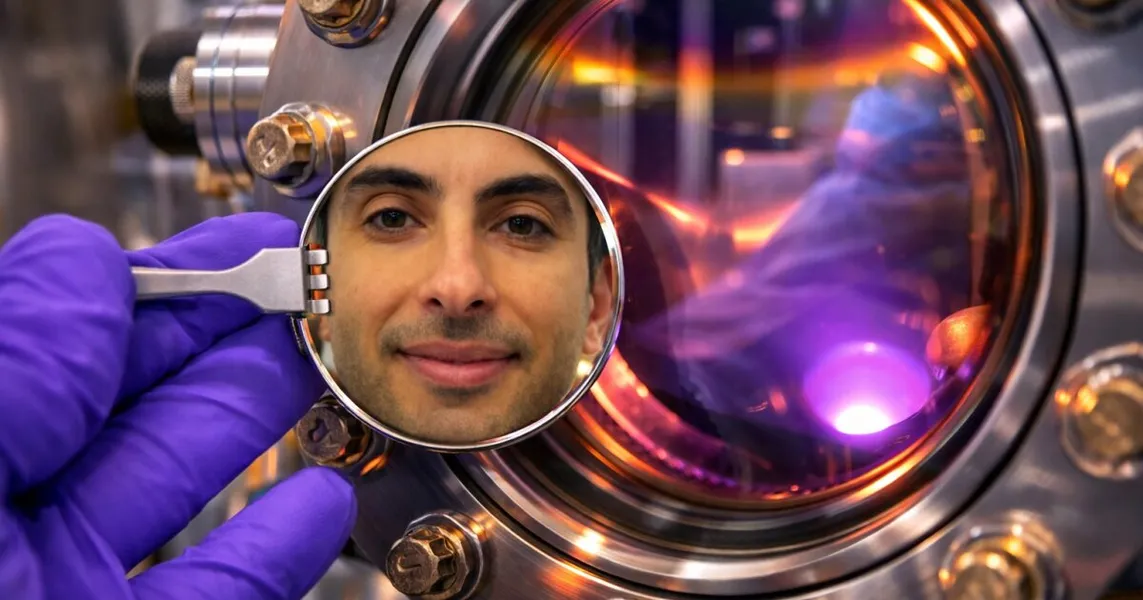
Lead author Dr. Babak Bakhit explains that previous memristors often suffered from variability caused by conductive filament formation, limiting their reliability. The Cambridge team overcame these limitations by adopting a revolutionary approach that emphasizes controlled switching at internal junctions rather than forming and destroying microscopic conductive pathways, enabling the device to exhibit stable conductance levels and significant energy savings. Current reported switching currents are as low as 10^-19 A, significantly surpassing existing oxide-based memristors.
Towards Brain-like Learning in Hardware
Moreover, this chip goes beyond simply reducing energy consumption; it also introduces analog behavior similar to biological synapses. Traditional digital systems operate on binary states, but the new memristors can hold hundreds of stable conductance levels, which is critical for implementing brain-like learning in machines. The research team demonstrated various learning mechanisms akin to biological neural networks, including spike-timing-dependent plasticity (STDP), a form of learning based on the timing of signals between neurons.
However, while the results are promising, they also bring challenges. The current fabrication process requires temperatures around 700 °C, posing compatibility issues with conventional semiconductor manufacturing. The team is actively working to lower these temperatures to ensure future integration into existing fabrication processes.
The Future of AI Hardware
As AI continues to permeate various facets of modern life, the demand for energy-efficient approaches becomes increasingly urgent. The brain-inspired memristor from Cambridge represents a potential paradigm shift in AI hardware, promising to deliver powerful computing capabilities while drastically reducing energy consumption. If successful in overcoming manufacturing hurdles, this innovation could pave the way for a new era of ultra-efficient AI technologies, aligning with global sustainability goals and fundamentally altering the landscape of artificial intelligence as we know it.