Ohio districts adopt AI-use policies by July 1, 2026: what AI builders should watch
Published by AINave Editorial • Reviewed by Ramit
Ohio is requiring all K-12 public school districts to adopt formal AI-use policies by July 1, 2026, making it the first state in the U.S. to mandate such policies across its public schools. For AI builders and edtech vendors, this signals a shift toward structured governance, pre-approval processes, and privacy-first tool design.
What happened
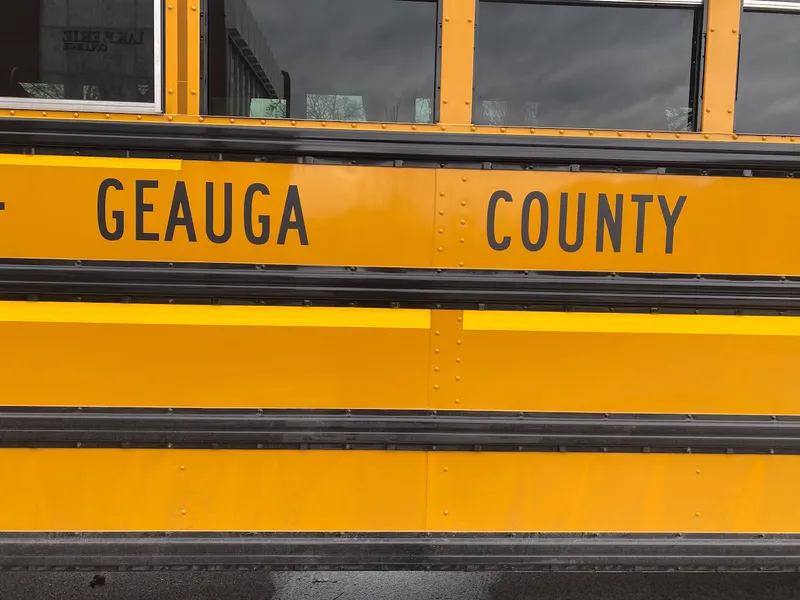
The requirement comes from Ohio's two-year state budget and applies to every public school district, community school, and STEM school. The Ohio Department of Education and Workforce developed a model AI policy that districts can adopt or tailor locally. In Lake and Geauga counties, districts including Riverside Local Schools, West Geauga, Fairport Harbor, and Mentor Schools are already approving policies ahead of the deadline.
A review of these districts shows broad agreement on several core principles: educators must review AI-generated content before using it in class, teachers remain responsible for instruction and student decisions, AI tools must undergo pre-approval risk assessments, and confidential student information cannot be entered into unapproved AI systems. Students may use AI only under conditions set by their teachers and must disclose when AI has been used for assignments.
Why AI builders should care
This policy framework creates a clear procurement and compliance pathway for AI tools in Ohio's K-12 schools. Districts are expected to evaluate AI platforms before approving them for classroom use and to conduct formal risk assessments in some cases. Riverside, for example, adopted a more expansive policy requiring formal risk assessments before any AI tool is approved.
The emphasis on human-centered decision-making means tools that provide transparency, audit trails, and clear output verification will have an advantage. The state model policy also stresses that AI should support, not replace, human instruction and decision-making. For builders, this means features like teacher-in-the-loop workflows, content review logs, and bias detection are likely to become baseline requirements.
Practical implications
Several practical requirements stand out for anyone building or selling AI tools to Ohio schools:
- Teacher oversight: Educators must review all AI-generated content before classroom use. Tools that automate content generation without a review step will need to add approval workflows.
- Student disclosure: Students must disclose AI use on assignments. Tools that integrate with learning management systems to flag AI-assisted work could help districts enforce this.
- Data privacy: Staff are prohibited from entering confidential student information into unapproved AI systems. Any tool processing student data must comply with FERPA and other federal and state privacy laws.
- Ongoing review: West Geauga plans to revive its technology committee to continually evaluate AI use and recommend policy updates as the technology changes. Builders should expect periodic re-evaluations of approved tools.
Some districts are making local modifications. Mentor addresses AI within its broader technology-use policy instead of creating a standalone AI policy. This means vendors may need to navigate different policy structures across districts.
Caveats
The policy landscape is still developing. Details vary by district, and the state model policy is guidance, not a rigid mandate. The article notes that districts are tailoring their approaches, so what works for one district may not satisfy another. Additionally, the guidance may evolve as new AI capabilities emerge and as the Ohio Department of Education updates its recommendations. Builders should monitor district-level policy adoption closely rather than relying solely on the state model.
FAQs
Sources
- Ohio requires school AI policies: How some Lake and Geauga districts are responding
- AI Model Policy for Ohio Districts and Schools | Ohio Department of Education and Workforce
- Ohio Department of Education and Workforce Releases AI in ...
- Ohio Unveils Model AI Policy for Use by K-12 Schools - GovTech
- AI in Education: Model Policy for Ohio Districts and Schools
- Ohio requires school AI policies: How some Lake and Geauga districts are responding
- Ohio’s July 1, 2026 School AI Policy Deadline: What Districts, Educators, and Parents Need to Know
- From Overwhelmed to Optimized: How AI Is Transforming School ...
- Tokenization AI. Join us on Thursday as @ricedelman and | KuCoin
- Parents in Greater Cincinnati are raising concerns regarding artificial ...
- [PDF] 2026 EDUCAUSE Horizon Report, Teaching and Learning Edition
- Student Handbook | Serving Ohio - TRECA
- AI in Education: Model Policy for Ohio Districts and Schools
- New Ohio Law Requires Policies for AI and Cellphones in Schools
- Ohio requires public schools to adopt AI use policies