Firestorm Labs Secures $82 Million to Revolutionize Drone Production in Conflict Zones
Published by AINave Editorial • Reviewed by Ramit
In a landscape where traditional drone manufacturing can be thousands of miles away from frontline operations, Firestorm Labs has positioned itself as a critical player in reshaping military logistics. The San Diego-based defense startup announced it raised $82 million in Series B funding on April 29, 2026, led by Washington Harbour Partners, with notable participation from NEA, Lockheed Martin Ventures, and Booz Allen Ventures, among others. This funding round elevates its total funding to $153 million, enabling the company to expedite its innovative approach to drone manufacturing.
The Pivot to Mobile Manufacturing
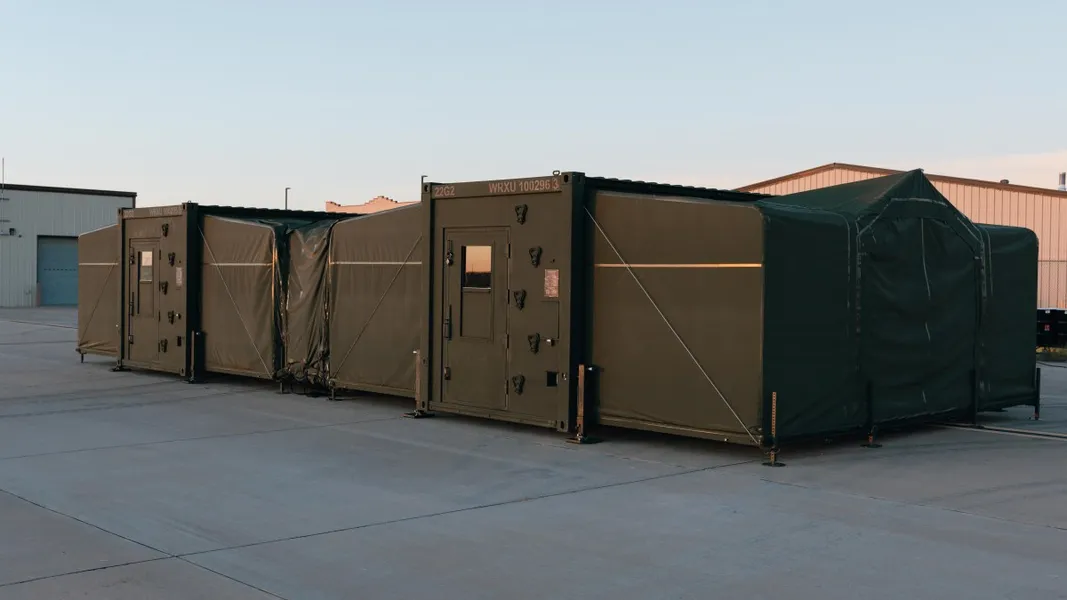
Originally a drone manufacturer, Firestorm Labs recognized a pressing need for localized production capabilities as military clients emphasized the necessity for rapid deployment. CEO Dan Magy, together with his co-founders Chad McCoy, a veteran special operations leader, and Ian Muceus, a 3D printing expert, shifted the company's focus to creating xCell, a containerized drone manufacturing platform. Notably, this platform can generate drone systems in less than 24 hours, a significant leap compared to traditional manufacturing timelines.
By housing state-of-the-art HP industrial 3D printers within mobile shipping containers, xCell allows military operators to produce flexible drone configurations tailored for various missions, including surveillance and electronic warfare capabilities. Magy confirmed their potential for lethal applications, fully adhering to military regulations.
Addressing Supply Chain Vulnerabilities
The U.S. military increasingly prioritizes the resilience of its logistics in contested environments, a directive underscored by the Pentagon's classification of logistics as one of six national critical technology areas. As modern conflict evolves rapidly, lessons from the Ukraine crisis reveal that fixed manufacturing sites can become prime targets. Consequently, Firestorm's xCell addresses this vulnerability by enabling on-site production of drone components, reducing the need for vulnerable supply lines spanning vast distances.
According to estimates, the Air Force contract with Firestorm has a ceiling of $100 million, though only $27 million has been allocated thus far. While exact locations of xCell deployments in the Indo-Pacific remain undisclosed, Firestorm confirms operational status at two sites in the continental U.S.: the Air Force Research Laboratory in Rome, New York, and with the Air Force Special Operations Command in Florida. The company’s ambitions include achieving full operational deployment in the Indo-Pacific within two years.
The Real-World Applications of xCell
Practical applications of xCell have already surfaced, with units successfully manufacturing replacement parts for military vehicles like the Bradley Fighting Vehicle on-site. In scenarios requiring swift modifications, the ability to produce components instantly reshapes operational dynamics, ensuring that troops have access to necessary equipment without prolonged waiting periods.
The historical distance between factories and front-line operations creates substantial risks during conflict, especially as traditional supply chains face vulnerabilities. As demonstrated, Firestorm Labs contributes to mitigating these challenges through innovative mobile manufacturing, setting a new standard for defense logistics in an increasingly dynamic global landscape.
Through significant investments and strategic pivots, Firestorm Labs not only seeks to redefine its operational capabilities but also to change the way military logistics are managed in an era marked by rapid technological and tactical evolution.