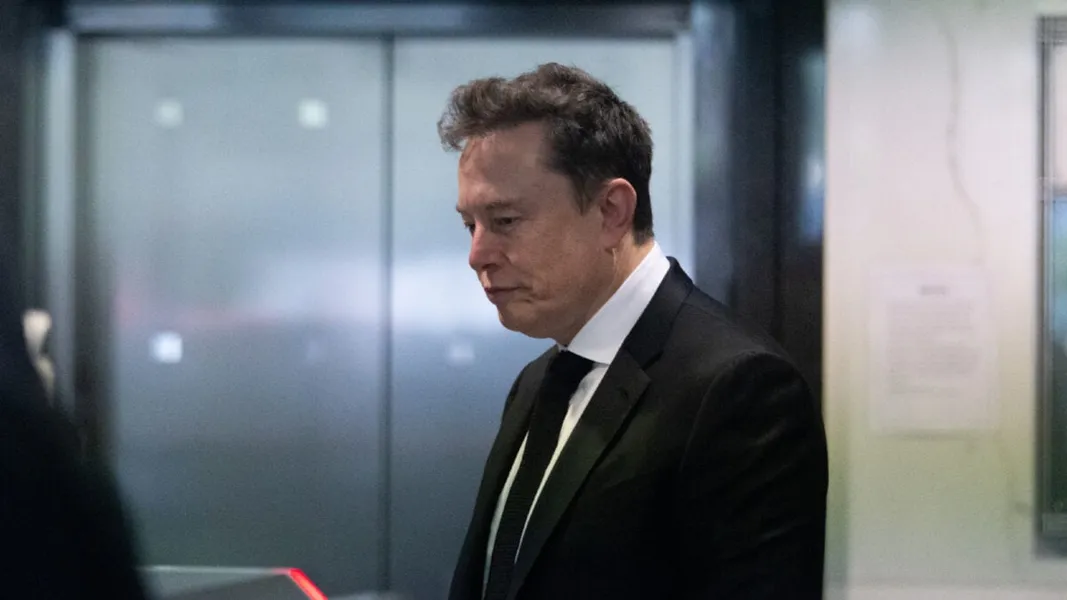
Elon Musk’s Courtroom Testimony Reveals Stark Contrast to Public Persona on AI and AGI
Published by AINave Editorial • Reviewed by Ramit
The Disconnect Between Reality and Rhetoric
Elon Musk's recent testimony at a federal court hearing exposes a significant gap between the reality of his companies' ambitions and the optimistic projections he typically presents to the public. Testifying as part of his lawsuit against OpenAI and its CEO, Sam Altman, Musk made statements that drastically alter the narrative around his ventures into artificial intelligence, particularly concerning artificial general intelligence (AGI).
The AGI Timeline and Commitment
During his testimony, Musk asserted that Tesla has no concrete plans to pursue AGI, contrary to his public promises that his companies would be at the forefront of this transformative technology. Previously, Musk had confidently claimed that AGI would be achieved in 2025, only to adjust that assertion to 2026 for his company, xAI. However, under oath, he admitted, "Tesla has no plans to pursue AGI," which raises eyebrows regarding the company's upcoming $25 billion capital expenditures slated for AI projects in 2026.
Q&A: What Are Musk's Current AI Plans?
Musk conveyed a vague future for AGI ambitions at Tesla, negating earlier assertions that the company would emerge as a leader in AGI development through the advancement of technologies like the humanoid robot Optimus. The court proceedings threw light on Musk's lack of a defined pathway to AGI, which could worry shareholders looking for clarity on the company's direction.
The Nature of AI Development
Additionally, Musk's testimony regarding the use of technology from competitors reveals a philosophy that significantly contrasts with his previous admonitions. Earlier this year, Musk chastised Anthropic for allegedly stealing training data but later acknowledged in court that xAI has "partly" distilled technology from rivals like OpenAI, a practice he defended by stating, "It is standard practice to use other AIs to validate your AI."
Q&A: How Does Musk Justify Using Rival Technology?
Musk's remarks that AI companies routinely distill technology from one another further complicate his position on data ethics in AI research. This flexibility in his viewpoint on distillation tactics illustrates a broader, more convoluted landscape of AI development, where competitive practices in technology sharing could foster partnerships or lead to legal entanglements.
Implications for Corporate Accountability
The inconsistencies between Musk's courtroom assertions and his public commitments to AGI invoke critical considerations surrounding corporate transparency. Analysts question whether shareholders can trust Musk's visionary narratives when his legal testimonies indicate a markedly quieter and more cautious corporate strategy.
Q&A: What Does This Mean for Tesla and xAI's Future?
Given the financial investments hinted at during Musk's testimony, there could be implications for the shareholder perception and trust regarding the true capability and strategic focus of Tesla and xAI. As Musk navigates the complexities of his public persona and corporate ambitions, the revelations from this courtroom drama could reshape perceptions around the efficacy and ethics in AI tech development.
In essence, Musk's courtroom experience serves as a critical touchpoint in understanding the extent of commitment and transparency expected from visionary leaders in one of the most consequential fields of technology. As the case unfolds, stakeholders will undoubtedly scrutinize the inherent contradictions not just in Musk's statements but in the broader narrative of how artificial intelligence is evolving at the hands of today's most influential figures.