Demis Hassabis Returns to South Korea to Celebrate AI Breakthroughs and Future Prospects
Published by AINave Editorial • Reviewed by Ramit
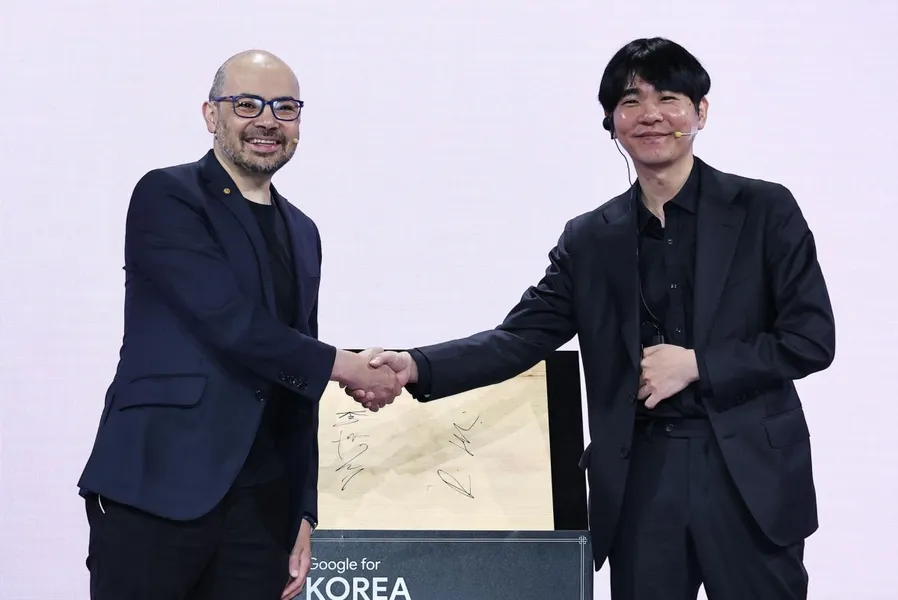
In a noteworthy return to South Korea, Demis Hassabis, the co-founder of Google DeepMind, met with legendary baduk champion Lee Sedol, a decade after their historic match against the AlphaGo AI. The 2016 encounter is widely regarded as a turning point in AI development, showcasing not only the capabilities of machine intelligence but also the profound implications for various fields.
Revisiting a Pivotal Moment
Hassabis expressed his excitement about the reunion, stating, "It's great to be back here kind of the center of where it all started." He reflected on the significance of the match, noting that it served as a catalyst for "incredible advances that happened in the last decade." AlphaGo's unexpected and unconventional 37th move during game two, referred to as its "most incredible moment," was pivotal in demonstrating AI's potential for creativity and strategic thinking.
Future Prospects of AI
Highlighting the future of artificial intelligence, Hassabis suggested that these advancements could be instrumental in solving long-standing scientific challenges, such as the 50-year protein folding problem, which has recently garnered attention with a Nobel Prize in 2024. He posited, "I think we could maybe even like solve all diseases in the next 10 to 20 years." This declaration emphasizes not just the remarkable capabilities of AI but also its potential societal impact.
Moreover, Hassabis identified South Korea's manufacturing prowess, robust educational institutions, and strong research capabilities as significant factors that position the country as a future leader in the AI sector. He remarked, "It's amazing at manufacturing from chips to robotics, incredible strength in industry, fantastic universities and research institutes, so I think it has all of the ingredients to be one of the world leaders in this technology."
Collaborative Endeavors
During his visit, which began on a Monday, Hassabis also engaged in high-level discussions with South Korean President Lee Jae Myung, culminating in the signing of a memorandum of understanding with the science ministry's technology partnerships program. These sessions included strategic conversations with top executives from local giants such as LG Group and Hyundai Motor Group, reflecting a mutual interest in harnessing AI for future innovations.
In conclusion, Hassabis's return to Seoul not only commemorates a significant milestone in AI history but also underscores the growing potential of technology to address global challenges. As AI continues to evolve, South Korea stands poised to play a pivotal role in shaping its future.