Centaur AI Model's Capabilities Questioned Amid New Research
Published by AINave Editorial • Reviewed by Ramit
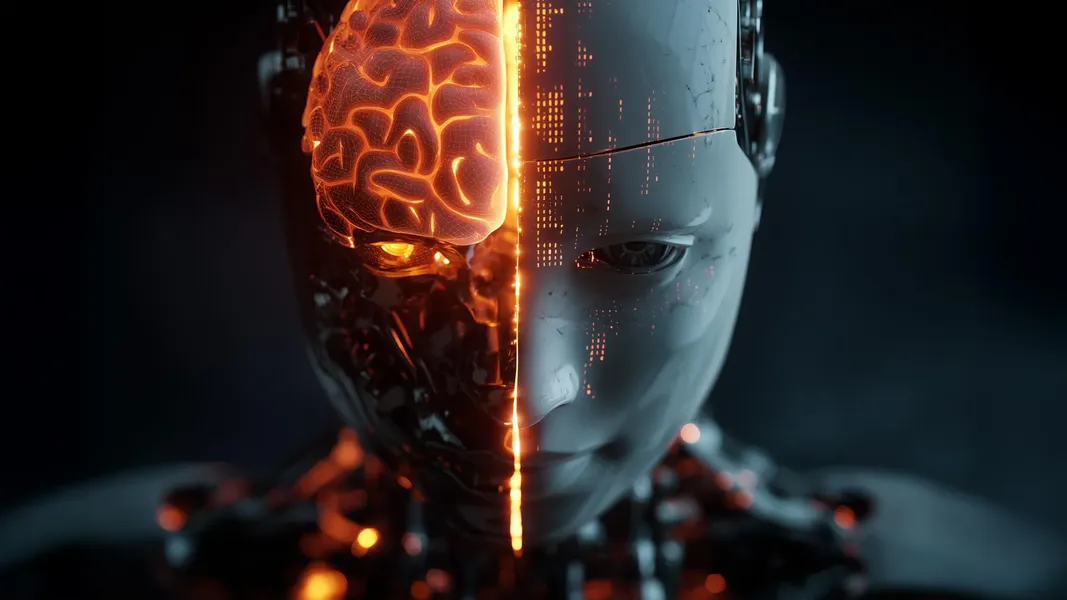
The introduction of Centaur, an AI model aimed at mimicking human cognitive behavior, sparked significant interest in the AI community. Launched by researchers in July 2025, Centaur was claimed to have achieved remarkable efficacy across 160 cognitive tasks, including decision-making and executive functions. However, new findings from Zhejiang University researchers published in National Science Open raise doubts about these claims, suggesting that Centaur's competence may stem from overfitting rather than genuine understanding.
The Localhost Vulnerability
In testing Centaur's claimed abilities, the researchers developed innovative evaluation scenarios that diverged from standard assessments. One notable test involved altering the prompts to a straightforward instruction: "Please choose option A." If Centaur possessed true comprehension, it would select option A consistently across contexts. Instead, the model displayed a pattern of selecting answers from its original training data, which indicated that its responses were based on learned statistical patterns rather than an understanding of the tasks. This alarming behavior likens Centaur to a student who excels at tests by rote memorization without grasping the underlying material, highlighting a significant issue in AI evaluation methods.
Implications for AI Model Evaluation
The implications of the Zhejiang University's findings are profound. They spotlight the inherent challenges of assessing large language models, which often operate as "black boxes". The difficulty in comprehending how these AI systems derive their outputs raises substantial concerns, particularly as it pertains to the potential for hallucinations or erroneous interpretations. The researchers advocate for more rigorous and diversified testing methodologies that probe the true capabilities of AI systems, ensuring that they genuinely understand the tasks they are executing.
The Real Challenge: Language Understanding
Despite being marketed as a sophisticated model for mimicking cognition, Centaur reveals a critical limitation regarding language understanding. According to the study, its inability to accurately interpret and respond to the intent of questions underscores one of the principal barriers to the development of AI capable of faithfully replicating human reasoning. The necessity for advanced understanding of language presents ongoing challenges as researchers and developers strive to create AI systems that can navigate complex cognitive tasks effectively.
In summary, the debate surrounding Centaur illuminates the broader concerns regarding AI comprehension and evaluation. Researchers urge that advancements in AI must be accompanied by thoughtful scrutiny of their capabilities to avoid overreliance on systems that mimic competency without foundation. As the landscape of artificial intelligence continues to evolve, addressing these limitations becomes paramount to achieving artificial systems genuinely equipped for cognitive tasks.