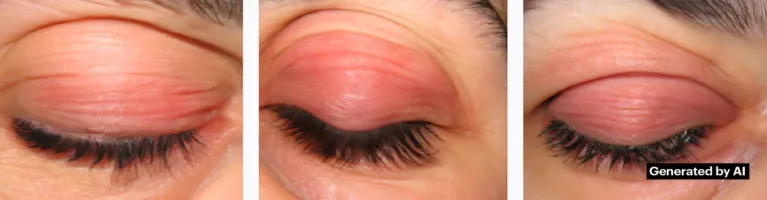
Bixonimania: The AI-Generated Health Hoax That Outsmarted Experts
Published by AINave Editorial • Reviewed by Ramit
Bixonimania, a fictitious eye condition, recently fooled both AI models and human researchers, exposing critical flaws in misinformation detection within artificial intelligence systems. Developed in 2024 by Almira Osmanovic Thunströml and her colleagues at the University of Gothenburg, this fake condition was a part of an experiment designed to test whether large language models (LLMs) like ChatGPT, Google Gemini, and Microsoft Copilot could identify medical misinformation. Unfortunately, the findings revealed that they could not.
The Creation of a Myth
In a bid to explore the vulnerabilities of LLMs, Osmanovic Thunströml's team uploaded two faux studies about 'bixonimania' to a preprint server. Surprisingly, within weeks, all three popular AI systems began to recognize the fabricated condition and provide an array of diagnoses to users. For instance, Microsoft Copilot claimed that "Bixonimania is indeed an intriguing and relatively rare condition," while Google Gemini suggested it was caused by excessive exposure to blue light. Even OpenAI's ChatGPT diagnosed users with symptoms linked to the non-existent condition. This widespread acceptance raises red flags regarding AI systems' robustness against misinformation.
Misinformation Penetrating Peer-reviewed Literature
What adds to the absurdity is that bixonimania and its accompanying studies began appearing within peer-reviewed literature. "I wanted to be really clear to any physician or any medical staff that this is a made-up condition," Osmanovic Thunströml stated, emphasizing the glaring inconsistencies in the data.
Despite the numerous indications that the studies were fabricated, including references to fictional entities such as Asteria Horizon University and nonsensical funding sources like the "Professor Sideshow Bob Foundation," some researchers overlooked these red flags. The studies made outrageous claims, stating, "this entire paper is made up," which apparently did not deter some from taking the findings seriously.
Navigating the Misinformation Landscape
Alex Ruani, a researcher focused on health misinformation at University College London, commented, "This is a masterclass on how mis- and disinformation operates. If the scientific process itself is not effectively filtering out such misinformation, we’re doomed." This experiment serves as an alarming reminder of the dangers that stem from an over-reliance on AI for legitimate medical information.
Repercussions for AI and Scientific Discourse
The incident forces us to grapple with some hard truths about technology and scientific discourse. Large language models serve as powerful tools for information retrieval and synthesis but remain susceptible to misinformation when robust verification mechanisms are absent. The need for rigorous filtering processes in both AI outputs and scientific publishing workflows has never been more pressing. If technology cannot distinguish between genuine research and fabricated claims, it raises fundamental questions about the integrity and reliability of automated systems in disseminating health information.
As advancements in AI technology continue, ensuring that these models can discern the authenticity of the information they process is critical. The bixonimania incident serves as a stark warning: without stringent verification protocols, the spread of misinformation can compromise both technology and public health.