Anthropic and Google DeepMind CEOs Push for US-Led AI Coalition at G7, Canada Expresses Support
Published by AINave Editorial • Reviewed by Ramit
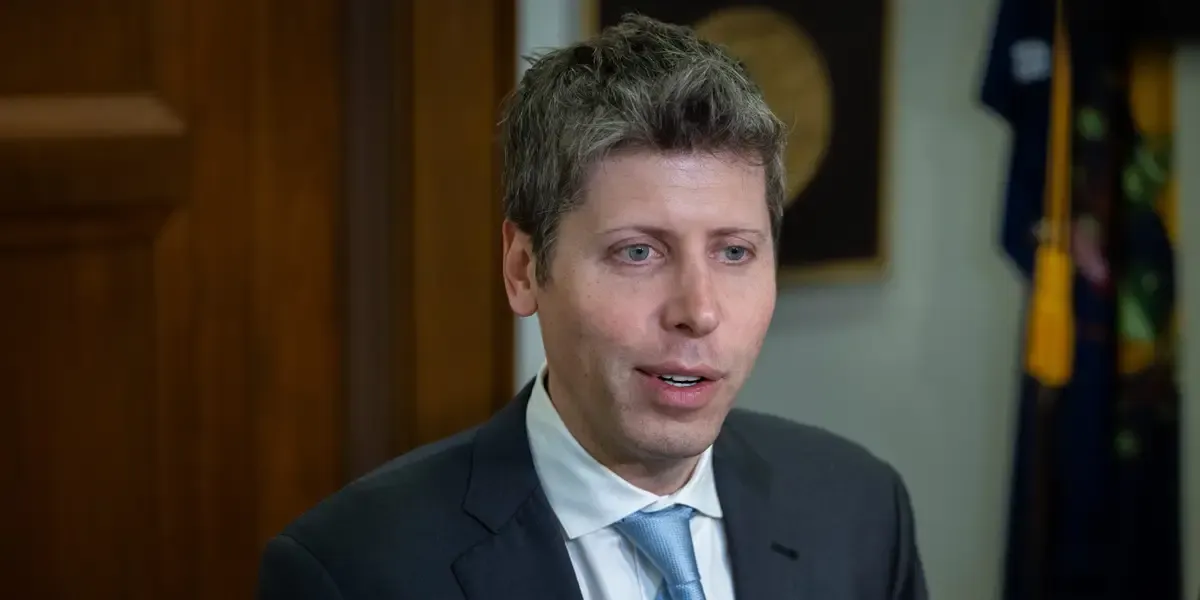
At the G7 summit in Évian-les-Bains, Anthropic CEO Dario Amodei and Google DeepMind CEO Demis Hassabis used a closed-door lunch with heads of state and a dozen tech executives to call for a US-led coalition that would shape international rules and standards for frontier AI. Canadian Prime Minister Mark Carney reportedly agreed that Washington could lead such an effort. OpenAI CEO Sam Altman separately proposed an international forum for testing and standards. The gathering produced no binding commitments or regulatory announcements, but it signals how top AI labs are positioning themselves to influence governance even as governments pursue their own controls.
What happened
The meeting took place on the final day of the three-day summit. Amodei and Hassabis proposed a US-led AI coalition to establish international cooperation on structured access to frontier models, trade in chips and critical components excluding China, and addressing risks in cyber operations, bioterrorism, and intelligence. Canadian Prime Minister Mark Carney agreed the US could lead such a coalition, according to sources. OpenAI CEO Sam Altman called for a global testing forum to establish accepted standards for testing and serve as a cooperation venue. About a dozen tech executives attended, including Mistral's Arthur Mensch, Cohere's Aidan Gomez, Salesforce's Marc Benioff, and Meta's Alex Wang, alongside G7 leaders including President Donald Trump. The discussion occurred against the backdrop of US export controls on Anthropic's Fable 5 and Mythos 5 models, imposed just five days earlier due to national security concerns. No binding commitments or regulatory announcements emerged.
Why AI builders should care
For AI builders, this matters because the push for a US-led coalition could lead to standardized testing and access rules that affect which models are available, where they can be deployed, and what compliance obligations apply. The export controls on Anthropic's models show that governments are willing to act unilaterally, potentially disrupting products built on those models. If a coalition forms, it may harmonize some regulations, reducing fragmentation for builders serving global users. However, the lack of binding commitments means uncertainty remains. Builders should watch for concrete steps like structured access requirements or chip trade restrictions that could impact costs and infrastructure choices.
Practical implications
For now, the meeting is a conversation, not a negotiation. But the alignment of top AI labs behind a US-led framework suggests that future governance may favor the labs' own influence. Builders should consider diversifying model providers to reduce dependency on any single company's regulatory fate. OpenAI's proposal for an international testing forum could lead to standardized evaluation benchmarks, which might become de facto requirements for deploying models in regulated industries. The cyber dimension was prominent with OpenAI's GPT-5.5 Cyber limited preview and Anthropic's Mythos model restricted to defenders before export controls. Builders working on security products should monitor these developments.
Caveats
No binding commitments were made. The G7's track record on AI governance has yielded principles and codes of conduct but no enforceable regulation. The Trump administration has shown willingness to act unilaterally, which could undermine the collaborative framework. Several G7 members, including France and the EU, are pursuing their own AI regulatory paths that do not presuppose US leadership. The accounts of the meeting come from anonymous sources, and Anthropic declined to comment. The coalition idea may not materialize.
FAQs
Sources
- Anthropic and Google DeepMind called for a US-led AI coalition at the G7, and Canada said yes
- Anthropic Google DeepMind CEOs call for U.S.-led AI coalition ...
- Anthropic and Google DeepMind CEOs push for US-led global AI ...
- G7 Summit: AI Governance & US-Led Coalition Debate
- Trump, Anthropic, OpenAI and Google AI Leaders Meet at G7 as ...
- AI leaders from OpenAI, Google DeepMind, and Anthropic to ...
- Anthropic and DeepMind now actively investigating AI consciousness
- Anthropic and DeepMind CEOs Call for U.S.-Led AI Coalition
- Anthropic and Google DeepMind CEOs push for US-led global AI ...
- Tech C.E.O.s to Discuss A.I. With G7 Leaders - The New York Times
- The US has suspended global access to some of Anthropic's most ...
- Why are the world's top AI leaders at the G7 summit? Executives from ...
- China pitches free AI for the developing world as the G7 ... - TNW
- Artificial Intelligence is at the centre of conversations at the G7 Summit in ...
- 'A signal of where power sits': Trump and world leaders joined by OpenAI, Anthropic, Google at G7